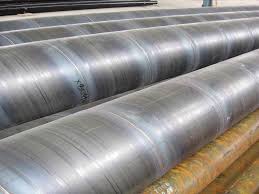
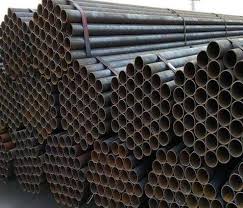
1.What welding methods are commonly used for Q195 welded pipes?
Common welding methods for Q195 welded pipes include electric resistance welding (ERW), gas metal arc welding (GMAW), and submerged arc welding (SAW). ERW is the most widely used due to its high efficiency and low cost, suitable for small to medium diameter welded pipes.
2. What welding methods are suitable for Q215 welded pipes?
Q215 welded pipes can be welded by ERW, GMAW, SAW, and manual metal arc welding (MMAW). For large-diameter and thick-walled Q215 welded pipes, SAW is preferred for its stable welding quality and high efficiency.
3. Which welding method is most suitable for Q235 welded pipes?
Q235 welded pipes are compatible with various welding methods, including ERW, GMAW, SAW, and MMAW. ERW is used for ordinary thin-walled pipes, while SAW is suitable for thick-walled pipes used in high-pressure or heavy-load environments, ensuring sufficient weld strength.
4. What is the main difference in chemical composition between Q195 and Q235 steels?
The main difference lies in the carbon content and manganese content. Q195 has a lower carbon content (≤0.12%) and manganese content (0.25-0.50%), while Q235 has a higher carbon content (0.14-0.22%) and manganese content (0.30-0.65%). The higher carbon and manganese content of Q235 gives it better mechanical strength.
5. How does the tensile strength of Q195, Q215, and Q235 welded pipes compare?
The tensile strength of Q195 welded pipes is 315-430 MPa; Q215 welded pipes have a tensile strength of 335-450 MPa; Q235 welded pipes have the highest tensile strength, ranging from 375-500 MPa. The tensile strength increases with the increase of the grade number.