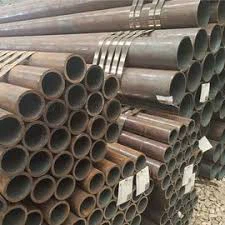

1. Q: What core mechanical properties must L245 steel pipe meet?
A: L245 steel pipe must meet four core mechanical properties: yield strength, tensile strength, elongation, and impact toughness. Yield strength (Rp0.2) is the stress at which the material begins to undergo noticeable plastic deformation, and its minimum value must reach 245 megapascals (MPa). Tensile strength (Rm) is the maximum stress a material can withstand before fracture, and the standard specifies minimum values (e.g., 415 MPa) and maximum values (e.g., 755 MPa). Elongation (A) is a measure of the material's ability to deform plastically, expressed as a percentage, and its value must meet standard requirements. For NB and MB grades, impact toughness (usually expressed as Charpy V-notch impact energy KV2) is also a mandatory requirement to ensure the steel pipe has good resistance to brittle fracture at service temperatures.
2. Q: Why is a minimum value specified for yield strength, while both a minimum and maximum value are specified for tensile strength? A: The purpose of specifying a minimum yield strength is to ensure a sufficient safety margin when the steel pipe is subjected to internal fluid pressure and other loads, preventing excessive plastic deformation that could lead to pipe instability or failure. The purpose of specifying a minimum tensile strength is also to ensure the overall load-bearing capacity of the pipe. Specifying a maximum tensile strength serves multiple purposes: First, it indirectly controls the material's yield strength ratio (yield strength/tensile strength). A high yield strength ratio indicates insufficient plastic reserve, making it more susceptible to brittle fracture under overload. Second, it ensures uniform and appropriate work hardening of the material, which is crucial for pipe forming (such as cold bending) and overall safety.
3. Q: What is the Charpy V-notch impact test? Why is it important for L245 steel pipe?
A: The Charpy V-notch impact test is a standard test method for measuring material toughness. A standard V-notch specimen is broken by a pendulum at a specific temperature, and the energy absorbed (impact energy, measured in joules) is measured. For L245 steel pipe, particularly grades NB and MB, this test is crucial because it assesses the material's ability to resist rapid brittle fracture in the presence of defects (notches simulating cracks). Pipelines may encounter low temperatures, dynamic loads, or manufacturing defects during service. Good impact toughness can prevent rapid crack propagation and catastrophic fracture, thereby ensuring the structural integrity and safety of the pipeline.
4. Q: In which orientations are mechanical testing of L245 steel pipe typically conducted? Why?
A: Mechanical testing, especially tensile testing, is typically conducted on specimens in two directions: transverse and longitudinal. The yield and tensile strengths of longitudinal specimens (along the pipe's axis) are generally slightly higher than those of transverse specimens (along the pipe's circumference). However, because the pipe is primarily subjected to circumferential hoop stress (caused by internal pressure), standards typically require that transverse specimens meet performance requirements to ensure that the weakest direction also meets service requirements. The sampling direction for impact testing is also important; standards typically specify whether to use transverse or longitudinal specimens because transverse specimens typically have lower impact energy values than longitudinal specimens, providing a more conservative reflection of the material's toughness.
5. Q: If the measured yield strength of an L245 steel pipe is significantly higher than 245 MPa, is this a good thing?
A: It's not necessarily a good thing; it needs to be viewed dialectically. A higher yield strength does mean the pipe can withstand higher pressures, providing a greater strength safety margin. However, excessive strength can be associated with some negative consequences: it may result in a higher carbon equivalent, which adversely affects weldability and increases the risk of weld cold cracking; it may also lead to a decrease in the material's plasticity (elongation) and toughness; and excessive strength may make on-site cold bending of the steel pipe difficult. Therefore, the standard stipulates an upper limit on tensile strength and indirectly controls the yield-to-strength ratio to ensure an optimal balance between strength, plasticity, and toughness.