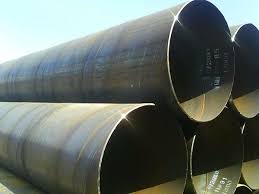
Q1: Regional distribution characteristics of the global API steel pipe market?
In 2023, the global API steel pipe market will be worth about US$32 billion, with a distinct regional pattern: Asia-Pacific accounts for 45% (China accounts for 60%), mainly driven by projects such as the Central Asia Pipeline; North America accounts for 28%, with shale gas development supporting demand; the Middle East accounts for 12%, focusing on pipes for sour gas fields; CIS countries account for 10%, with Arctic projects promoting the application of high-grade steel pipes; Europe accounts for 5%, mainly replacing old pipe networks. In terms of product structure, X65-X80 accounts for 55%, and the annual growth rate of acid-resistant pipes (Sour Service) reaches 8%. In terms of regional trade, China's exports account for 35%, mainly to the Middle East and Africa.
Q2: What is the impact of shale gas development on the demand for API steel pipes?
The shale gas revolution has reshaped market demand: horizontal wells use three times more casing than vertical wells (single well requires 800-1200 tons of casing); fracturing operations require higher steel grades (P110 accounts for 40%); demand for special threads (such as VAM TOP) increases by 15% annually; anti-collapse casing (such as HC110) is used for long horizontal sections; corrosion from flowback fluids has led to an increase in L80-3Cr stainless steel composite pipes. The U.S. Permian Basin consumes more than 5 million tons of API steel pipes annually. China's shale gas development has promoted the localization of X80 steel grade Φ1016mm welded pipes, which is 30% cheaper than imported pipes.
Q3: What is the impact of new energy development on the API steel pipe industry?
Energy transformation creates new demands: hydrogen pipelines require X52/X65 hydrogen embrittlement-resistant modified steel (adding Cu and Nb); CCUS projects promote the development of CO₂ corrosion-resistant pipes (3LPE lining); large-diameter pile pipes (Φ2500mm SSAW) for offshore wind power foundations; duplex steel casings (such as 2205) for geothermal wells; and X80 thick-walled pipes for high-pressure gas storage are required for energy storage systems. It is estimated that the proportion of API steel pipes for new energy will reach 15% in 2025, and the proportion of traditional oil and gas will drop to 65%. The European "Hydrogen Energy Backbone Network" plan will drive the demand for 2 million tons of steel pipes.
Q4: What are the main factors affecting the price fluctuations of API steel pipes?
Prices are driven by multiple factors: raw material costs (hot-rolled coil prices fluctuate by ±30%); energy prices (natural gas affects heat treatment costs); trade policies (such as US 232 tariffs); technology premiums (X80 is 20% more expensive than X65); logistics costs (sea transportation costs account for 15-25%). In 2023, the average price of X70 Φ1219mm welded pipe FOB China is $1200-1500/ton, and the casing P110 is $1800-2200/ton. Long-term agreements (LTAs) can lock in 70% of the supply and buffer price fluctuations.
Q5: What challenges does the API steel pipe supply chain face?
Supply chain pain points include: raw material supply (large factories such as Baowu and Angang give priority to domestic supply); logistics bottlenecks (the Red Sea crisis pushes up freight rates in Asia and Europe); geopolitics; technical barriers (patent monopoly of X100 and above steel grades); talent shortage (global gap of 20% for welding engineers). Leading companies are responding to challenges through vertical integration (such as acquisition of iron ore), regional layout (building factories in the Middle East) and digitalization (blockchain traceability). In the next three years, the localization rate of regional supply chains will increase to 60%.