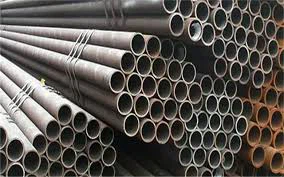
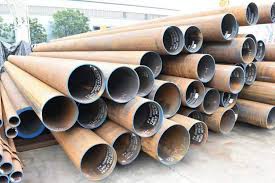
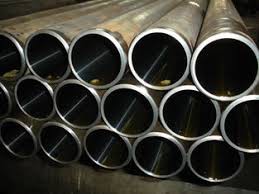
What are the major domestic and international manufacturers?
Leading domestic companies include Baosteel, Tianjin Steel Pipe (TPCO), and Pangang Group, whose products are TSG-certified. International suppliers include Japan's Sumitomo Metal and Germany's Mannesmann. Private companies such as Jiangsu Wujin Stainless Steel specialize in small and medium-diameter precision pipes. When purchasing, verify the Special Equipment Manufacturing License (Class A). Export products must comply with PED Directive 2014/68/EU.
What are the differences between GB 5310 and ASTM A335?
GB 5310 requires a phosphorus content of ≤ 0.025%, while A335 allows for ≤ 0.035%. GB has a higher impact energy requirement (≥ 27J at -20°C vs. ASTM 21J). Regarding dimensional tolerances, ASTM A335 has a looser wall thickness tolerance (±12.5% vs. GB's ±10%). Regarding heat treatment, ASTM allows normalizing and tempering or quenching and tempering. GB certification requires a boiler and pressure vessel license as part of the certification system.
Key factors influencing market prices?
Molybdenum metal price fluctuations (accounting for 20% of the cost) directly impact steel pipe prices. When energy costs rise, heat treatment costs can increase by 30%. Large-diameter (>508mm) and thick-walled (>50mm) pipes command a 40% premium. Quarterly purchases exceeding 500 tons receive a 5-8% discount. The average market price in 2023 is expected to be approximately 8,500-12,000 yuan/ton (fluctuating with specification).
What quality certificates should I look for when purchasing?
A Material Certificate (MTC) including a heat analysis report is required. Third-party inspection certificates (such as SGS/BV) must include UT, HT, and PMI test results. Special equipment requires a "Safety Performance Certificate for Steel for Boiler and Pressure Vessels." Imported products must provide a certificate of origin and CE/API certification. All documents must be stamped with the manufacturer's quality stamp.
What are the future trends in market demand? The expansion of ultra-supercritical units (630°C) will lead to the development of improved 15CrMoG (e.g., with the addition of W and Nb). Demand for corrosion-resistant pipes for offshore wind turbine booster stations is increasing by 15% annually. The hydrogen pipeline sector requires the development of new processes to combat hydrogen embrittlement. Digital procurement platforms (such as Ouyeel Cloud Commerce) will account for over 30% of the market share. Under the carbon neutrality policy, 15CrMoG, produced from recycled steel, will become a new growth point.