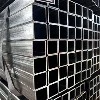
Q1: What are the main production methods covered by the GB/T 5310 standard?
A1: It primarily includes hot rolling (hot extrusion) and cold drawing (cold rolling).
Hot rolling: Piercing and rolling the billet into shape after heating it to a high temperature. It is suitable for large-diameter, thick-walled pipes.
Cold drawing: Further processing of the hot-rolled pipe at room temperature achieves higher dimensional accuracy and is suitable for small-diameter, thin-walled pipes.
Q2: What is the specific production process for hot-rolled steel pipes?
A2:
Blank preparation: Round steel or ingots are heated to approximately 1200°C.
Piercing: Cross-rolling or pressure piercing is used.
Rolling: Forming is performed on a continuous rolling mill or automatic pipe mill.
Sizing and cooling: Control of the outer diameter is performed with air cooling or slow cooling.
Inspection: This includes ultrasonic testing and mechanical property testing.
Q3: What are the key technical aspects of the cold drawing process?
A3:
Diameter and wall reduction: Gradual drawing through dies or rollers to improve dimensional accuracy;
Intermediate annealing: Eliminates work hardening and restores plasticity (e.g., bright annealing);
Surface treatment: Pickling removes scale and ensures surface finish.
Q4: What restrictions does GB/T 5310 place on the choice of steel pipe production methods?
A4: The standard does not mandate specific processes, but does require the final product to meet the following requirements:
Mechanical properties (e.g., tensile strength, yield strength);
High-temperature performance (suitable for high-temperature and high-pressure environments in boilers);
Non-destructive testing (100% ultrasonic or eddy current testing).
Q5: What are the differences in the application scenarios of the two processes?
A5:
Hot-rolled pipe: Mainly used in large-diameter, high-pressure applications such as main steam pipes;
Cold-drawn pipe: Suitable for components with strict dimensional accuracy requirements, such as heat exchanger tubes.