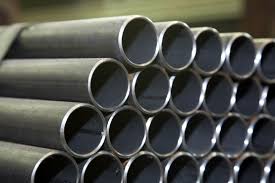
L450, also known as X65 according to the API (American Petroleum Institute) 5L standard, is a high-grade line pipe steel. The "L" stands for "Line Pipe," and the number "450" indicates its minimum specified yield strength (SMYS) of 450 MPa (65,000 psi). It is a micro-alloyed, high-strength low-alloy (HSLA) steel, widely regarded as a workhorse grade in the energy transportation sector due to its excellent balance of strength, toughness, and weldability.
1. Primary Applications and Uses
L450 steel pipe is predominantly used in the construction of pipelines for the oil and gas industry. Its specific applications include:
Onshore and Offshore Transmission Pipelines: It is the most common grade for long-distance, high-pressure natural gas and crude oil transmission lines. Its strength allows it to withstand the high internal pressures required for efficient transport over thousands of kilometers.
Gathering Lines: Used to collect oil or gas from multiple wellheads and transport it to processing facilities.
Distribution Networks: Part of the infrastructure that delivers natural gas to municipalities and end-users.
Structural Applications: In offshore environments, L450 pipes are sometimes used for structural components like jackets and piles due to their corrosion resistance and high strength-to-weight ratio.
2. Key Advantages and Benefits
The widespread adoption of L450 is driven by a combination of technical and economic benefits:
High Strength and Pressure Capacity: The 450 MPa minimum yield strength enables the design and operation of pipelines at higher pressures, which significantly increases the throughput and transport efficiency of oil and gas.
Excellent Toughness and Fracture Resistance: L450 is manufactured with strict control over its chemical composition and microstructure (typically a fine-grained ferrite-bainite structure). This ensures high impact toughness, especially at low temperatures, which prevents catastrophic running fractures-a critical safety feature.
Good Weldability: Despite its high strength, L450 is designed to have good weldability. This allows for relatively straightforward field welding during pipeline construction, ensuring joint integrity and reducing construction time and costs.
Economic Efficiency (Cost-Effectiveness): The high strength of L450 allows for the use of thinner pipe walls compared to lower-grade steels (like L245 or L320) to withstand the same pressure. This reduces the total tonnage of steel required, lowering material, transportation, and construction costs.
Corrosion Resistance: L450 pipes are often coated with external fusion-bonded epoxy (FBE) or other coatings and can be combined with internal coatings and cathodic protection systems. The base steel itself can also be specified with improved resistance to Hydrogen Induced Cracking (HIC) and Sulfide Stress Cracking (SSC) for sour service environments.
3. Future Development Prospects and Trends
The future for L450 steel pipe remains bright, with ongoing developments focused on enhancing its performance and sustainability:
Sustained Demand in Global Energy Infrastructure: As the world continues to rely on natural gas as a transitional fuel and develops new oil and gas fields, the demand for reliable pipeline infrastructure will persist. L450 will continue to be a material of choice for many of these projects.
Advancements in Manufacturing Technology: The production of L450 is increasingly relying on advanced Thermo-Mechanical Controlled Processing (TMCP) and accelerated cooling techniques. This allows for further refinement of the microstructure, enabling even better combination of strength and toughness without excessive use of costly alloying elements.
Focus on "Fitness-for-Service" and Customization: Future trends point towards the development of "tailored" L450 grades. This includes:
Enhanced Sour Service Performance: Improved resistance to HIC and SSC for more aggressive environments.
Heavy Wall Thickness for Arctic/Deepwater Applications: Development of L450 pipes with very thick walls but maintained toughness for use in extreme climates and deep-sea projects.
Improved Strain-Based Design Capability: Modifying the steel's stress-strain behavior to make it suitable for pipelines in seismic zones or unstable permafrost regions where ground movement is expected.
Alignment with the Hydrogen Economy: There is growing research and pilot projects focused on transporting hydrogen through existing and new pipelines. L450 is a prime candidate for this application, though its compatibility with hydrogen embrittlement is a key area of ongoing study and material optimization. Its future role in a hydrogen transport network is highly promising.
Conclusion
In summary, L450 (X65) steel pipe is a foundational material for modern energy transportation. Its optimal balance of high strength, toughness, weldability, and cost-effectiveness has made it the global standard for onshore and offshore pipelines. With continuous improvements in manufacturing and its potential adaptation for new energy carriers like hydrogen, L450 is poised to remain a critical and evolving product in the global industrial landscape for decades to come.