


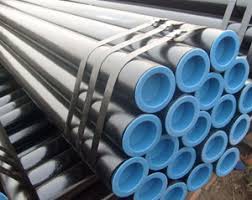
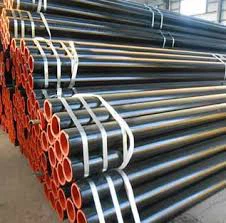
At a Glance: L390 PSL2
"L390": The "L" stands for "Line Pipe." The number "390" designates the Specified Minimum Yield Strength (SMYS) in Megapascals (MPa). This means the pipe is designed to withstand a stress of at least 390 MPa (or approximately 56,500 psi) without permanent deformation.
"PSL2": Stands for Product Specification Level 2. This is a critical designation from the API 5L standard that defines a higher quality level with more stringent chemical, mechanical, and testing requirements compared to PSL1.
Governing Standard: API 5L
This pipe is manufactured according to the API 5L (American Petroleum Institute Specification 5L) standard. This is the international benchmark for steel line pipe used in the transportation of oil, gas, and other fluids.
Key Characteristics and Requirements (PSL2 vs. PSL1)
The PSL2 designation imposes stricter controls, making L390 PSL2 a more reliable and tougher product than its PSL1 counterpart.
| Feature | L390 PSL2 Requirements | Significance / Why It Matters |
|---|---|---|
| Chemical Composition | Stricter control on carbon equivalent (CE) and higher limits for elements like Carbon, Manganese, etc. | Improved Weldability & Fracture Toughness. Lower CE makes the pipe less prone to cracking during welding, especially in field conditions. |
| Mechanical Properties | Mandatory Charpy V-Notch (CVN) Impact Testing. | Verified Toughness. Guarantees the pipe can absorb energy and resist brittle fracture at low service temperatures. This is crucial for safety. |
| Strength | SMYS of 390 MPa (56,500 psi). Specified Minimum Tensile Strength (SMTS) is 490 MPa (71,000 psi). | High Pressure Capacity. Suitable for high-pressure transmission lines, both onshore and offshore. |
| Dimensional Tolerances | Tighter controls on dimensions like outside diameter, wall thickness, and straightness. | Easier, Higher Quality Welding. Ensures better fit-up for pipeline girth welds, reducing installation time and potential defects. |
| Hydrostatic Testing | Mandatory test on every length of pipe to a pressure higher than the specified minimum. | Integrity Verification. Confirms the pressure-containing capability of each joint of pipe before it leaves the mill. |
| Non-Destructive Testing (NDT) | Mandatory full-body ultrasonic testing (or other approved methods) for the detection of planar imperfections. | Enhanced Defect Detection. Provides a higher level of quality assurance by finding laminations, cracks, and other flaws that could lead to failure. |
Equivalent Grades
L390 is the metric designation. Its equivalent in U.S. customary (inch-pound) units is X56.
L390 PSL2 = X56 PSL2
They are the same pipe, just labeled according to different measurement systems.
Manufacturing Processes
L390 PSL2 pipe can be produced using two main methods:
Seamless (SMLS): Made by piercing a solid steel billet. It has no longitudinal seam weld, making it inherently strong and ideal for high-pressure, critical applications.
Welded (ERW, SAW):
Electric Resistance Welded (ERW): Formed from skelp and the seam is welded using electric resistance. Modern ERW (HFI) processes produce high-quality pipe.
Submerged Arc Welded (SAW): Formed from plate and welded longitudinally (LSAW) or spirally (SSAW). LSAW is common for larger diameters and high-pressure applications.
The choice between seamless and welded depends on factors like diameter, wall thickness, availability, project specifications, and cost.
Common Applications
L390 PSL2/X56 pipe is a workhorse grade in the energy industry, used for:
Onshore & Offshore Natural Gas Transmission Pipelines
Crude Oil Transmission Pipelines
Product Pipelines (e.g., diesel, jet fuel)
CO₂ Pipelines for Carbon Capture, Utilization, and Storage (CCUS)
Water Injection Lines in oil and gas fields
Slurry Pipelines
Advantages of Using L390 PSL2
Proven Safety & Reliability: The stringent PSL2 requirements make it a safe choice for demanding environments.
Excellent Weldability: The controlled chemistry facilitates easier and more reliable field welding.
Good Toughness: The mandatory impact testing ensures performance in a range of temperatures, resisting brittle fracture.
High Strength-to-Weight Ratio: Allows for the transportation of high-pressure fluids while potentially using less steel compared to lower grades, optimizing costs.
Important Considerations for Procurement and Use
Purchase Order: The purchase order should clearly state "API 5L L390 PSL2" and specify requirements like size (OD and WT), delivery condition (e.g., as-rolled, normalized), and any supplementary requirements.
Supplementary Requirements: API 5L Annex H lists optional requirements that can be specified for even tighter control (e.g., further restriction on chemistry, additional NDT).
Competent Manufacturer: Source pipe from reputable manufacturers with a proven quality assurance system to ensure it meets all API 5L PSL2 requirements.
In summary, L390 PSL2 is a high-quality, high-strength carbon steel line pipe designed for safe and efficient long-distance transportation of oil and gas under high pressure. Its PSL2 designation ensures enhanced toughness, weldability, and overall integrity, making it a preferred choice for modern pipeline projects.


