


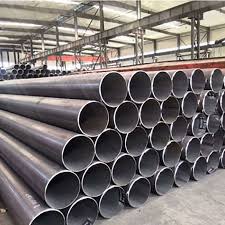
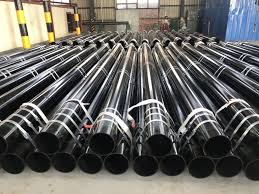
What is JIS G 3466?
JIS G 3466 is a Japanese Industrial Standard that specifies the requirements for carbon steel pipes used for boiler and heat exchanger applications.
The key characteristic of pipes made to this standard is their ability to withstand high internal pressures and temperatures. They are typically seamless and are designed for use in critical services like:
Boiler Superheaters
Boiler Reheaters
Economizers
Heat Exchangers
Other pressure vessel components
Key Grades and Their Properties
JIS G 3466 defines several grades, with the most common being STB340, STB410, and STB510. The "STB" stands for "Seamless Tube for Boiler," and the number indicates the minimum tensile strength in MPa.
Here is a detailed breakdown of the most common grades:
1. STB340
This is a low-carbon steel grade with excellent weldability and formability.
Chemical Composition (approx.):
Carbon (C): ≤ 0.18%
Manganese (Mn): 0.30 - 0.60%
Phosphorus (P): ≤ 0.035%
Sulfur (S): ≤ 0.035%
Mechanical Properties:
Tensile Strength: 340 MPa (min)
Yield Strength: 185 MPa (min)
Elongation: 35% (min)
Characteristics: Good ductility, easy to weld, suitable for lower temperature and pressure services.
2. STB410
A medium-carbon steel grade offering higher strength than STB340.
Chemical Composition (approx.):
Carbon (C): 0.10 - 0.25%
Manganese (Mn): 0.30 - 0.60%
Phosphorus (P): ≤ 0.035%
Sulfur (S): ≤ 0.035%
Mechanical Properties:
Tensile Strength: 410 MPa (min)
Yield Strength: 245 MPa (min)
Elongation: 30% (min)
Characteristics: A good balance of strength and formability.
3. STB510
A higher-strength carbon steel grade, often used where greater mechanical strength is required.
Chemical Composition (approx.):
Carbon (C): 0.15 - 0.30%
Manganese (Mn): 0.60 - 0.90%
Phosphorus (P): ≤ 0.035%
Sulfur (S): ≤ 0.035%
Mechanical Properties:
Tensile Strength: 510 MPa (min)
Yield Strength: 285 MPa (min)
Elongation: 25% (min)
Characteristics: Higher strength due to increased carbon and manganese content. Weldability may require more care (pre-heat or post-weld heat treatment).
Comparison with International Standards
JIS G 3466 pipes are functionally similar to pipes from other international standards used for the same purpose. Here's a rough comparison:
| JIS G 3466 | ASTM A179 / A192 | DIN 17175 | GB 5310 (Chinese Std.) |
|---|---|---|---|
| STB340 | Similar to A179 (Low-C) | Similar to St35.8 | Similar to 20G |
| STB410 | Similar to A192 (Med-C) | Similar to St45.8 | - |
| STB510 | - | - | - |
Important Note: While the grades are similar, they are not always directly interchangeable. The chemical composition limits, heat treatment requirements, and testing procedures can differ. Always consult the specific standard and design specifications when selecting a material.
Common Applications
Due to their high-pressure and high-temperature capabilities, JIS G 3466 pipes are primarily used in:
Power Generation:
Superheater and reheater tubes in coal-fired, gas-fired, and biomass power plants.
Water wall tubes and economizer tubes in boilers.
Petrochemical Industry:
Heat exchanger tubes in refineries and chemical processing plants.
Tubes for fired heaters and process heaters.
Industrial Boilers:
Various tubes and pipes in industrial-scale steam boilers.
Key Points to Remember
Seamless Construction: JIS G 3466 pipes are almost exclusively seamless, which provides superior pressure integrity compared to welded pipes.
High-Temperature Service: They are designed and tested to perform reliably under prolonged exposure to heat and pressure.
Grade Selection: The choice of grade (STB340, STB410, etc.) depends on the design pressure, temperature, and required strength of the specific application.
Quality Control: The standard mandates strict non-destructive testing (like eddy current or hydrostatic testing) to ensure the pipes are free from defects that could lead to failure.
In summary, JIS G 3466 is a critical standard for high-quality carbon steel pipes essential for the safe and efficient operation of boilers and heat exchangers across the energy and process industries.


