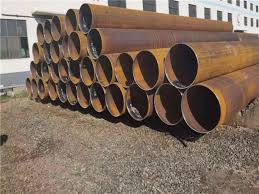
Key points for construction of anti-corrosion layer for buried welded pipe?
Three-layer PE anti-corrosion is the mainstream: epoxy powder (≥80μm) + adhesive (170-250μm) + polyethylene (1.8-3.7mm). Before coating, sandblast and remove rust to Sa2.5 level, anchor pattern depth 50-90μm. Heat shrink sleeve is used at the patching point, and the baking temperature needs to reach 200℃ to ensure molten bonding. Use nylon slings when going down the ditch to prevent mechanical damage. Cathodic protection (-0.85V to -1.2V CSE potential) and anti-corrosion layer work together for protection.
Reasons for sealing failure during flange connection of welded pipe?
80% of failures are caused by incorrect gasket selection: asbestos gaskets are not oil-resistant, and PTFE gaskets are prone to cold flow under high pressure. Flange surface parallelism deviation > 0.2mm/m will cause local leakage. Bolts are not tightened in cross order (such as tightening diagonal bolts to 50% torque first). Sudden changes in medium temperature cause bolt stress relaxation (e.g., graphite gaskets are required above 200°C). Solution: ASME PCC-1 standard provides detailed installation guidelines.
How to detect the remaining wall thickness of in-service welded pipes?
Ultrasonic thickness gauges (accuracy ±0.1mm) are the first choice, but the surface needs to be polished to a metallic luster. For insulation layer pipes, low-frequency guided wave detection (0.1-1MHz) can scan a range of 10 meters. Severely corroded areas can be measured through the insulation layer using pulsed eddy current (PEC) technology. Data should be entered into the GIS system to establish a corrosion rate model (such as ≥0.3mm/year needs to be replaced).
Precautions for laying welded pipes in frozen soil areas?
The trench needs to be over-excavated by 0.5 meters and filled with gravel to prevent frost heave. The buried depth of the pipeline should be 0.6 meters below the frozen soil layer (e.g., 3 meters deep in Siberia). Use PU foam insulation layer (λ≤0.03W/m·K) and electric heating tape (10-15W/m). Compensators are installed at elbows to absorb freeze-thaw displacement. Construction should be avoided during the summer thawing period, and a heat preservation shed (≥10℃) should be built for winter welding.
What are the emergency repair technologies for welded pipe leakage?
Pressure plugging: Clamps injected with sealants (such as polymer composite materials) are suitable for pressures ≤2MPa. Epoxy steel strip winding (such as Clock Spring) can temporarily repair for 8 hours. For small holes (<6mm), the magnetic plugger does not need to stop transmission. Permanent repair requires cutting and replacing pipe sections, and automatic welding is used to ensure the quality of the girth weld. ASME B31.4 stipulates that a pressure test of 1.25 times the design pressure is required after repair.