### 1. How to identify duplex steel?
Duplex steel is identified through a combination of methods:
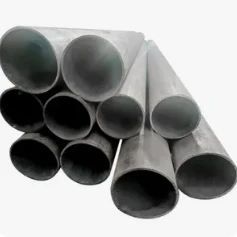
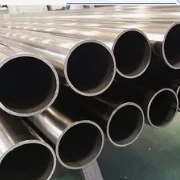
- **Visual Inspection**: Brighter metallic sheen compared to carbon steel but less shiny than austenitic stainless steel.
- **Magnetism Test**: Shows **weak magnetic attraction** (unlike austenitic stainless steel, which is non-magnetic).
- **Spark Test**: Produces moderate, reddish sparks with fewer branches than carbon steel.
- **Chemical Analysis** (Lab): Chromium (~22%), Nickel (~5%), Molybdenum (~3%), and Nitrogen (>0.1%).
- **Microstructure Examination** (Lab): Reveals ~50% ferrite + ~50% austenite phase balance under etching.
### 2. What is the EN number for duplex steel?
Common EN (European Standard) designations for duplex steels include:
- **1.4462 (X2CrNiMoN22-5-3)**: Standard duplex grade.
- **1.4410 (X2CrNiMoN25-7-4)**: Super duplex grade (higher corrosion resistance).
- **1.4501 (X2CrNiMoCuWN25-7-4)**: Hyper duplex grade.
*Note: EN numbers specify chemical composition; equivalent grades exist in ASTM (e.g., UNS S31803/S32205).*
### 3. How to identify a duplex?
Quick identification methods:
- **Check Magnetism**: Use a magnet-duplex steels exhibit **slight magnetic pull** (distinguishing them from fully non-magnetic austenitic steels like 304/316).
- **Observe Color**: Less "silvery" than austenitic steels; often has a subtle yellow/gray tint.
- **Spark Test**: Medium-length, dark-red sparks with limited bursting.
- **Professional Testing**: Portable XRF analyzers give instant alloy composition (confirming Cr/Ni/Mo/N).
### 4. What is the disadvantage of duplex steel?
Key disadvantages include:
- **Thermal Sensitivity**: Prolonged exposure to 300–900°C (572–1652°F) causes embrittlement due to sigma phase precipitation.
- **Toughness Limitations**: Not suitable for cryogenic temperatures (below -50°C/-58°F).
- **Machining Difficulty**: High strength and work hardening reduce tool life during cutting/drilling.
- **Welding Complexity**: Requires strict heat control and filler metals to maintain phase balance.
- **Higher Cost**: More expensive than standard stainless steels (e.g., 304/316) due to alloy content.
### 5. What are the benefits of duplex steel?
Major advantages:
- **Strength**: 2x the yield strength of austenitic stainless steels (e.g., 316), allowing thinner/lighter designs.
- **Corrosion Resistance**: Excels in chloride-rich environments (e.g., seawater, chemical plants), resisting pitting/crevice corrosion better than 316.
- **Stress Corrosion Cracking (SCC) Resistance**: Superior to austenitic grades under tension in corrosive settings.
- **Cost Efficiency**: Higher initial cost offset by reduced material usage (via higher strength) and longer service life.
- **Abrasion/Erosion Resistance**: Harder surface resists wear better than standard stainless steels.