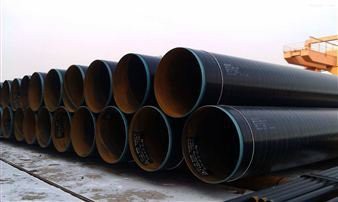

Question 1: What are the definition requirements for pipelines resistant to H₂S corrosion in API 5L specification?
When the partial pressure of H₂S reaches 300Pa, the pipe used must have the performance of acid corrosion resistance. This kind of pipeline used in acid environment is acid-resistant line pipe. Pipelines used in this environment have special requirements for the carbon content, sulfur-phosphorus content, calcium-sulfur ratio, and flaw detection of the pipe, and require HIC (hydrogen-induced cracking) and SSC (sulfide stress cracking) tests. The main implementation standards are API 5L and ISO 31833.
Question 2: How is the HIC test of H₂S-resistant line pipe conducted under API 5L specification?
The implementation standard of HIC test is NACE TM0284, and the sample size is 100mm long and 20mm wide. The test sample is placed in two standard test solutions: solution A (sodium chloride and acetic acid solution saturated with H₂S at room temperature and pressure) and solution B (synthetic seawater solution saturated with H₂S at room temperature and pressure), and the test time is 96 hours. There are three indicators for evaluation: crack sensitivity ratio CSR≤2%, crack length ratio CLR≤15%, and crack thickness ratio CTR≤5%.
Question 3: What are the methods for SSC test of H₂S-resistant line pipe under API 5L specification?
The SSC test is implemented in accordance with NACE TM0177, and the sample size of the four-point bending method is 115mm×15mm×5mm. There are 4 test methods:
Test Method A - NACE standard tensile test: maximum non-failure stress within 720 hours
Test Method B - NACE standard bend test: maximum non-failure stress within 720 hours
Test Method C - NACE standard C-ring test: maximum non-failure stress within 720 hours
Test Method D - NACE standard double cantilever beam (DCB) test: average KISSC (SSC threshold stress intensity coefficient) of repeated test specimens for valid test. There are also 3 test solutions, solution A is an acidic, buffered one.
Question 4: Which grades or types of pipelines in API 5L standard are more suitable for H₂S environment resistance?
PIPELINE PIPE of PSL-2 grade under API 5L standard is relatively more suitable for H₂S environment resistance. In addition to the requirements of PSL-1, PSL-2 also includes more stringent technical requirements, such as more detailed chemical composition control, higher mechanical property standards and additional testing requirements. While the NACE standard involves the performance of steel pipes in environments containing corrosive media (such as H₂S and CO₂), API 5L GR. B PSL-1 NACE steel pipes are designed and manufactured with the potential effects of these corrosive media in mind, have better corrosion resistance, and are suitable for harsh oil and gas environments, where they have a certain resistance to corrosion such as H₂S.
Question 5: What measures are taken in the API 5L specification to ensure the H₂S resistance of line pipes?
Chemical composition control: Limit the content of elements in steel pipes that may affect corrosion resistance, such as sulfur, phosphorus, etc., to ensure that the chemical composition of the steel pipe meets specific corrosion resistance requirements. For example, the optimized production strategy is to improve the cleanliness and uniformity of steel, C≤0.09%, S≤0.005%, P≤0.01%, O≤0.002%, and adopt microalloying, etc.
Testing and certification: Steel pipes must pass a series of tests, including but not limited to corrosion tests, hydrogen sulfide stress corrosion cracking (HIC) tests, stress-oriented hydrogen-induced cracking (SOHIC) tests, and corrosion fatigue tests, to ensure their performance in H₂S environments2.
Manufacturing process control: Control the manufacturing process of steel pipes, including heat treatment, welding and surface treatment, to ensure the corrosion resistance of steel pipes