1. Question: How does the wall thickness of ASTM A53 Grade A welded pipes affect their pressure-bearing capacity, and what is the standard range of wall thickness for this grade? Answer: The wall thickness of ASTM A53 Grade A welded pipes directly affects their pressure-bearing capacity-thicker walls can withstand higher internal and external pressures, as they distribute stress more evenly across the pipe's cross-section. The pressure-bearing capacity is calculated using the Barlow's formula, which relates pressure, wall thickness, diameter, and tensile strength. ASTM A53 Grade A has a tensile strength of ≥ 330 MPa, and its standard wall thickness ranges from SCH 10 (1.73 mm for 1-inch pipe) to SCH 160 (12.70 mm for 1-inch pipe), with larger nominal diameters having thicker maximum wall thicknesses. For example, a 6-inch ASTM A53 Grade A pipe with SCH 40 wall thickness (4.57 mm) can withstand a higher pressure than the same diameter pipe with SCH 10 wall thickness, making it suitable for applications with moderate pressure requirements (e.g., water distribution, compressed air lines).
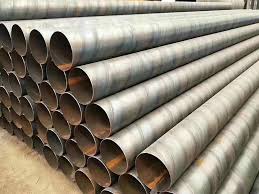
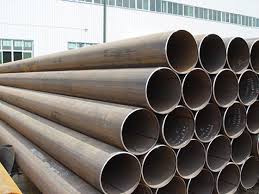
2. Question: What is the difference between ERW (Electric Resistance Welded) and SAW (Submerged Arc Welded) pipes for API 5L Grade X60, and which is better for long-distance pipelines? Answer: ERW and SAW are two common welding methods for API 5L Grade X60 welded pipes. ERW pipes are made by passing a steel strip through rollers to form a cylinder, then using electric resistance to weld the seam-this process is fast, cost-effective, and suitable for pipes with smaller diameters (up to 24 inches) and thinner walls. SAW pipes are welded by submerging the weld seam in a flux, which protects the weld from atmospheric contamination; this method produces a stronger, more uniform weld and is suitable for larger diameters (above 24 inches) and thicker walls. For long-distance oil and gas pipelines, SAW pipes are generally better because they have higher weld strength, better fatigue resistance, and can handle the high pressures and large diameters required for long-distance transportation. ERW pipes are more commonly used for shorter pipelines, distribution lines, and applications where cost is a primary concern.
3. Question: What are the chemical and mechanical requirements for GB/T 9711-2011 Grade L245N welded steel pipes, and how do they compare to API 5L Grade B? Answer: GB/T 9711-2011 Grade L245N welded steel pipes have the following chemical requirements: C ≤ 0.20%, Mn 0.90-1.60%, P ≤ 0.030%, S ≤ 0.020%, and N ≤ 0.012%. Their mechanical properties include tensile strength ≥ 415 MPa, yield strength ≥ 245 MPa, and elongation ≥ 25%. Compared to API 5L Grade B (tensile strength ≥ 415 MPa, yield strength ≥ 245 MPa, elongation ≥ 22%), L245N has a slightly lower carbon content and stricter limits on phosphorus and sulfur, which improves its weldability and toughness. Additionally, the "N" suffix indicates that L245N is normalized, which enhances its ductility and uniform mechanical properties across the pipe. Both grades are used for oil and gas transportation, but L245N is preferred for applications requiring better toughness and weld quality, while API 5L Grade B is more cost-effective for general low-pressure applications.
4. Question: Why is Grade 321 stainless steel welded pipe suitable for high-temperature applications, and what industries commonly use this grade? Answer: Grade 321 stainless steel welded pipe is suitable for high-temperature applications because it contains titanium (Ti), which stabilizes the steel by forming titanium carbides instead of chromium carbides. This prevents intergranular corrosion and maintains the pipe's mechanical properties at temperatures up to 870°C (1600°F), which is higher than austenitic grades like 304 (max 815°C) or 316 (max 870°C but with lower creep resistance). The titanium addition also improves creep resistance, meaning the pipe can withstand long-term exposure to high temperatures without significant deformation. Industries that commonly use Grade 321 include aerospace (exhaust systems), power generation (boiler tubes, steam lines), chemical processing (high-temperature reactors), and petrochemicals (refinery piping), where high temperatures and corrosive environments are present.
5. Question: What are the inspection and testing standards for ASTM A312 Grade TP304 welded stainless steel pipes, and what defects are commonly checked for? Answer: ASTM A312 Grade TP304 welded stainless steel pipes must comply with strict inspection and testing standards to ensure quality. The main tests include: visual inspection (to check for surface defects such as cracks, porosity, incomplete fusion, and weld bead irregularities), dimensional inspection (to verify outer diameter, inner diameter, wall thickness, and straightness), hydrostatic testing (to test for leaks under pressure-typically 1.5 times the maximum working pressure), and non-destructive testing (NDT) such as ultrasonic testing (UT) or radiographic testing (RT) for critical applications. Additionally, chemical composition analysis is performed to confirm the pipe meets TP304's requirements (18-20% Cr, 8-12% Ni, C ≤ 0.08%). Common defects checked for include weld cracks (both surface and internal), porosity (tiny holes in the weld), incomplete penetration (failure to weld through the entire wall thickness), and undercutting (grooves along the weld edge that weaken the pipe).