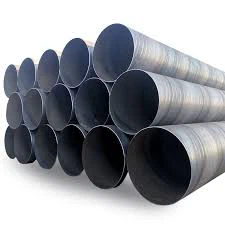
GB/T 9711 is a Chinese national standard for "Petroleum and natural gas industries - Steel pipe for pipelines - Technical delivery conditions." The L360 grade, equivalent to the API 5L X52 grade, is a high-strength, micro-alloyed steel widely used in the energy sector. The "L" stands for "Line Pipe," and the "360" indicates its minimum yield strength of 360 MPa.
1. Primary Uses and Applications
GB/T 9711 L360 steel pipe is predominantly used in the construction of long-distance, high-pressure pipelines for the transportation of oil and natural gas. Its specific applications include:
Onshore and Offshore Transmission Pipelines: Serving as the main artery for transporting crude oil, refined products, and natural gas from production fields to refineries, storage facilities, and distribution networks.
Gathering Lines: Collecting oil or gas from multiple wells and transporting them to a central processing facility.
City Gate Stations and Distribution Networks: Used in sections requiring higher strength to withstand internal pressure.
Structural Applications: In some cases, it can be used for structural supports in offshore platforms or pipeline crossings where specific mechanical properties are required.
2. Key Advantages and Benefits
The widespread adoption of L360 pipe is due to its excellent balance of properties, which are crucial for the safety, efficiency, and longevity of pipeline systems.
High Strength and Toughness: With a minimum yield strength of 360 MPa, L360 can withstand high internal pressures, allowing for the transport of larger volumes of fluid over longer distances. It also possesses good impact toughness, which is vital for preventing crack propagation, especially in low-temperature environments.
Excellent Weldability: The chemical composition of L360 is carefully controlled (with limited Carbon Equivalent - CE). This makes it highly suitable for various welding techniques used in field construction, such as manual, automatic, and semi-automatic welding, ensuring strong and reliable pipeline joints.
Good Deformability: It has a balanced ductility that allows it to withstand ground movement, subsidence, and external loads without fracturing, which is critical for pipeline integrity over varied terrains.
Corrosion Resistance: While not stainless steel, L360 pipes are often used with external anti-corrosion coatings (e.g., FBE, 3LPE) and internal linings to resist corrosion from the transported medium and the external soil/marine environment, significantly extending service life.
Cost-Effectiveness: As a micro-alloyed steel, L360 achieves its high strength through cost-effective additions of elements like Niobium (Nb) and Vanadium (V), rather than expensive heat treatments. This makes it an economical choice for large-scale pipeline projects.
Standardization and Reliability: Being produced to the stringent GB/T 9711 standard (which is largely aligned with international API 5L standards) ensures consistent quality, dimensional accuracy, and reliable performance, which is non-negotiable for safety-critical energy infrastructure.
3. Development Prospects and Future Trends
The future for GB/T 9711 L360 steel pipe remains bright, driven by global and regional energy demands and technological advancements.
Sustained Demand from Energy Infrastructure: The global transition, including China's energy security strategy, continues to rely on natural gas as a cleaner-burning bridge fuel. This drives the construction of new pipelines and the maintenance of existing networks, ensuring steady demand for reliable grades like L360.
Alignment with the "Belt and Road" Initiative: Many infrastructure projects under this initiative involve building oil and gas pipelines across Central Asia, the Middle East, and other regions. GB/T 9711 L360, as a key Chinese standard product, is well-positioned to be used in these international projects.
Advancements in Pipe Manufacturing: The ongoing development in production technologies, such as improved Thermo-Mechanical Controlled Processing (TMCP), will further enhance the properties of L360 pipes-offering even better toughness, weldability, and resistance to Hydrogen Induced Cracking (HIC) and Sulfide Stress Cracking (SSC) for sour service applications.
Focus on Safety and Environmental Standards: As safety and environmental regulations become stricter, the certified and traceable quality of standard-compliant L360 pipe will become even more critical. Its role in preventing leaks and ensuring the safe transport of hydrocarbons will keep it at the forefront of material selection.
Competition and Coexistence with Higher Grades: While there is a trend towards using even higher-strength grades (like L450/X65 and above) for efficiency gains in large-diameter, high-pressure lines, L360 will continue to be the workhorse grade for a vast range of applications where its strength-to-cost ratio is optimal, particularly in medium-pressure transmission and distribution networks.
Conclusion
In summary, GB/T 9711 L360 steel pipe is a fundamental and high-performance material for the modern energy industry. Its optimal combination of strength, weldability, and cost-effectiveness makes it the preferred choice for a wide array of oil and gas pipeline projects. Its development prospects are closely tied to the growth of global energy infrastructure, where it will continue to play a vital role in the safe and efficient transportation of vital energy resources.