


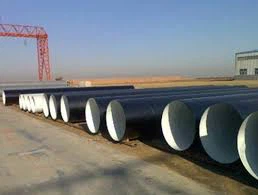

GB/T 9711.2 Spiral Submerged Arc Welded Steel Pipe - PSL 2 Technical Requirements
1. Standard Overview - PART 2 SPECIFICATIONS
GB/T 9711.2-2019 is Part 2 of the Chinese national standard series for pipeline steel pipes, specifically addressing Technical delivery conditions for grades PSL 2 pipes.
Critical Understanding:
This is Part 2 of a 3-part series (not a standalone SSAW standard)
Applies ONLY to PSL 2 pipes (Product Specification Level 2)
Must be used in conjunction with GB/T 9711.1
PSL 2 = Higher quality level than PSL 1
2. Relationship Between Parts
Table 1: GB/T 9711 Series Structure
| Part | Title | Scope | Relation to SSAW |
|---|---|---|---|
| GB/T 9711.1 | General requirements | Base requirements for all pipes | Covers SSAW in general |
| GB/T 9711.2 | PSL 2 requirements | Additional requirements for PSL 2 | SSAW-specific PSL 2 rules |
| GB/T 9711.3 | PSL 3 requirements | Most stringent requirements | Highest quality SSAW |
Usage Rule: GB/T 9711.1 + GB/T 9711.2 = Complete specification for PSL 2 SSAW pipes
3. PSL 2 Definition and Application
What is PSL 2?
PSL (Product Specification Level) 2 represents enhanced quality requirements for steel pipes used in more demanding pipeline applications.
Table 2: PSL 2 vs PSL 1 Comparison
| Requirement | PSL 1 | PSL 2 | Impact on SSAW |
|---|---|---|---|
| Application | General service | Critical service | SSAW for high-pressure |
| Chemical Control | Standard limits | Tighter limits | Better weldability |
| Mechanical Testing | Less frequent | More frequent | Higher reliability |
| NDT Requirements | Basic | Comprehensive | 100% weld inspection |
| Traceability | Batch level | Pipe-by-pipe | Full traceability |
4. SSAW-Specific PSL 2 Requirements
4.1 Manufacturing Process Controls
Table 3: Enhanced SSAW Manufacturing Requirements (PSL 2)
| Process Step | PSL 2 Specific Requirements | Standard Clause |
|---|---|---|
| Material Traceability | Each plate/coil individually identified | 5.2.1 |
| Welding Process | Welding procedures must be qualified | 5.3.2 |
| Weld Repair | Maximum 2 repairs per weld, limits on length | 5.3.5 |
| Heat Treatment | Records of all thermal cycles | 5.4.1 |
| Dimensional Control | Tighter tolerances than PSL 1 | 6.2 |
5. Chemical Composition Requirements (PSL 2)
Table 4: PSL 2 Chemical Requirements for SSAW
| Element | Maximum % | Test Frequency | Notes for SSAW |
|---|---|---|---|
| Carbon (C) | ≤ 0.18 | Each heat | Lower for better weldability |
| Sulfur (S) | ≤ 0.010 | Each heat | Critical for HIC resistance |
| Phosphorus (P) | ≤ 0.020 | Each heat | Improves toughness |
| Carbon Equivalent (CE) | Customer specified | Each heat | Controls weld cracking |
| Hydrogen (H) | ≤ 2.0 ppm | Each heat | Prevents cold cracking |
Carbon Equivalent Formulas (PSL 2):
CE(IIW): CE = C + Mn/6 + (Cr+Mo+V)/5 + (Ni+Cu)/15
Pcm: Pcm = C + Si/30 + Mn/20 + Cu/20 + Ni/60 + Cr/20 + Mo/15 + V/10 + 5B
Typical Limits for SSAW:
CE(IIW) ≤ 0.43% (for good weldability)
Pcm ≤ 0.25% (for high strength steels)
6. Mechanical Properties (PSL 2)
Table 5: Enhanced Mechanical Testing (PSL 2)
| Test Type | Frequency | Specimen Location | Acceptance Criteria |
|---|---|---|---|
| Tensile Test | Each heat/treatment | Transverse | Both yield & tensile |
| Yield Strength | Each pipe* | - | Within ±100 MPa of SMYS |
| Impact Test | Each heat/treatment | Weld, HAZ, Base | Full curve required |
| Hardness Test | Batch basis | Weld, HAZ, Base | Max 250 HV10 |
| Drop Weight Test | Optional | Base metal | For low temperature |
Note: *For SSAW, typically each pipe from same heat/treatment
Table 6: Impact Test Requirements (PSL 2)
| Grade | Test Temperature | Minimum Average | Minimum Single | Specimen Location |
|---|---|---|---|---|
| L245NB | -10°C | 27J | 20J | Weld & HAZ |
| L360NB | -10°C | 40J | 30J | Weld & HAZ |
| L415NB | -10°C | 45J | 35J | Weld & HAZ |
| L450NB | -10°C | 50J | 40J | Weld & HAZ |
| L485NB | -10°C | 60J | 48J | Weld & HAZ |
7. Non-Destructive Testing (PSL 2)
Table 7: Mandatory NDT for SSAW PSL 2
| NDT Method | Coverage | Equipment | Personnel | Records |
|---|---|---|---|---|
| Radiographic (RT) | 100% weld length | Film or digital | Level II certified | Films + report |
| Ultrasonic (UT) | 100% weld length | Automated system | Level II certified | Scan + report |
| Visual (VT) | 100% surface | Adequate lighting | Trained inspector | Report |
| Magnetic Particle (MT) | All repairs | Wet fluorescent | Level II certified | Report |
| Ultrasonic (Body) | Optional | Automated | Level II | Report |
Table 8: Defect Acceptance Criteria (PSL 2)
| Defect Type | Maximum Size | Accumulation | Remarks |
|---|---|---|---|
| Cracks | Not permitted | N/A | Immediate rejection |
| Lack of Fusion | 12.5mm length | ≤25mm in 300mm | Repair required |
| Incomplete Penetration | 1.6mm or 10% t | - | Whichever smaller |
| Porosity | 3.2mm diameter | ≤6 in any 150mm | Clustered porosity reject |
| Slag Inclusions | 6.4mm length | ≤12.7mm in 300mm | Linear defects |
8. Hydrostatic Testing (PSL 2)
Table 9: Enhanced Hydrostatic Requirements
| Parameter | PSL 2 Requirement | Difference from PSL 1 |
|---|---|---|
| Minimum Stress | 95% SMYS | Higher than PSL 1 (90%) |
| Holding Time | ≥ 30 seconds | Longer than PSL 1 (10s) |
| Test Medium | Treated water | Corrosion inhibitor required |
| Temperature | ≥ 5°C | Controlled temperature |
| Calibration | Certified gauges | Annual calibration |
| Recording | Pressure-time chart | Digital recording required |
Test Pressure Calculation:
text
P = (2 × t × SMYS × F) / D Where: P = Test pressure (MPa) t = Wall thickness (mm) SMYS = Specified Minimum Yield Strength (MPa) F = Factor (0.95 for PSL 2) D = Outside diameter (mm)
9. Dimensional Tolerances (PSL 2)
Table 10: Tighter Tolerances for SSAW PSL 2
| Dimension | Tolerance | Measurement Method | Frequency |
|---|---|---|---|
| Outside Diameter | ±0.5% or ±3mm | Circumference tape | Each pipe |
| Wall Thickness | +10%/-5% | Ultrasonic gauge | Each pipe, 4 points |
| Ovality | ≤ 1.0% of OD | Max-min diameter | Each pipe |
| Straightness | ≤ 0.15% length | Straight edge | Each pipe |
| Length | +100mm/0mm | Tape measure | Each pipe |
| End Squareness | ≤ 1.6mm | Square tool | Each end |
10. Special Requirements for SSAW PSL 2
10.1 Weld Bead Requirements
Table 11: Weld Bead Profile (PSL 2)
| Parameter | Internal Weld | External Weld |
|---|---|---|
| Reinforcement Height | 0-2.5mm | 0-3.0mm |
| Width | ≥ Wall thickness | ≥ 1.5 × wall thickness |
| Transition | Smooth, gradual | Smooth, gradual |
| Undercut | ≤ 0.5mm depth | ≤ 0.8mm depth |
| Overlap | Not permitted | Not permitted |
10.2 End Preparation
Table 12: Pipe End Requirements
| Requirement | Specification |
|---|---|
| Bevel Angle | 30° ± 2.5° |
| Land | 1.6mm ± 0.8mm |
| Root Face | 0-1.0mm |
| End Condition | Clean, no defects |
| Protection | Plastic end caps |
11. Quality Documentation (PSL 2)
Table 13: Required Documentation
| Document | Content Required | Retention Period |
|---|---|---|
| Mill Certificate | Full chemical, mechanical, NDT | Permanent |
| Welding Documents | WPS, PQR, WPQ | Permanent |
| NDT Records | RT films, UT scans, reports | 20 years minimum |
| Heat Treatment | Time-temperature charts | Permanent |
| Hydrostatic Test | Pressure-time charts | Permanent |
| Traceability | Heat to pipe mapping | Permanent |
| Repair Records | All repair documentation | Permanent |
Certificate Types:
Type 3.1: Inspection certificate with specific results
Type 3.2: Certificate with test results from manufacturer
12. Marking Requirements (PSL 2)
Table 14: Enhanced Marking for PSL 2 SSAW
| Information | Marking Method | Location | Permanence |
|---|---|---|---|
| Manufacturer | Stencil/paint | Near pipe end | Permanent |
| Standard | GB/T 9711.2 | Clear | Permanent |
| Grade | L360NB, etc. | With PSL | Permanent |
| Heat Number | Unique ID | Traceable | Permanent |
| Pipe Number | Sequential | Unique | Permanent |
| Test Pressure | Actual value MPa | Visible | Permanent |
| PSL Level | "PSL 2" | Required | Permanent |
| Third Party Stamp | If applicable | Authority | Permanent |
13. Sour Service Requirements (Optional)
Table 15: Sour Service Additions for PSL 2
| Requirement | Test Method | Acceptance Criteria | Frequency |
|---|---|---|---|
| HIC Test | NACE TM0284 | CLR ≤ 15%, CTR ≤ 5% | Each heat |
| SSC Test | NACE TM0177 | No cracking at 90% AYS | Each heat |
| Hardness | HV10 | ≤ 250 | Each pipe |
| Chemistry | Enhanced | S ≤ 0.002%, P ≤ 0.015% | Each heat |
| Microcleanliness | ASTM E45 | A ≤ 2.0, B ≤ 2.0, C ≤ 1.0, D ≤ 1.5 | Each heat |
14. Inspection and Testing Frequency
Table 16: Testing Frequency for SSAW PSL 2
| Test Type | Frequency | Sample Size | Standard |
|---|---|---|---|
| Chemical Analysis | Each heat | 1 sample/heat | GB/T 223 |
| Tensile Test | Each heat/treatment | 2 transverse | GB/T 228.1 |
| Impact Test | Each heat/treatment | 3 sets | GB/T 229 |
| Hardness Test | 10% of pipes | Weld, HAZ, base | GB/T 4340.1 |
| Flattening Test | 1 per 200 pipes | 200mm length | GB/T 246 |
| Hydrostatic | 100% of pipes | Each pipe | GB/T 241 |
| RT/UT | 100% of welds | Full length | GB/T 3323/11345 |
15. Procurement Specification Example
Complete PSL 2 SSAW Specification:
specification
SPIRAL SUBMERGED ARC WELDED PIPE - PSL 2 1. APPLICABLE STANDARDS: - Primary: GB/T 9711.1-2019 - Supplementary: GB/T 9711.2-2019 2. PRODUCT SPECIFICATION LEVEL: PSL 2 3. MANUFACTURING PROCESS: - Spiral Submerged Arc Welded (SSAW/HSAW) - Double-sided automatic welding - As-welded or normalized condition 4. MATERIAL GRADE: L415MB (PSL 2, sour service capable) 5. DIMENSIONS: - OD: 914.4 mm (±4.6 mm) - WT: 15.9 mm (+1.6 mm/-0.8 mm) - Length: 12.2 m (+0.1 m/0 m) 6. CHEMICAL REQUIREMENTS: - CE(IIW) ≤ 0.43% - Pcm ≤ 0.23% - S ≤ 0.005% - P ≤ 0.018% 7. MECHANICAL REQUIREMENTS: - Yield Strength: 415-535 MPa - Tensile Strength: 520-760 MPa - Yield Ratio: ≤ 0.93 - Impact Energy: ≥ 45J at -10°C 8. TESTING REQUIREMENTS: - 100% RT of weld seam (film or digital) - 100% UT of weld seam (automated) - Hydrostatic test to 95% SMYS minimum - Hardness test: ≤ 250 HV10 - Charpy V-notch: Weld, HAZ, base metal 9. DOCUMENTATION: - Mill Test Certificate Type 3.2 - Third-party inspection required - Complete traceability from plate to pipe 10. SPECIAL CONDITIONS: - Design temperature: -5°C to +60°C - Sour service capability required - Offshore application - corrosion protection
16. Industry Applications for PSL 2 SSAW
Table 17: Typical Applications
| Industry | Application | Why PSL 2? |
|---|---|---|
| Oil & Gas Transmission | Main pipeline trunk lines | High pressure, reliability |
| Gas Distribution | High-pressure city gates | Safety critical |
| Offshore Pipelines | Subsea flowlines | Corrosive environment |
| Refinery/Petrochem | Process piping | High temperature service |
| Water Transmission | Large diameter water mains | Long service life |
| Slurry Pipelines | Mining operations | Abrasion resistance |
17. Quality Assurance Program
PSL 2 Requires:
ISO 9001 Certification of manufacturer
API Q1 certification (optional but recommended)
Welding Qualification to NB/T 47014
NDT Personnel Certification to GB/T 9445
Calibration System for all test equipment
Third-party Surveillance during production
Audit Checklist:
✓ Raw material certification
✓ Welding procedure qualification
✓ NDT equipment calibration
✓ Personnel qualifications
✓ Test record completeness
✓ Traceability system
18. Cost Implications
Table 18: Cost Factors for PSL 2 vs PSL 1
| Factor | PSL 1 Cost Impact | PSL 2 Cost Impact |
|---|---|---|
| Raw Material | Standard | Premium (+5-10%) |
| Testing | Basic | Extensive (+10-15%) |
| Documentation | Minimal | Comprehensive (+5%) |
| Inspection | Self-certified | Third-party (+5-8%) |
| Lead Time | Standard | Longer (+10-15%) |
| Overall Premium | Baseline | +25-40% |
19. Common Non-Conformities
Frequent Issues with SSAW PSL 2:
Chemical Composition: CE or Pcm out of specification
Yield Strength: Over-strength (>100 MPa above SMYS)
Impact Energy: Below minimum requirements
Weld Defects: Lack of fusion, incomplete penetration
Dimensional: Ovality or wall thickness out of tolerance
Documentation: Incomplete traceability records
Resolution Process:
Immediate quarantine of affected pipes
Root cause analysis
Corrective action implementation
Re-testing of affected batch
Customer notification
20. Future Developments
Trends in SSAW PSL 2 Technology:
Digitalization: Blockchain for traceability
Advanced NDT: Phased array UT, digital radiography
Automation: Robotic welding and inspection
Materials: Higher grades (X80/X100) with PSL 2
Sustainability: Lower carbon footprint manufacturing
Regulatory Changes:
Increasing emphasis on sour service capability
Stricter environmental requirements
Enhanced safety standards
International harmonization
Summary and Key Points
Essential Requirements for SSAW PSL 2:
Must reference BOTH standards: GB/T 9711.1 + GB/T 9711.2
Enhanced quality throughout: From raw material to final pipe
Comprehensive testing: More frequent and stringent than PSL 1
Full traceability: Each pipe traceable to original heat
Third-party verification: Often required by end users
When to Specify PSL 2:
High-pressure transmission pipelines
Critical service applications
Offshore or subsea environments
Sour service conditions
Long design life requirements
Safety-critical installations
Verification Checklist:
Both standards referenced in purchase order
PSL 2 clearly specified
All enhanced requirements included
Third-party inspection arranged
Documentation requirements specified
Acceptance criteria defined
GB/T 9711.2 provides the enhanced quality framework that makes Chinese SSAW pipes competitive with the best international products for demanding pipeline applications.


