


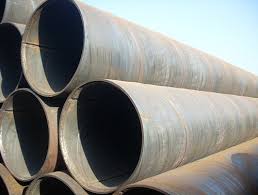
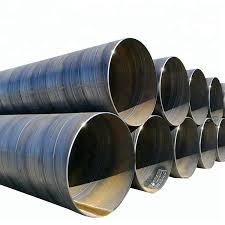
GB/T 9711.1 is the foundational Chinese national standard for Spiral Submerged Arc Welded (SSAW) steel pipes used in the petroleum and natural gas industries [citation:4, citation:5]. This standard specifies the technical delivery conditions for pipes used to transport flammable and non-flammable fluids in oil and gas transmission systems [citation:3, citation:6].
📋 GB/T 9711.1 Standard Overview
The table below summarizes the key aspects of GB/T 9711.1 for spiral submerged arc welded pipes:
| Attribute | Description |
|---|---|
| Standard Number | GB/T 9711.1 (full title: "Petroleum and natural gas industries - Pipes for transmission systems - Part 1: Technical delivery conditions") [citation:4, citation:5]. |
| Status | An older version (1997) is still referenced, but the latest version is GB/T 9711.1-2017 integrated with GB/T 9711.2-2017, superseding the older parts . |
| Commonly Called | "9711.1螺旋钢管" (9711.1 spiral steel pipe) [citation:3, citation:7]. |
| Scope | Specifies technical delivery conditions for non-alloy and alloy steel (excluding stainless) seamless and welded pipes for transporting flammable and non-flammable fluids (including water) [citation:6, citation:7]. |
| Grade Designation | PSL1 (Product Specification Level 1) - Represents the A-level quality requirements in the older two-part standard, with basic requirements for quality and testing [citation:2, citation:6]. |
| Steel Grades | L175, L210, L245, L290, L320, L360, L390, L415, L450, L485, L555 and intermediate grades . |
| Manufacturing Process | Spiral Submerged Arc Welding (SSAW/HSAW) - Formed from hot-rolled steel strip at room temperature using automatic double-sided submerged arc welding [citation:3, citation:5]. |
| Typical Applications | Oil and gas transmission pipelines; conveying combustible and non-combustible fluids in the petroleum and natural gas industries; also suitable for water, slurry, and structural applications [citation:3, citation:5]. |
📊 Steel Grade Comparison
GB/T 9711.1 uses an "L" designation system aligned with international standards. The table below shows common grades:
| GB/T 9711.1 Grade | Approximate API 5L Equivalent | Minimum Yield Strength (MPa) | Typical Application |
|---|---|---|---|
| L175 | A | 175 | Low-pressure gathering |
| L210 | A | 210 | Low-pressure gathering |
| L245 | B | 245 | General pipeline service |
| L290 | X42 | 290 | Medium-pressure transmission |
| L360 | X52 | 360 | General transmission |
| L390 | X56 | 390 | Higher-pressure lines |
| L415 | X60 | 415 | High-pressure transmission |
| L450 | X65 | 450 | High-pressure transmission |
| L485 | X70 | 485 | Long-distance high-pressure |
| L555 | X80 | 555 | Ultra-high-pressure lines |
🔧 Manufacturing Process for GB/T 9711.1 SSAW Pipe
The manufacturing process follows quality-controlled procedures suitable for oil and gas industry requirements [citation:3, citation:5]:
| Step | Description |
|---|---|
| 1. Raw Material Preparation | Hot-rolled steel coils meeting the specified chemistry requirements are leveled and edge-milled. |
| 2. Cold Forming | The steel strip is continuously formed into a cylindrical shape at a specific helix angle at room temperature . |
| 3. Submerged Arc Welding | Double-sided automatic submerged arc welding (inside and outside) creates the spiral seam with full penetration [citation:3, citation:5]. |
| 4. Non-Destructive Testing | 100% ultrasonic testing (UT) of the weld seam; X-ray examination for critical areas like "T" joints [citation:4, citation:7]. |
| 5. Hydrostatic Testing | Each pipe undergoes hydrostatic pressure testing to verify integrity (test pressure calculated based on yield strength) . |
| 6. Mechanical Testing | Tensile tests, flattening tests, and bend tests to verify properties. Charpy impact testing for higher grades . |
| 7. End Finishing | Ends prepared (plain or beveled) for field welding. |
📏 Typical Size Range
Based on manufacturer data for GB/T 9711.1 compliant SSAW pipes [citation:2, citation:4, citation:5]:
| Parameter | Range |
|---|---|
| Outside Diameter | 219 mm to 4064 mm (approx. 8" to 160") |
| Wall Thickness | 5 mm to 32 mm (up to 60 mm available) |
| Length | 3 m to 18 m (customizable, up to 32 m available) |
📝 Important Considerations
Part 1 vs. Part 2: Historically, GB/T 9711 was divided into:
Part 1 (A-level): Basic requirements (PSL1 equivalent)
Part 2 (B-level): More stringent requirements (PSL2 equivalent) [citation:6, citation:10]
The current version (2017) integrates both into a single standard with PSL1 and PSL2 designations .
PSL1 Quality Level: GB/T 9711.1 (PSL1) includes:
Standard chemistry limits
Minimum strength requirements only
Impact testing not mandatory (except when specified)
Standard NDT requirements
PSL2 Requirements: For more critical applications requiring:
Tighter chemistry controls
Maximum strength limits
Mandatory Charpy impact testing
Enhanced NDT requirements
Specify GB/T 9711.2 or PSL2 .
Key Differences from SY/T 5037: GB/T 9711.1 has stricter requirements than the petroleum industry standard SY/T 5037, including:
More stringent chemical composition limits
Higher testing requirements
Stricter dimensional tolerances
Specifically designed for oil and gas transmission [citation:6, citation:8]
Coating Options: Pipes can be supplied with various corrosion protection systems :
3LPE (3-layer polyethylene)
FBE (Fusion Bonded Epoxy)
Coal Tar Epoxy
Internal epoxy coatings
🔍 Key Points to Understand
International Alignment: GB/T 9711.1 is technically aligned with API 5L and ISO 3183, making it suitable for international projects requiring recognized standards [citation:4, citation:5].
Material Requirements: The standard requires the use of killed steel with carbon equivalent (CEV) controlled to ensure good weldability and toughness .
Weld Quality: For spiral welded pipes, the standard requires:
Penetration depth ≥80% of wall thickness
Weld reinforcement controlled to 0-3mm
Impact energy at -20°C ≥120J for critical grades
NDT Requirements: Spiral weld seams must undergo 100% ultrasonic inspection with sensitivity capable of detecting φ2mm internal defects .
📝 Summary
GB/T 9711.1 Spiral Submerged Arc Welded pipes are the standard choice for oil and gas transmission pipelines in China and increasingly for international projects [citation:4, citation:5]. This standard specifies PSL1 quality level requirements for pipes used in transporting flammable and non-flammable fluids, with steel grades ranging from L175 to L555 . The pipes are produced from hot-rolled steel coils using double-sided automatic submerged arc welding, with diameters available from 219mm to over 4000mm [citation:4, citation:5].
The standard is technically aligned with API 5L, ensuring compatibility with international pipeline projects. For more demanding applications requiring enhanced toughness and tighter controls, specify GB/T 9711.2 (PSL2) instead [citation:4, citation:6]. When ordering, clearly indicate the complete standard (including part number), required grade, dimensions, and any supplementary testing requirements.


