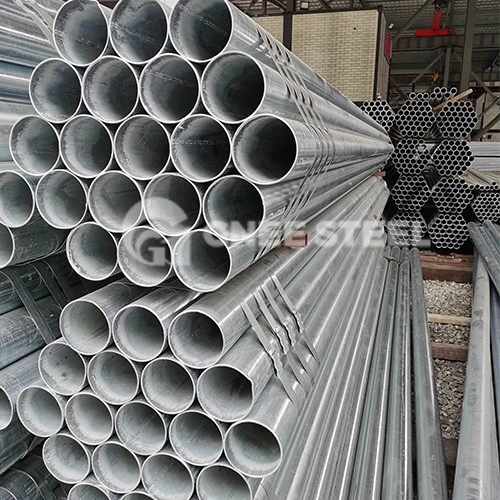
- Commonly used thicknesses of galvanized steel pipes
Galvanized steel pipe is a layer of zinc plated on the surface of the steel pipe to prevent corrosion. Its commonly used thicknesses generally range from 0.8mm to 2.5mm, with the most commonly used thicknesses of 1.0mm and 1.2mm.
- Usage scenarios and characteristics corresponding to different thicknesses
1. 0.8mm thickness
Galvanized steel pipes of this thickness are used in some scenarios where hardness requirements are not high and the use environment is relatively relaxed, such as the production of electrical conduits.
2. 1.0mm thickness
Galvanized steel pipes of this thickness are widely used in the construction industry, such as stair handrails, fences, steel structures, ventilation ducts, etc.
3. 1.2mm thickness
Galvanized steel pipes of this thickness are widely used and can be used in various scenarios in the construction industry that require pressure resistance, such as wire casings, plumbing pipes, scaffolding, etc.
4. 2.0mm to 2.5mm thickness
Galvanized steel pipes of this thickness are mostly used in scenes that require higher hardness and harsh usage environments, such as large steel structures in buildings, bridges, road guardrails, etc.

- How to choose the appropriate thickness?
When choosing the thickness of galvanized steel pipes, you need to choose according to the specific usage scenarios and needs. Generally speaking, choosing a slightly thicker thickness can make the galvanized steel pipe have a longer service life and better resist the erosion of the external environment, but it will also increase the cost. Therefore, when selecting the thickness of galvanized steel pipes, comprehensive considerations need to be made based on specific needs.