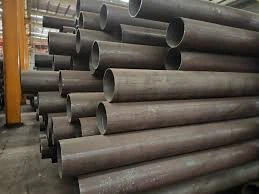
Question 1: What are the emerging trends in the research and development of ASTM A335 P92 steel pipe?
Answer: In the research and development of ASTM A335 P92 steel pipe, several emerging trends can be observed. One trend is the exploration of further optimizing its alloy composition. Scientists and engineers are looking into adding new or adjusting existing alloying elements in minute quantities to enhance specific properties. For instance, there is research on incorporating elements that could improve its resistance to more aggressive corrosive environments while maintaining or even enhancing its mechanical strength at high temperatures. Another trend is the focus on advanced manufacturing techniques. With the development of technologies like additive manufacturing, studies are being conducted to see if it can be applied to produce P92 steel pipe components with improved precision and potentially unique microstructures. Additionally, there is an increasing interest in understanding the long-term performance of P92 steel pipe under more extreme conditions through advanced simulation and modeling. By using computational models that take into account factors like temperature gradients, stress variations, and corrosion kinetics over long periods, a more accurate prediction of the pipe's behavior in real-world applications can be achieved. This can help in designing better preventive maintenance strategies and improving the overall reliability of the pipe systems.
Answer: In the research and development of ASTM A335 P92 steel pipe, several emerging trends can be observed. One trend is the exploration of further optimizing its alloy composition. Scientists and engineers are looking into adding new or adjusting existing alloying elements in minute quantities to enhance specific properties. For instance, there is research on incorporating elements that could improve its resistance to more aggressive corrosive environments while maintaining or even enhancing its mechanical strength at high temperatures. Another trend is the focus on advanced manufacturing techniques. With the development of technologies like additive manufacturing, studies are being conducted to see if it can be applied to produce P92 steel pipe components with improved precision and potentially unique microstructures. Additionally, there is an increasing interest in understanding the long-term performance of P92 steel pipe under more extreme conditions through advanced simulation and modeling. By using computational models that take into account factors like temperature gradients, stress variations, and corrosion kinetics over long periods, a more accurate prediction of the pipe's behavior in real-world applications can be achieved. This can help in designing better preventive maintenance strategies and improving the overall reliability of the pipe systems.
Question 2: How might advancements in materials science impact the properties of ASTM A335 P92 steel pipe in the future?
Answer: Advancements in materials science are likely to have a significant impact on the properties of ASTM A335 P92 steel pipe in the future. For example, new alloying concepts might be developed where nanoscale or metastable phases are intentionally introduced into the steel matrix. These phases could offer enhanced strengthening mechanisms at high temperatures, improving the creep resistance and tensile strength to even higher levels. Materials science research may also lead to better control of grain boundaries through techniques like grain boundary engineering. By precisely tailoring the nature and distribution of grain boundaries, the steel pipe could have improved resistance to both corrosion and mechanical degradation. Moreover, the development of advanced surface modification technologies could result in the creation of superhydrophobic or self-healing coatings for the P92 steel pipe. Superhydrophobic coatings would repel water and other corrosive liquids, reducing the likelihood of corrosion initiation, while self-healing coatings could automatically repair any minor damage to the surface, extending the service life of the pipe. All these potential advancements could transform the performance of ASTM A335 P92 steel pipe in various applications.
Answer: Advancements in materials science are likely to have a significant impact on the properties of ASTM A335 P92 steel pipe in the future. For example, new alloying concepts might be developed where nanoscale or metastable phases are intentionally introduced into the steel matrix. These phases could offer enhanced strengthening mechanisms at high temperatures, improving the creep resistance and tensile strength to even higher levels. Materials science research may also lead to better control of grain boundaries through techniques like grain boundary engineering. By precisely tailoring the nature and distribution of grain boundaries, the steel pipe could have improved resistance to both corrosion and mechanical degradation. Moreover, the development of advanced surface modification technologies could result in the creation of superhydrophobic or self-healing coatings for the P92 steel pipe. Superhydrophobic coatings would repel water and other corrosive liquids, reducing the likelihood of corrosion initiation, while self-healing coatings could automatically repair any minor damage to the surface, extending the service life of the pipe. All these potential advancements could transform the performance of ASTM A335 P92 steel pipe in various applications.
Question 3: What role could new manufacturing technologies play in improving the production of ASTM A335 P92 steel pipe?
Answer: New manufacturing technologies can play a crucial role in improving the production of ASTM A335 P92 steel pipe. Additive manufacturing, for instance, offers the possibility of fabricating complex geometries that are difficult or impossible to achieve with traditional manufacturing methods. This could be beneficial for creating custom-designed pipe fittings or components with optimized shapes for specific flow and stress distribution requirements. It also allows for a more precise control of the material deposition and microstructure formation during the building process, potentially resulting in more homogeneous and defect-free products. Another technology like advanced automation and robotics in the production line can improve the consistency and quality of the manufacturing process. Robots can perform tasks such as precise material handling, welding, and inspection with high accuracy and repeatability, reducing human errors and ensuring that each step of the production process is carried out under optimal conditions. Additionally, the use of real-time monitoring and feedback systems enabled by the Internet of Things (IoT) can provide instant data on parameters like temperature, pressure, and chemical composition during manufacturing. This data can be used to make immediate adjustments to the process, optimizing the production of ASTM A335 P92 steel pipe and enhancing its overall quality.
Answer: New manufacturing technologies can play a crucial role in improving the production of ASTM A335 P92 steel pipe. Additive manufacturing, for instance, offers the possibility of fabricating complex geometries that are difficult or impossible to achieve with traditional manufacturing methods. This could be beneficial for creating custom-designed pipe fittings or components with optimized shapes for specific flow and stress distribution requirements. It also allows for a more precise control of the material deposition and microstructure formation during the building process, potentially resulting in more homogeneous and defect-free products. Another technology like advanced automation and robotics in the production line can improve the consistency and quality of the manufacturing process. Robots can perform tasks such as precise material handling, welding, and inspection with high accuracy and repeatability, reducing human errors and ensuring that each step of the production process is carried out under optimal conditions. Additionally, the use of real-time monitoring and feedback systems enabled by the Internet of Things (IoT) can provide instant data on parameters like temperature, pressure, and chemical composition during manufacturing. This data can be used to make immediate adjustments to the process, optimizing the production of ASTM A335 P92 steel pipe and enhancing its overall quality.
Question 4: How will the increasing demand for sustainable and energy-efficient solutions affect the use of ASTM A335 P92 steel pipe?
Answer: The increasing demand for sustainable and energy-efficient solutions will have a notable impact on the use of ASTM A335 P92 steel pipe. In the context of sustainable development, the long service life and durability of the P92 steel pipe are significant advantages. Since it can withstand harsh conditions for extended periods without frequent replacement, it reduces the consumption of raw materials and energy associated with manufacturing new pipes. This aligns with the goal of minimizing the environmental footprint. In energy-efficient applications, such as in power plants aiming to improve their thermal efficiency, the excellent high-temperature properties of the P92 steel pipe are crucial. For example, in supercritical and ultra-supercritical power plants, using P92 steel pipe in steam lines allows for higher operating temperatures and pressures, which can lead to more efficient conversion of heat into electricity. Moreover, efforts are being made to recycle and reuse P92 steel pipe at the end of its service life. Research is underway on effective recycling methods that can recover the valuable alloying elements and reuse them in the production of new steel pipes, further contributing to the sustainability aspect of its use.
Answer: The increasing demand for sustainable and energy-efficient solutions will have a notable impact on the use of ASTM A335 P92 steel pipe. In the context of sustainable development, the long service life and durability of the P92 steel pipe are significant advantages. Since it can withstand harsh conditions for extended periods without frequent replacement, it reduces the consumption of raw materials and energy associated with manufacturing new pipes. This aligns with the goal of minimizing the environmental footprint. In energy-efficient applications, such as in power plants aiming to improve their thermal efficiency, the excellent high-temperature properties of the P92 steel pipe are crucial. For example, in supercritical and ultra-supercritical power plants, using P92 steel pipe in steam lines allows for higher operating temperatures and pressures, which can lead to more efficient conversion of heat into electricity. Moreover, efforts are being made to recycle and reuse P92 steel pipe at the end of its service life. Research is underway on effective recycling methods that can recover the valuable alloying elements and reuse them in the production of new steel pipes, further contributing to the sustainability aspect of its use.
Question 5: What are the potential challenges and opportunities for ASTM A335 P92 steel pipe in the future market?
Answer: Looking ahead, ASTM A335 P92 steel pipe faces several potential challenges and opportunities in the future market. One of the challenges is the continuous competition from alternative materials. With the development of advanced composites, ceramics, and other novel materials that claim to offer similar or even better properties in certain aspects, the market share of P92 steel pipe might be affected. Additionally, the strict environmental regulations regarding the production process, such as emissions during smelting and refining of the steel, pose a challenge. Manufacturers need to invest in cleaner production technologies to comply with these regulations. However, there are also numerous opportunities. The growing demand for energy in developing countries means more power plants and infrastructure projects will be built, which will require high-performance pipes like the P92 steel pipe. The expansion of the oil and gas industry into more challenging environments, such as deep-sea and arctic regions, also presents an opportunity as the P92 steel pipe's ability to withstand extreme conditions makes it a viable choice. Moreover, the focus on improving and maintaining existing infrastructure in developed countries will drive the need for reliable and durable piping materials, and the P92 steel pipe's reputation for quality and performance positions it well to capture a significant portion of this market.
Answer: Looking ahead, ASTM A335 P92 steel pipe faces several potential challenges and opportunities in the future market. One of the challenges is the continuous competition from alternative materials. With the development of advanced composites, ceramics, and other novel materials that claim to offer similar or even better properties in certain aspects, the market share of P92 steel pipe might be affected. Additionally, the strict environmental regulations regarding the production process, such as emissions during smelting and refining of the steel, pose a challenge. Manufacturers need to invest in cleaner production technologies to comply with these regulations. However, there are also numerous opportunities. The growing demand for energy in developing countries means more power plants and infrastructure projects will be built, which will require high-performance pipes like the P92 steel pipe. The expansion of the oil and gas industry into more challenging environments, such as deep-sea and arctic regions, also presents an opportunity as the P92 steel pipe's ability to withstand extreme conditions makes it a viable choice. Moreover, the focus on improving and maintaining existing infrastructure in developed countries will drive the need for reliable and durable piping materials, and the P92 steel pipe's reputation for quality and performance positions it well to capture a significant portion of this market.