


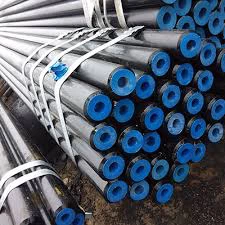
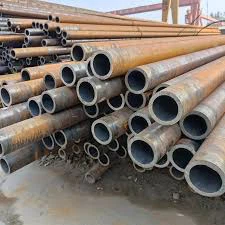
EN 10216-3: Seamless Alloy Fine Grain Steel Tubes for Low Temperature Service
EN 10216-3 is a specialized European standard for seamless alloy fine grain steel tubes designed specifically for pressure purposes at low temperatures. While not a typical "boiler steel pipe" in the conventional sense, it finds critical applications in boiler plants and related systems where components operate at sub-zero temperatures or where high impact toughness is required.
Core Definition & Distinct Purpose
Full Title: "Seamless steel tubes for pressure purposes - Technical delivery conditions - Part 3: Alloy fine grain steel tubes"
Critical Distinction: Unlike EN 10216-2 (elevated temperature service) and EN 10216-1 (ambient/elevated), EN 10216-3 focuses on low temperature toughness. The "fine grain" microstructure is engineered to provide excellent impact properties down to -50°C or lower.
Boiler Plant Relevance: While not for the high-temperature boiler circuit itself, these tubes are essential for:
Liquefied gas systems (LNG vaporizers, fuel gas systems)
Cold feedwater systems in arctic conditions
Cryogenic storage and transfer systems
External boiler plant piping in extreme cold climates
Material Grades & Low Temperature Classes
EN 10216-3 grades are classified by their minimum impact test temperatures:
| Grade Designation | Impact Test Temperature | Minimum Yield Strength (MPa) | Key Alloying Elements | Potential Boiler-Related Application |
|---|---|---|---|---|
| 14MoV6-3 | -20°C | 360 | Mo, V | Not typical for low temp - actually an elevated temp grade |
| 15NiCuMoNb5-6-4 | -50°C | 440 | Ni, Cu, Mo, Nb | Arctic boiler plant structures, supports |
| 12Ni14 | -100°C | 480 | 3.5% Nickel | LNG regasification systems, cryogenic exchangers |
| X12Ni5 | -120°C | 500 | 5% Nickel | Ultra-low temperature systems |
| X10Ni9+NT | -196°C | 530 | 9% Nickel | LNG applications, air separation units |
Note: The numbering often indicates Nickel content (e.g., 12Ni14 = ~3.5% Ni, X12Ni5 = ~5% Ni, X10Ni9 = ~9% Ni).
Manufacturing & Microstructural Control
Production Process:
The key to EN 10216-3 is achieving the fine grain structure:
text
Electric Steel Making → Vacuum Degassing → Thermo-Mechanical Controlled Processing (TMCP) → Normalizing → Testing
Grain Size Requirements:
Minimum grain size: Typically ASTM 6 or finer (≤0.044 mm average grain diameter)
Achieved through: Aluminum nitride precipitation, controlled rolling, normalization
Verification: Micrographic examination per EN ISO 643
Delivery Conditions:
| Symbol | Condition | Purpose |
|---|---|---|
| +N | Normalized | Standard for achieving fine grain structure |
| +NT | Normalized & Tempered | For certain grades requiring specific properties |
| +QT | Quenched & Tempered | For highest strength-toughness combinations |
Comprehensive Testing Regime
EN 10216-3 mandates rigorous testing focused on low-temperature performance:
| Test Type | Requirement | Frequency | Standard Reference | Purpose for Low Temp Service |
|---|---|---|---|---|
| Impact Testing | Charpy V-notch at specified low temperature | Per batch | EN ISO 148-1 | Most critical - verifies low temperature toughness |
| Hydrostatic Test | Minimum pressure per standard | 100% tubes | EN 10216-3 Annex A | Pressure integrity verification |
| Non-Destructive Test | Ultrasonic testing | 100% tubes | EN 10246-3 | Defect detection in seamless tubes |
| Tensile Test | Room temperature properties | Per batch | EN ISO 6892-1 | Strength verification |
| Flattening Test | Or ring tensile test | Per batch | EN 10216-3 Section 7.4 | Ductility verification |
| Hardness Test | Brinell or Rockwell | Per batch | EN ISO 6506-1 | Heat treatment verification |
| Grain Size Check | Micrographic examination | Per heat | EN ISO 643 | Verifies fine grain structure |
Impact Energy Requirements:
Minimum average: Typically 40-60 J at test temperature
Minimum individual: Typically 70% of average value
Test direction: Usually longitudinal
Comparison with Other EN 10216 Standards
| Parameter | EN 10216-3 | EN 10216-2 | EN 10216-1 |
|---|---|---|---|
| Primary Focus | Low temperature toughness | Elevated temperature strength/creep | Ambient/elevated pressure |
| Key Property | Impact energy at low temperature | Creep resistance at high temperature | General mechanical properties |
| Microstructure | Fine grain (ASTM 6 or finer) | Tempered bainite/martensite | Various |
| Typical Grades | Nickel-alloyed steels | Cr-Mo-V steels | C-Mn & low alloy steels |
| Temperature Range | Down to -196°C | Up to 650°C | Up to ~300°C |
| Boiler Application | Cryogenic auxiliary systems | Main high-temperature circuits | General pressure parts |
Typical Applications in Power & Boiler Plants
While not for steam generation, EN 10216-3 tubes are critical for:
1. LNG & Cryogenic Systems:
LNG vaporizers for gas-fired power plants
Cold boxes in air separation units (for oxyfuel combustion)
Cryogenic storage tanks and transfer lines
2. Arctic/Cold Climate Installations:
External boiler feedwater lines (when temperatures drop below -20°C)
Fuel gas supply lines in cold regions
Instrument air lines exposed to ambient cold
3. Special Process Applications:
CO₂ capture and storage systems (compression and transport)
Hydrogen economy infrastructure (future applications)
Chemical process coolants
Complete Specification Example
A typical order specification for LNG vaporizer tubes:
EN 10216-3 - 12Ni14 - 168.3 x 14.2 - +N - SMLS - KV(-100°C) ≥ 40J avg
With supplementary requirements:
Grain size: ASTM 7 or finer per EN ISO 643
Heat treatment: Normalized at 880-920°C
NDT: UT 100% to EN 10246-3, sensitivity 3 mm FBH
Hydro test: 200 bar minimum
End preparation: Beveled 37.5° for welding
Certification: EN 10204 3.1 with impact test reports
Marking: Low temperature grade clearly indicated
Design Considerations for Low Temperature Service
1. Temperature Transitions:
Ductile-to-Brittle Transition Temperature (DBTT): EN 10216-3 grades have suppressed DBTT
Design margin: Typically design for 10-20°C below minimum operating temperature
2. Toughness Requirements:
Minimum Charpy impact energy requirements:
-50°C service: Typically ≥ 40 J average
-100°C service: Typically ≥ 40 J average
-196°C service: Typically ≥ 60 J average
3. Stress Analysis Considerations:
text
Allowable Stress = min(2/3 × yield strength, 1/3 × tensile strength) × temperature reduction factor
Temperature reduction factors may apply for sustained low-temperature operation.
Material Selection Guidelines for Low Temperature Service
| Minimum Design Temperature | Recommended EN 10216-3 Grade | Alternative Standards |
|---|---|---|
| Down to -20°C | Fine grain C-Mn steels (not typically EN 10216-3) | EN 10216-1 with impact testing |
| -20°C to -50°C | 15NiCuMoNb5-6-4 | EN 10217-4 (welded) |
| -50°C to -100°C | 12Ni14 (3.5% Ni) | --- |
| -100°C to -120°C | X12Ni5 (5% Ni) | ASTM A333 Gr. 5 |
| -120°C to -196°C | X10Ni9+NT (9% Ni) | ASTM A333 Gr. 8 |
Welding & Fabrication Considerations
Critical aspects for low temperature service:
Welding Procedures:
Must be qualified for low temperature service
Heat input control to preserve HAZ toughness
Typically use Ni-alloyed filler metals
Post-Weld Heat Treatment (PWHT):
Often required for thick sections
Temperature control critical to maintain properties
Non-Destructive Examination:
More stringent than for ambient temperature service
Often includes 100% RT or UT of welds
Quality Documentation Requirements
For pressure equipment applications, EN 10216-3 tubes require:
EN 10204 Type 3.1 or 3.2 Certificate
Low temperature impact test reports at specified temperature
Grain size certification (micrographs or test reports)
Complete chemical analysis (including tramp elements like P, S)
Heat treatment records with time-temperature charts
NDT reports (UT, possibly additional MPI)
Material traceability to cast/heat number
Cost & Availability Considerations
Relative Cost Comparison (per ton):
Carbon steel (P265GH): Base cost (1.0x)
3.5% Ni steel (12Ni14): 2.5-3.5x
5% Ni steel (X12Ni5): 4-5x
9% Ni steel (X10Ni9): 6-8x
Lead Times: Typically longer than standard carbon steel tubes due to:
Specialized steelmaking (vacuum degassing required)
Complex heat treatment cycles
Extensive testing requirements
Regulatory & Code Compliance
EN 10216-3 tubes for pressure applications must comply with:
Pressure Equipment Directive (PED) 2014/68/EU: Category dependent on pressure-volume product
National Regulations: e.g., AD2000 in Germany, CODAP in France
Design Codes: EN 13480 (piping), EN 12952 (water tube boilers) for applicable sections
Material Standards: Additional requirements may apply for specific applications
Conclusion
EN 10216-3 Carbon Steel Boiler Pipe is a specialized classification-while not used in the high-temperature steam circuit of boilers, it is critical for low-temperature and cryogenic systems in modern power plants and industrial facilities. Its value lies in the guaranteed low-temperature toughness achieved through fine grain microstructure and nickel alloying.
Key Applications in Energy Sector:
LNG infrastructure for gas-fired power generation
Air separation units for oxyfuel combustion/CCS
Arctic/cold climate power plant external systems
Future hydrogen and CCUS (Carbon Capture) systems
Selection Consideration: Only specify EN 10216-3 when design temperatures fall below -20°C or when impact toughness is a critical design parameter. For standard boiler applications (water walls, superheaters, economizers), EN 10216-2 or EN 10217-5 are the appropriate standards.
The premium cost of EN 10216-3 materials is justified by their performance in preventing brittle fracture-a critical safety consideration in low-temperature pressure equipment.


