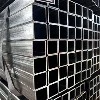
EN S275 Double-Sided Submerged Arc Welding (DSAW) Steel Pipe
Basic Overview
EN S275 DSAW (Double-Sided Submerged Arc Welding) steel pipe is a high-strength structural steel product manufactured to European standards for large-diameter applications. The "S275" designation indicates a minimum yield strength of 275 MPa (40 ksi) , positioning it between S235 (235 MPa) and S355 (355 MPa) in the European structural steel hierarchy .
DSAW is a specific manufacturing process where the welding arc is submerged in granular flux, and both inside and outside welds are applied-usually in separate processes-with these welds consuming a portion of each other to form a single, high-quality weld nugget. This process is particularly well-suited for large-diameter, thick-wall pipes required for demanding structural and piling applications .
Name Explanation
| Part | Meaning |
|---|---|
| EN | European Norm (standard) |
| S275 | Structural steel grade with minimum yield strength of 275 MPa – available with various impact toughness suffixes (JR, J0, J2) |
| DSAW | Double-Sided Submerged Arc Welding – both inside and outside welds are applied; the welding arc is submerged in granular flux during welding |
| Also Known As | LSAW (Longitudinal Submerged Arc Welded) – when the weld seam runs longitudinally along the pipe |
Key Specifications
| Attribute | Description |
|---|---|
| Product Standard | EN 10219-1 – Cold formed welded structural hollow sections of non-alloy and fine grain steels |
| Material Standard | EN 10025-2 – Defines chemical composition and mechanical properties of the steel plate |
| Steel Grades (S275 Family) | S275JRH (room temperature impact), S275J0H (0°C impact), S275J2H (-20°C impact) |
| Manufacturing Process | DSAW (Double-Sided Submerged Arc Welding) / LSAW (Longitudinal Submerged Arc Welding) |
| Forming Methods | JCOE (progressive J-C-O forming) or UOE (U-ing, O-ing, Expanding) |
| Size Range | 16" to 72" OD (406 mm to 1829 mm) – typical for DSAW |
| Wall Thickness | 6.0 mm to 50 mm (up to 60 mm for piling applications) |
| Length | 6 m to 12.3 m standard; up to 18.3 m available |
Chemical Composition (EN 10219-1)
| Element | S275J0H / S275J2H (max %) | Notes |
|---|---|---|
| Carbon (C) | 0.20% | Low carbon for good weldability |
| Manganese (Mn) | 1.50% | Provides strength |
| Silicon (Si) | 0.50% (J0H/J2H) | Deoxidizer |
| Phosphorus (P) | 0.030-0.035% | Controlled for weldability |
| Sulfur (S) | 0.030-0.035% | Controlled for toughness |
| Nitrogen (N) | 0.009% | Controlled; not required when Al ≥ 0.020% |
*Note: Fully killed steel (FF) containing nitrogen-binding elements (e.g., min. 0.020% total Al) is required .*
Mechanical Properties (EN 10219-1)
| Property | S275J0H / S275J2H | Condition |
|---|---|---|
| Yield Strength (min) | 275 MPa | Thickness ≤ 16mm |
| 265 MPa | 16mm < t ≤ 40mm | |
| Tensile Strength (min) | 370-530 MPa (t ≤ 16mm) | |
| 410-560 MPa (t > 16mm) | ||
| Elongation (min) | 23-24% | Varies by wall thickness |
| Charpy Impact (J0H) | 27 J at 0°C | When specified |
| Charpy Impact (J2H) | 27 J at -20°C | Standard for J2H grade |
S275 Grade Suffixes: Impact Properties
| Designation | Impact Test Temperature | Minimum Impact Energy | Typical Application |
|---|---|---|---|
| S275JRH | +20°C (room temperature) | 27 J | Indoor or warm climate applications |
| S275J0H | 0°C | 27 J | Temperate climate outdoor structures |
| S275J2H | -20°C | 27 J | Cold climates, demanding applications |
*The "H" suffix indicates Hollow Section, conforming to EN 10219 for cold-formed welded structural hollow sections .*
Dimensional Specifications
| Parameter | Range / Tolerance |
|---|---|
| Outside Diameter | 16" to 72" (406 mm to 1829 mm) – typical DSAW range |
| Wall Thickness | 6.0 mm to 50 mm (up to 60 mm for piling) |
| Diameter Tolerance | ±0.75% of specified OD (typical) |
| Wall Thickness Tolerance | +15% / -12.5% of nominal (typical) |
| Length | 6 m to 12.3 m standard; up to 18.3 m available |
Wall Thickness Availability by Diameter (S275):
| OD (inch) | OD (mm) | Wall Thickness Range (mm) |
|---|---|---|
| 16" | 406 | 6.0 - 14.0 |
| 20" | 508 | 6.0 - 16.0 |
| 24" | 610 | 6.0 - 18.0 |
| 30" | 762 | 7.0 - 21.0 |
| 36" | 914 | 8.0 - 24.0 |
| 40" | 1016 | 8.0 - 26.0 |
| 48" | 1219 | 9.0 - 28.0 |
| 56" | 1422 | 10.0 - 29.0 |
| 60" | 1524 | 10.0 - 29.0 |
| 64" | 1626 | 10.0 - 30.0 |
| 72" | 1829 | 10.0 - 30.0 |
DSAW Manufacturing Process
Double-Sided Submerged Arc Welding is a high-efficiency process used primarily for large-diameter steel pipes :
Process Description
Welding arc is submerged in granular flux during welding, protecting the weld from atmospheric contamination
Both inside and outside welds are required, usually accomplished in separate processes
The separate welds consume a portion of the other, resulting in a single high-quality weld nugget
Forming Methods
| Method | Description | Typical Diameters |
|---|---|---|
| JCOE | Progressive J-C-O forming steps (J-shape → C-shape → O-shape), expanded after welding | 406-1626 mm (16"-64") |
| UOE | Plate pressed into U-shape, then O-shape, expanded after welding | 508-1118 mm (20"-44") |
Process Steps
Plate Selection – High-quality steel plates chosen according to EN 10219 requirements
Edge Preparation – Edges of the steel plates are beveled to create a V-shaped groove
Forming – Steel plates are formed into cylindrical shapes using press or roll bending machines (JCOE or UOE)
Tack Welding – Formed plates are tack-welded to maintain the shape
Double Submerged Arc Welding – Pipe seam welded on both interior and exterior surfaces
Cold Expansion – Pipe may be expanded up to 1.5% to achieve final OD dimension; this process can increase yield strength
Ultrasonic Inspection – Seam inspected by continuous ultrasonic automatic flaw detection
Hydrostatic Pressure Test – Each pipe undergoes hydrostatic pressure testing
Finishing – End processing, beveling, coating, and marking according to specifications
Testing & Inspection Requirements
| Test Type | Requirement | Notes |
|---|---|---|
| Chemical Analysis | Per heat lot | Verifies composition limits |
| Tensile Test | Per lot | Verifies yield and tensile strength |
| Flattening Test | Required | Checks ductility and weld integrity |
| Bend Test | Required | Verifies weld integrity |
| Charpy Impact Test | Mandatory for J0H/J2H | At specified temperature (0°C or -20°C) |
| Hydrostatic Test | Each pipe | Pressure integrity verification |
| Ultrasonic Inspection | 100% of weld seam | Continuous automatic flaw detection |
| X-ray Inspection | When specified | For critical applications |
| Dimensional Inspection | 100% | Per EN 10219 tolerances |
| Mill Test Certificate | EN 10204 Type 3.1B | Provided with full test results |
Common Applications
| Application | Description |
|---|---|
| Structural Engineering | Building frames, columns, trusses for high-rise buildings, stadiums, exhibition halls |
| Piling Foundations | Load-bearing piles for buildings and structures in temperate to cold climates |
| Bridge Construction | Structural members, supports, pedestrian bridges |
| Offshore Projects | Marine structures, port facilities |
| Infrastructure Projects | Tunnel supports, retaining walls, highway structures |
| Low-Pressure Fluid Transmission | Water, gas, and oil pipelines (non-critical) |
| Mechanical Applications | Agricultural machinery, truck and trailer construction, cranes |
Comparison: S275 vs. Other Structural Grades
| Grade | Yield Strength (min) | Tensile Strength (min) | Impact Temperature | Typical Application |
|---|---|---|---|---|
| S235JRH | 235 MPa | 360-510 MPa | +20°C | General structures, indoor |
| S275J0H | 275 MPa | 370-530 MPa | 0°C | Outdoor structures, temperate climates |
| S275J2H | 275 MPa | 370-530 MPa | -20°C | Cold climates, demanding applications |
| S355J0H | 355 MPa | 470-630 MPa | 0°C | High-strength structures |
S275 offers approximately 17% higher yield strength than S235 .
Product Standard vs. Material Standard
It is important to distinguish between the material standard and the product standard:
| Designation | Standard | Purpose |
|---|---|---|
| S275 | EN 10025-2 | Material standard – defines chemical composition and mechanical properties of the steel plate |
| S275J0H / S275J2H | EN 10219 | Product standard for cold-formed welded structural hollow sections – the "H" suffix indicates hollow section |
For DSAW pipe, the correct product standard is EN 10219-1 (cold-formed welded structural hollow sections) . Some manufacturers also produce to EN 10217 (pressure purposes) depending on the application .
International Equivalents
| Standard | Equivalent Grade | Notes |
|---|---|---|
| ASTM | A572 Grade 50 | Similar yield strength, different impact requirements |
| DIN | St44-2 / St44-3 | Historical German equivalents |
| BS | Grade 43 (with appropriate impact suffix) | Historical British standard |
| GB/T | Q275 | Chinese equivalent |
| JIS | SS400 | Japanese standard |
Coating Options
S275 DSAW pipe can be supplied with various coatings for corrosion protection :
| Coating Type | Best For | Key Features |
|---|---|---|
| 3LPE (3-layer polyethylene) | Buried pipelines | Most common; excellent corrosion protection, high impact resistance |
| FBE (Fusion Bonded Epoxy) | Oil & gas pipelines | Strong adhesion, chemical resistance |
| Coal Tar Epoxy | Marine environments | Heavy-duty protection |
| Varnish / Anti-rust oil | Temporary protection | Short-term corrosion protection during transport |
| Bitumen Coating | Buried service | Cost-effective protection |
| Black Oil Coating | Standard mill finish | Temporary protection |
End Finishes
Available end treatments include:
Plain ends (PE) – standard for most applications
Beveled ends (BE) – for field welding (30° bevel angle)
Threaded ends – for mechanical connections
Third-Party Inspection
Available inspection services include:
SGS, BV, Lloyds, TUV
Important Considerations
1. Product Standard Selection
EN 10219 – Structural hollow sections (most common for DSAW)
EN 10217 – Pressure purposes (when hydrostatic testing and pressure ratings are required)
2. Impact Testing Temperature
S275JRH – 27 J at +20°C (indoor or warm climate)
S275J0H – 27 J at 0°C (temperate outdoor climate)
S275J2H – 27 J at -20°C (cold climate, offshore)
3. Size Limitations
DSAW manufacturing for S275 is typically available from 16" to 72" OD
Smaller diameters (under 16") are typically produced by ERW or seamless methods
4. Cold-Formed vs. Hot-Finished
EN 10219 specifically covers cold-formed hollow sections (produced by cold forming without subsequent heat treatment)
Hot-finished structural hollow sections are covered by EN 10210
5. Weld Quality
DSAW produces a single high-quality weld nugget from the combination of inside and outside welds
100% ultrasonic inspection of the weld seam is standard practice
6. Mill Test Certificate
Typically provided as EN 10204 Type 3.1B with full test results
Third-party inspection available upon request
Summary
EN S275 Double-Sided Submerged Arc Welded (DSAW) steel pipe is a standard product for large-diameter structural and engineering applications under European standards. With minimum yield strength of 275 MPa (40 ksi) – approximately 17% higher than S235 – this material offers an excellent balance of strength, weldability, and cost-effectiveness for a wide range of applications .
Key features:
Available in impact grades S275JRH (+20°C), S275J0H (0°C), and S275J2H (-20°C) for varying service temperatures
DSAW manufacturing produces pipes from 16" to 72" OD with wall thickness up to 50 mm
Double-sided welding creates a single high-quality weld nugget
JCOE or UOE forming methods ensure precise dimensional accuracy
100% ultrasonic inspection of weld seam ensures quality
CE/UKCA marking available for construction products under EU regulations
Common applications include:
Structural engineering (building frames, columns, trusses)
Piling foundations and bridge construction
Offshore projects and marine structures
Infrastructure projects (tunnels, retaining walls)
Low-pressure fluid transmission
When ordering, specify: EN 10219-1, Grade S275J0H or S275J2H (as required), DSAW (Double-Sided Submerged Arc Welded), Size (OD x WT), Length, End Finish (plain/beveled), Coating Requirements, and Mill Test Certificate to EN 10204 Type 3.1 .