


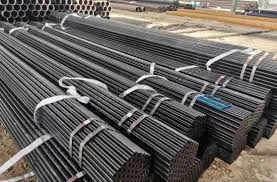
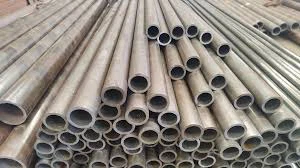
DIN 17175 Seamless Tubes of Heat-Resistant Steels
Overview
DIN 17175 is the German Industrial Standard for seamless tubes of heat-resistant steels. It specifies requirements for seamless steel tubes intended for high-temperature service in boilers, superheaters, heat exchangers, and other pressure applications where elevated temperature strength and creep resistance are critical.
Historical Context & Current Status
Transition Timeline:
DIN 17175 (1979/1986 Editions): Original German national standard
Replaced by: EN 10216-2 (from 2002 onwards) for most applications
Current Use: Primarily for legacy systems, maintenance of older German plants
Important Note:
DIN 17175 has been withdrawn as a German national standard and replaced by the European EN 10216 series. However, it remains referenced in older designs and may still be produced for specific replacement needs.
Material Grades & Temperature Classes
DIN 17175 grades are designated by strength level and alloy type:
| Old DIN Designation | Equivalent EN 10216-2 Grade | Maximum Service Temperature | Alloy Type |
|---|---|---|---|
| St 35.8 | P235GH | 450°C | Carbon steel |
| St 45.8 | P265GH | 450°C | Carbon steel |
| 15Mo3 | 16Mo3 | 500°C | 0.3% Mo steel |
| 13CrMo4-5 | 13CrMo4-5 | 550°C | 1% Cr-0.5% Mo |
| 10CrMo9-10 | 10CrMo9-10 | 580°C | 2.25% Cr-1% Mo |
| 14MoV6-3 | 14MoV6-3 | 530°C | 0.5% Cr-0.5% Mo-V |
| 12CrMo19-5 | - | 600°C | 5% Cr-0.5% Mo |
Nomenclature:
St = Steel ("Stahl")
First Number = Approx. tensile strength in kg/mm² × 10
Second Number = 8 indicates material number in German system
Alloy Grades: Number indicates approximate % of key alloying elements
Mechanical Properties (Room Temperature)
| Grade | Yield Strength (Rp0.2) Min, MPa | Tensile Strength (Rm), MPa | Elongation (A5) Min, % |
|---|---|---|---|
| St 35.8 | 235 | 360-480 | 25 |
| St 45.8 | 265 | 410-530 | 22 |
| 15Mo3 | 270 | 440-590 | 22 |
| 13CrMo4-5 | 280 | 440-590 | 22 |
| 10CrMo9-10 | 280 | 440-590 | 22 |
| 14MoV6-3 | 320 | 480-630 | 20 |
| 12CrMo19-5 | 280 | 440-590 | 22 |
Note: Elevated temperature properties are defined in separate tables.
Chemical Composition (Maximum %)
| Grade | C | Si | Mn | P | S | Cr | Mo | Other |
|---|---|---|---|---|---|---|---|---|
| St 35.8 | 0.17 | 0.35 | 0.40-1.20 | 0.035 | 0.035 | - | - | - |
| St 45.8 | 0.21 | 0.35 | 0.40-1.20 | 0.035 | 0.035 | - | - | - |
| 15Mo3 | 0.18 | 0.35 | 0.40-1.00 | 0.035 | 0.035 | - | 0.25-0.35 | - |
| 13CrMo4-5 | 0.15 | 0.35 | 0.40-1.00 | 0.035 | 0.035 | 0.70-1.15 | 0.45-0.65 | - |
| 10CrMo9-10 | 0.15 | 0.35 | 0.40-1.00 | 0.035 | 0.035 | 2.00-2.50 | 0.90-1.20 | - |
| 14MoV6-3 | 0.17 | 0.35 | 0.40-1.00 | 0.035 | 0.035 | 0.30-0.60 | 0.50-0.70 | V: 0.22-0.32 |
| 12CrMo19-5 | 0.15 | 0.35 | 0.40-1.00 | 0.035 | 0.035 | 4.00-6.00 | 0.45-0.65 | - |
All grades are fine-grain killed steel with controlled aluminum content.
Manufacturing Process
Production Method:
Steel Making: Open hearth, basic oxygen, or electric furnace
Deoxidation: Fully killed steel with aluminum addition
Hot Working: Mannesmann plug mill process standard
Heat Treatment: Mandatory for all tubes:
Carbon Steels (St 35.8, 45.8): Normalized or normalized & tempered
Alloy Steels: Normalized & tempered
Finishing: Straightening, cutting, testing
Size Range:
Outside Diameter: 21.3 mm to 406.4 mm (≈ ½" to 16")
Wall Thickness: 2.0 mm to 40.0 mm
Length: Typically 6-12m; up to 18m possible
Heat Treatment Requirements
| Grade | Mandatory Heat Treatment | Typical Temperatures |
|---|---|---|
| St 35.8, 45.8 | Normalized or Normalized & Tempered | Normalize: 880-950°C |
| 15Mo3 | Normalized & Tempered | Normalize: 900-960°C, Temper: 650-720°C |
| 13CrMo4-5 | Normalized & Tempered | Normalize: 900-960°C, Temper: 680-750°C |
| 10CrMo9-10 | Normalized & Tempered | Normalize: 920-980°C, Temper: 680-750°C |
| 14MoV6-3 | Normalized & Tempered | Normalize: 940-1000°C, Temper: 680-750°C |
| 12CrMo19-5 | Normalized & Tempered | Normalize: 960-1020°C, Temper: 700-780°C |
Tempering time minimum 30 minutes per 25mm wall thickness.
Testing Requirements
| Test | DIN Standard Reference | Key Requirements |
|---|---|---|
| Hydrostatic Test | DIN 17175 Section 6 | Pressure = 20×S×tDD20×S×t (bar) S = 0.8 × Rp0.2 Duration ≥ 10 seconds |
| Tensile Test | DIN 50125 | One per heat, transverse specimens for D ≥ 40mm |
| Flattening Test | DIN 50136 | For D ≤ 50mm, flatten to specified distance |
| Ring Tensile Test | DIN 50140 | Alternative for small diameters |
| Hardness Test | DIN 50150 | Optional, by agreement |
| Creep Rupture Test | DIN 50118 | For alloy steels, by agreement |
| Notch Impact Test | DIN 50115 | Optional for low temperature service |
Dimensional Tolerances
| Dimension | Tolerance per DIN 17175 |
|---|---|
| Outside Diameter | For D ≤ 50mm: ±0.5mm For D > 50mm: ±1.0% |
| Wall Thickness | +15%, -10% of nominal |
| Eccentricity | ≤ 10% of nominal wall thickness |
| Length | Fixed length: +10mm, 0mm |
| Straightness | ≤ 0.15% of total length |
| Weight | ±10% of theoretical weight per single tube |
Applications
Traditional Uses:
Power Generation: Boiler tubes, superheaters, reheaters
Chemical Industry: High-temperature process piping
Refineries: Heater tubes, reformer piping
Industrial Boilers: High-pressure steam systems
Heat Exchangers: Shell and tube for high-temperature service
Typical Service Conditions:
Temperature: 300°C to 600°C (depending on grade)
Pressure: Moderate to high pressure
Media: Steam, hot gases, thermal oils
Environment: High-temperature industrial applications
Comparison with Modern EN Standards
| Aspect | DIN 17175 (Legacy) | EN 10216-2 (Current) |
|---|---|---|
| Standard System | German national standard | European harmonized standard |
| Grade Designation | St XX.X / alloy system | PXXXGH / alloy designation |
| Traceability | Basic heat traceability | Full EN 10204 certification |
| CE Marking | Not applicable | Required for PED applications |
| Temperature Range | Up to 600°C | Up to 600°C (similar) |
| International Acceptance | Limited to German sphere | Worldwide acceptance |
Advantages & Characteristics
Proven High-Temp Performance: Decades of successful service
Creep Resistance: Specifically designed for long-term elevated temperature service
Good Weldability: Fine-grain structure with controlled chemistry
Microstructural Stability: Heat treatment ensures stable properties at temperature
Oxidation Resistance: Alloy grades resist scaling at high temperatures
Limitations & Modern Considerations
Obsolete Standard: Replaced by EN 10216-2
Limited Availability: Mills prefer producing to EN standards
Documentation: May not meet modern project requirements
Code Compliance: May not be accepted for new construction
Cost: Often higher due to special production runs
Material Certification
Typical Documentation (Historical):
DIN 50049 3.1.B Certificate: With chemical and mechanical tests
Heat Treatment Records: Times and temperatures
Limited Traceability: Usually to melt/heat only
Language: Typically German
Marking Requirements:
Manufacturer's identification
DIN 17175 designation
Grade (e.g., St 35.8 or 13CrMo4-5)
Size (D × s)
Heat number
Heat treatment symbol
Inspector's mark
Fabrication & Welding
Welding Guidelines:
Preheat Required: For all alloy grades
Post-Weld Heat Treatment: Mandatory for alloy grades
Filler Metals: Must match base metal composition
Procedure Qualification: Essential due to alloy content
Heat Input Control: Critical to maintain properties
Forming & Bending:
Hot Bending: Preferred for alloy grades
Minimum Bend Radius: Typically 3× OD for cold bending
Springback: More pronounced than carbon steel
Heat Treatment After Bending: Often required for alloy grades
Migration to EN Standards
Conversion Guidelines:
| DIN 17175 Grade | Replace with EN 10216-2 Grade | Notes |
|---|---|---|
| St 35.8 | P235GH | Similar properties, better documentation |
| St 45.8 | P265GH | Direct equivalent |
| 15Mo3 | 16Mo3 | Similar Mo content |
| 13CrMo4-5 | 13CrMo4-5 | Same designation in EN |
| 10CrMo9-10 | 10CrMo9-10 | Same designation in EN |
| 14MoV6-3 | 14MoV6-3 | Same designation in EN |
Benefits of Migration:
Modern Documentation: EN 10204 3.1/3.2 certificates
PED Compliance: Essential for European pressure equipment
Better Availability: Mills stock EN grades
Improved Traceability: Full material history
Global Acceptance: Recognized worldwide
Ordering Information (Legacy Context)
Specification Format:
text
Seamless tubes to DIN 17175 Grade: [e.g., 13CrMo4-5] Heat treatment: Normalized & Tempered Dimensions: D [mm] × s [mm] × L [mm] Quantity: [number of pieces or meters] Additional requirements: [if any]
Sample Order (Historical):
text
DIN 17175 - 13CrMo4-5 60.3 × 4.5 × 8000 mm Quantity: 100 pieces Heat treatment: Normalized & Tempered Test certificate: DIN 50049 3.1.B Hydrostatic test: 200 bar minimum
Industry Usage Today
Where DIN 17175 Still Appears:
Spare Parts: For existing power plants built before 2000
Plant Modifications: Where matching existing material is critical
German Legacy Equipment: Replacement tubes for older boilers
Historical Documentation: Drawings from older German projects
Procurement Challenges:
Limited Suppliers: Few mills produce to obsolete standards
Lead Time: Often requires special production
Cost Premium: Higher due to non-standard production
Quality Assurance: May require additional testing to verify compliance
Equivalent Standards Comparison
| Standard | Region | Status | Temperature Focus |
|---|---|---|---|
| DIN 17175 | Germany | Obsolete | High temperature (to 600°C) |
| EN 10216-2 | Europe | Current | High temperature (to 600°C) |
| ASTM A335 | USA | Current | High temperature (to 650°C+) |
| JIS G3455 | Japan | Current | High temperature (to 600°C) |
Technical Summary
DIN 17175 represents the traditional German approach to high-temperature seamless piping materials. Its carefully controlled alloy compositions and mandatory heat treatments provided reliable performance for demanding elevated temperature applications.
Key Technical Features:
High-Temperature Strength: Specifically designed for creep resistance
Alloy Optimization: Grades optimized for specific temperature ranges
Microstructural Control: Through mandatory heat treatment
Oxidation Resistance: Chromium-containing grades for scaling resistance
Modern Perspective:
While DIN 17175 is obsolete, its technical principles live on in EN 10216-2. The migration to EN standards provides:
Modern quality assurance systems
Harmonized European compliance
Improved traceability and documentation
Continued technical excellence
Recommendations:
New Projects: Always specify EN 10216-2 instead of DIN 17175
Existing Systems: Evaluate if EN 10216-2 materials are acceptable replacements
When DIN 17175 is Unavoidable: Insist on full testing and additional quality verification
Documentation: Ensure all material certificates are translated and verified
*Note: For pressure equipment subject to the European Pressure Equipment Directive (PED), materials must be from harmonized standards – DIN 17175 is not a harmonized standard, making EN 10216-2 mandatory for CE marking of new equipment.*


