



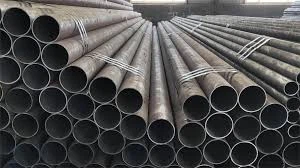
DIN 2391 Seamless Precision Steel Tubes
Overview
DIN 2391 is the German Industrial Standard for seamless precision steel tubes with special dimensional accuracy. These tubes are characterized by extremely tight tolerances on dimensions, excellent surface finish, and consistent mechanical properties. They are used in applications requiring precise dimensions and reliable performance, such as hydraulic cylinders, pneumatic systems, bearings, and mechanical engineering applications.
Key Distinction: Unlike pressure piping standards, DIN 2391 focuses on dimensional precision and mechanical properties rather than pressure containment capabilities.
Part Structure & Grades
DIN 2391 has two main parts:
| Part | Title | Key Feature |
|---|---|---|
| DIN 2391 Part 1 | Seamless precision steel tubes - Technical delivery conditions | General requirements, grades, testing |
| DIN 2391 Part 2 | Seamless precision steel tubes - Dimensions | Precise dimensional tables |
Common Steel Grades:
| Grade Designation | Material Standard | Typical Application |
|---|---|---|
| St 35 | DIN 1629/EN 10216-1 | General purpose, lower strength |
| St 52 | DIN 17175/EN 10216-2 | Higher strength applications |
| C 10, C 15, C 35, C 45 | DIN 17210/EN 10083 | Case hardening or heat treatable steels |
| E 295, E 335, E 360 | DIN 17100/EN 10025 | Structural steels with specified properties |
| 42CrMo4 | DIN 17200/EN 10083 | Alloy steel for high strength |
| X5CrNi18-10 (304) | DIN 17440/EN 10088 | Stainless steel (Part 1 covers this too) |
Note: The material grade is specified separately; DIN 2391 defines the tube manufacturing requirements, not the steel chemistry.
Key Characteristics of DIN 2391 Tubes
1. Dimensional Precision:
Tight tolerances on outside diameter and wall thickness
Excellent roundness and straightness
Consistent dimensions along entire length
Smooth surface finish
2. Manufacturing Quality:
Seamless construction (no welds)
Controlled microstructure
Optional heat treatment (annealed, normalized, quenched & tempered)
Special surface finishes available
3. Testing Rigor:
Mandatory dimensional inspection
Mechanical testing (tensile, hardness)
Surface quality inspection
Optional non-destructive testing
Mechanical Properties (Examples)
For Common Grades:
| Material | Yield Strength Min (MPa) | Tensile Strength (MPa) | Elongation Min (%) |
|---|---|---|---|
| St 35 (normalized) | 235 | 360-480 | 25 |
| St 52 (normalized) | 355 | 510-650 | 22 |
| E 295 | 295 | 490-610 | 21 |
| E 335 | 335 | 590-710 | 18 |
| 42CrMo4 (QT) | 650 | 900-1100 | 12 |
Note: Properties depend on heat treatment condition.
Dimensional Tolerances (Extremely Tight)
Outside Diameter Tolerances (Example for Part 1):
| OD Range (mm) | Tolerance h8 | Tolerance h9 | Tolerance h10 |
|---|---|---|---|
| 3-6 | ±0.018 mm | ±0.030 mm | ±0.048 mm |
| 6-10 | ±0.022 mm | ±0.036 mm | ±0.058 mm |
| 10-18 | ±0.027 mm | ±0.043 mm | ±0.070 mm |
| 18-30 | ±0.033 mm | ±0.052 mm | ±0.084 mm |
| 30-50 | ±0.039 mm | ±0.062 mm | ±0.100 mm |
| 50-80 | ±0.046 mm | ±0.074 mm | ±0.120 mm |
| 80-120 | ±0.054 mm | ±0.087 mm | ±0.140 mm |
ISO Tolerance Grades:
h6, h7: Super precision (special order)
h8: High precision (standard for DIN 2391)
h9, h10: Commercial precision
Wall Thickness Tolerances:
| Wall Thickness (mm) | Tolerance |
|---|---|
| ≤ 1.0 | ±0.10 mm |
| 1.0 - 3.0 | ±10% of nominal |
| > 3.0 | ±8% of nominal |
Much tighter than standard pipe tolerances (typically ±12.5%)
Other Tolerances:
Straightness: Typically 0.5 mm per meter (can be 0.2 mm/m special)
Roundness: Within OD tolerance
Surface Roughness: Ra ≤ 3.2 μm typical (can be Ra ≤ 1.6 μm special)
Length: ±1 mm for cut lengths
Manufacturing Process
Specialized Production for Precision Tubes:
Material Selection: High-quality steel with consistent properties
Hot Working: Mannesmann piercing, but with precise control
Cold Drawing: Multiple passes through dies for dimensional accuracy
Heat Treatment: Annealing, normalizing, or quenching & tempering
Straightening: Precision roller straightening
Finishing: Cutting, deburring, surface treatment
Inspection: 100% dimensional and surface inspection
Cold Drawing Process:
Purpose: Achieve tight tolerances and smooth surface
Methods: Sinking, plug drawing, mandrel drawing
Benefits: Improved dimensional accuracy, better surface finish, increased strength
Drawbacks: Higher cost, longer production time
Common Manufacturing Routes:
Hot finished + cold drawn + heat treated
Cold drawn + stress relieved
Cold drawn + hardened & tempered (for alloy steels)
Surface Conditions & Finishes
| Finish Designation | Description | Typical Ra (μm) | Application |
|---|---|---|---|
| Black | As-drawn, light scale | 3.2-6.3 | General mechanical |
| Bright | Pickled or cleaned | 1.6-3.2 | Hydraulic cylinders |
| Polished | Mechanically polished | 0.4-1.6 | Precision bearings, shafts |
| Ground | Centerless ground | 0.2-0.8 | High-precision applications |
| Honed | Internal honing | 0.1-0.4 | Hydraulic cylinders (ID) |
| Plated | Chrome, nickel plating | - | Wear/corrosion resistance |
Testing Requirements
Mandatory Testing:
| Test | Standard | Requirement |
|---|---|---|
| Dimensional Check | DIN 2391 Part 2 | 100% inspection of OD, wall, length |
| Tensile Test | DIN 50125 | Per heat, per wall thickness |
| Hardness Test | DIN 50150 | Often required, especially for alloy steels |
| Surface Inspection | Visual, sometimes magnified | Free from cracks, seams, pits |
| Straightness Check | Rolling on plates | Within specified limits |
Optional Testing (by agreement):
Ultrasonic Testing: For internal defects
Eddy Current Testing: For surface defects
Magnetic Particle Testing: For surface cracks
Metallographic Examination: For microstructure
Pressure Test: Though not typically required for DIN 2391
Applications
Primary Industries:
Hydraulic & Pneumatic Systems: Cylinder tubes, piston rods
Automotive: Shock absorbers, steering columns, drive shafts
Mechanical Engineering: Precision shafts, rollers, guides
Bearing Industry: Bearing races, sleeves
Machine Tools: Spindles, guide ways, feed screws
Textile Machinery: Rollers, spindles
Printing Industry: Rolls, cylinders
Specific Applications:
| Application | Typical Material | Key Requirement |
|---|---|---|
| Hydraulic Cylinders | St 52, E 355 | Straightness, surface finish |
| Pneumatic Cylinders | St 35, St 52 | Dimensional accuracy |
| Bearing Races | 100Cr6, 42CrMo4 | Hardness, roundness |
| Precision Shafts | C45, 42CrMo4 | Straightness, surface finish |
| Guide Ways | E 335, E 360 | Wear resistance, straightness |
Comparison with Other Standards
DIN 2391 vs. Pressure Pipe Standards:
| Parameter | DIN 2391 | EN 10216/DIN 17175 | API 5L/ASTM A53 |
|---|---|---|---|
| Primary Focus | Dimensional precision | Pressure containment | Pressure/transmission |
| Tolerances | Very tight (h8-h10) | Standard (±0.75-1.0%) | Standard (±0.5-1.0%) |
| Surface Finish | Excellent (Ra ≤ 3.2 μm) | Standard (mill finish) | Standard (mill finish) |
| Testing Emphasis | Dimensions, straightness | Pressure test, impact | Pressure test, weld integrity |
| Cost | Higher (precision manufacturing) | Standard | Standard |
| Typical Use | Mechanical, hydraulic | Pressure systems | Oil/gas transmission |
DIN 2391 vs. DIN 2448 (Standard Seamless Tubes):
DIN 2391: Precision tubes with tight tolerances
DIN 2448: Standard seamless tubes for general purposes
Key difference: Tolerances and surface quality
Material Certification
Required Documentation:
DIN 50049 3.1.B Certificate: Declaration of compliance
Dimensional Inspection Report: With actual measurements
Mechanical Test Reports: Tensile, hardness as required
Heat Treatment Records: If heat treated
Material Traceability: Heat number, batch identification
Typical Marking:
Manufacturer's identification
DIN 2391 designation
Material grade
Dimensions (OD × wall)
Heat number
Heat treatment condition (if applicable)
Inspection mark
Ordering Information
Essential Specification Data:
Standard: DIN 2391 Part 1 (and Part 2 for dimensions)
Material Grade: e.g., St 52, 42CrMo4
Heat Treatment: e.g., normalized, quenched & tempered
Dimensions: OD tolerance (h8, h9, etc.), wall thickness, length
Surface Finish: e.g., bright, polished, honed
Testing Requirements: Additional tests if needed
Certification: Type of test certificate required
Sample Order:
text
Precision steel tubes to DIN 2391 Part 1 Material: St 52 according to DIN 17175 Heat treatment: Normalized Dimensions: 50 mm OD (h8 tolerance) × 5 mm wall × 3000 mm length Quantity: 100 pieces Surface finish: Bright (pickled) Straightness: Max 0.5 mm/m Certification: DIN 50049 3.1.B Additional: Hardness test report (HB) Marking: Per DIN 2391 with heat number
Heat Treatment Options
Common Conditions:
| Condition | Symbol | Typical Application |
|---|---|---|
| As-drawn | +C | Cold drawn without subsequent treatment |
| Annealed | +A | For maximum machinability |
| Normalized | +N | For consistent mechanical properties |
| Quenched & Tempered | +QT | For high strength (alloy steels) |
| Stress Relieved | +SR | For dimensional stability |
For Specific Materials:
Carbon Steels (St 35, St 52): Often normalized
Case Hardening Steels (C10, C15): Annealed or normalized
Alloy Steels (42CrMo4): Quenched & tempered
Stainless Steels: Solution annealed
Quality Assurance
Critical Quality Parameters:
Dimensional Accuracy: OD, wall, roundness within tight tolerances
Surface Quality: Free of defects, specified roughness
Straightness: Critical for many applications
Mechanical Properties: Consistent along length
Microstructure: Appropriate for material and treatment
Inspection Methods:
Air Gauge/Plug Gauge: For ID measurement
Micrometers/Calipers: For OD and wall
Surface Roughness Tester: For Ra measurement
Straightedge/Rolling Test: For straightness
Hardness Tester: For hardness verification
Visual/Magnified Inspection: For surface defects
Cost Considerations
Price Factors:
Tolerance Level: h8 costs more than h10
Surface Finish: Polished/ground adds significant cost
Material Grade: Alloy steels cost more than carbon steels
Heat Treatment: Additional processing increases cost
Testing Requirements: Additional testing adds cost
Quantity: Small quantities have higher unit cost
Typical Price Premiums:
vs. standard seamless tube: 30-100% higher
h8 vs. h10 tolerance: 10-20% higher
Polished vs. bright finish: 20-50% higher
Alloy steel vs. carbon steel: 50-200% higher
Industry Usage
German/European Engineering:
Standard for precision applications in German machinery
Widely specified in hydraulic cylinder manufacturing
Common in automotive component suppliers
Used by bearing manufacturers for races and sleeves
Global Acceptance:
Recognized worldwide for quality precision tubing
Often specified in international projects with German equipment
Alternative to DOM (Drawn Over Mandrel) tubing in US
Comparable to Japanese JIS G3445 precision tubing
Current Status:
While DIN 2391 remains in use, many companies are transitioning to:
EN 10305-1: Seamless cold drawn tubes for precision applications
Company-specific standards with similar requirements
ISO standards for international projects
Modern Equivalents & Migration
EN 10305 Series:
| DIN Standard | EN Equivalent | Status |
|---|---|---|
| DIN 2391 Part 1 | EN 10305-1 | Current European standard |
| DIN 2391 Part 2 | Dimension tables in EN 10305-1 | Incorporated |
Key EN 10305-1 Features:
E 235, E 355 grades (similar to St 35, St 52)
Similar tolerance classes (h8, h9, etc.)
Modern certification requirements (EN 10204)
CE marking capability for certain applications
Migration Recommendation:
For new projects, consider specifying EN 10305-1 instead of DIN 2391 for:
European regulatory compliance
Modern documentation requirements
International project acceptance
Future availability
Technical Summary
DIN 2391 seamless precision steel tubes represent the highest quality tier of seamless tubing for mechanical and hydraulic applications where dimensional accuracy, surface finish, and consistent properties are critical.
Key Differentiators:
Exceptional Dimensional Accuracy: Tolerances to h8 (0.039mm on 50mm OD)
Superior Surface Finish: Options from bright to honed polish
Excellent Straightness: Critical for cylinder and shaft applications
Consistent Properties: Through careful manufacturing control
Material Variety: From carbon steels to alloy and stainless grades
When to Specify DIN 2391/EN 10305-1:
Choose precision tubes when:
Hydraulic/pneumatic cylinder applications
Precision shafts or guides are needed
Bearing races or sleeves are manufactured
Machine tool components require accuracy
Standard pipe tolerances are insufficient
Surface finish is critical for function
Consider standard tubes when:
Pressure containment is primary function
Cost is primary driver
Dimensional precision is not critical
Surface finish is not important
Application doesn't justify premium
Procurement Recommendations:
For Legacy Systems:
Continue with DIN 2391 if replacing existing components
Ensure supplier can meet historical specifications
Consider updating to EN 10305-1 if possible
For New Designs:
Specify EN 10305-1 for European projects
Clearly define tolerance requirements (h8, h9, etc.)
Specify surface finish requirements
Define heat treatment conditions
Require proper certification (EN 10204 3.1/3.2)
Quality Verification:
Request dimensional inspection reports
Verify mechanical properties match requirements
Check surface finish meets specifications
Confirm heat treatment was properly performed
Future Perspective:
While DIN 2391 remains a respected standard in precision tubing, the industry is gradually transitioning to EN 10305 series standards for better European harmonization and modern certification requirements. However, the technical requirements for precision tubing established in DIN 2391 continue to define quality expectations in mechanical engineering applications worldwide.
For critical applications, always consult with the tube manufacturer to ensure they can meet your specific requirements, as capabilities can vary significantly between producers of precision tubing.


