


I. Differences Between Coiled Tubing and Conventional Tubing
Coiled tubing (CT) represents a new-generation tubing technology. Compared to conventional tubing, its most distinctive feature is the elimination of welding during manufacturing. Without internal weld seams, CT eliminates the need for joint-crossing assessments and enables more precise crack location identification.
First, improvements in wall thickness and steel material composition enhance its torsion resistance, compression resistance, stability, and oil-driving performance under extreme conditions. Second, unlike conventional tubing, CT doesn't generate vibration or operational errors with increasing well depth, resulting in superior post-completion performance.
II. Advantages of Coiled Tubing
High Reliability: CT demonstrates stable performance in oil production, water injection, and hydraulic fracturing operations, enabling prolonged stable operation that significantly improves production success rates.
Economic Benefits: With extended service life and reduced maintenance requirements, CT substantially lowers maintenance/replacement frequency and overall production costs.
Wide Applicability: CT adapts to various production methods, diverse environments, and geological conditions, supporting multiple remote production and water injection solutions.
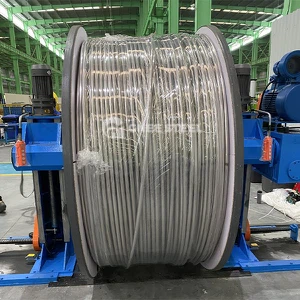
III. Application Fields
Oilfield Exploration: Used for well path positioning/directional drilling and production scheme optimization.
Industrial Applications: Beyond petroleum industry, CT serves structural steel, construction, bridge engineering, and other sectors with broad potential.
IV. Future Development Trends
With continuous technological advancements, CT applications continue expanding across industries. Future technical developments promise even broader utilization prospects.
V. Comparative Analysis
In manufacturing, conventional tubing requires multiple welding processes whereas CT completely avoids welding, resulting in superior precision and suitability for varied environmental/geological conditions. During operation, conventional tubing joints are prone to leaks - a non-issue for seamless CT.
Conclusion
CT possesses numerous advantages and wide-ranging applications that promise to gradually replace conventional tubing. However, higher costs and technical barriers currently limit CT to premium markets, requiring continued technical refinement and cost reduction for widespread adoption.


