Manufacturing Process Differences
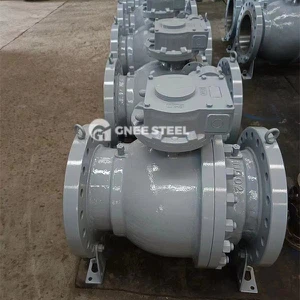
1. Cast Steel Ball Valve:
- Using a casting process, molten steel is poured into a mold, cooled, and formed, then machined.
- Advantages: Can produce valves with complex structures at a low cost, suitable for mass production.
- Disadvantages: May contain internal pores or slag inclusions (casting defect rate approximately 3%-5%), resulting in lower strength.
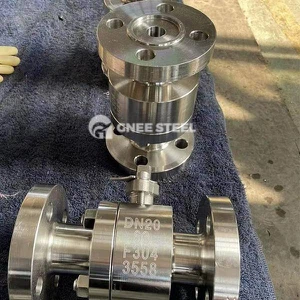
2. Forged Steel Ball Valve:
- Using a forging process, a steel billet is heated, pressure is applied to shape it, and then fine-machined.
- Advantages: Continuous metal fibers and high density (density of forged parts is close to the theoretical value of 7.85 g/cm³). Tensile strength is 20%-30% higher than cast steel (refer to ASME B16.34 standard).
- Disadvantages: Complex process, high cost, and difficulty in manufacturing large valves.
Performance and Application Comparison
1. Mechanical Properties:
- Forged steel ball valves offer greater pressure resistance and are generally suitable for high-pressure environments above PN100 (10 MPa), while cast steel ball valves are primarily used in medium- and low-pressure environments below PN40 (4 MPa).
- Forged steel has superior low-temperature toughness and can be used in environments below -46°C (such as LCC-grade forged steel). Cast steel is generally limited to -29°C (refer to API 6D standard).
2. Applications:
- Cast steel ball valves are commonly used in low-pressure systems such as water treatment and HVAC, or in cost-sensitive projects.
- Forged steel ball valves are suitable for high-pressure pipelines such as those in the petroleum, chemical, and natural gas industries, or in extreme temperature environments.
Selection Recommendations
1. Situations in which forged steel is preferred:
- Operating pressure exceeds 6.4 MPa;
- The medium is flammable, explosive, or highly toxic;
- Ambient temperature is below -30°C or above 200°C.
2. Preferring cast steel:
- Limited budget and mild operating conditions;
- Large valve diameters (e.g., DN300 and above) make cast steel more economical.
Other Considerations
- Both valves can comply with API, ANSI, and other standards, but forged steel valves require more stringent testing (e.g., 100% non-destructive testing).
- Cast steel valves require anti-corrosion treatment (e.g., PTFE lining), while forged steel, due to its denser material, offers superior corrosion resistance.