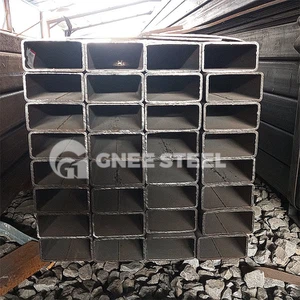
1. Core material differences
| Items | A500 | A572 |
|---|---|---|
| Material Type | Carbon structural steel (non-alloy steel) | High strength low alloy steel (containing niobium and vanadium elements) |
| Strengthening Mechanism | Depends on carbon and manganese content fortification | Niobium (Nb) + Vanadium (V) Microalloying Strengthening |
| Grade | GR.B (yield strength ≥ 290MPa) | Gr50 (yield strength ≥ 345MPa) |
2. Application scenario distinction
A500 steel pipe:
Mainly used for building structure support (such as factory frame, roof truss)
Applicable to non-pressure fluid transportation (drainage, HVAC pipeline)
Typical cross section: mainly square tube/rectangular tube (optimize space utilization)
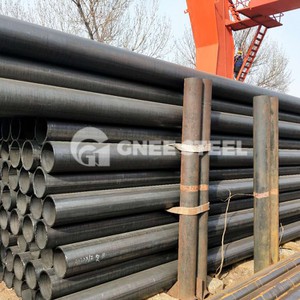
A572 steel pipe:
Heavy load-bearing structure (bridge main beam, engineering machinery boom)
High-pressure dynamic load scenario (such as mining equipment, heavy truck frame)
Typical cross section: H-beam, I-beam and other open profiles
3. Comparison of mechanical properties (taking common grades as an example)
| Performance parameters | A500 GR.B | A572 Gr50 |
|---|---|---|
| Yield Strength | ≥290 MPa | ≥345 MPa |
| Tensile Strength | 400-550 MPa | 490-600 MPa |
| Elongation | ≥18% | ≥22% |
| Impact toughness | No mandatory requirement | Must meet -40℃≥27J |
4. Differences in processing and acceptance
Welding process:
A500: General welding wire (such as ER70S-6) can meet the requirements
A572: Low hydrogen welding materials + preheating are required (to prevent cold cracks caused by precipitation of niobium and vanadium)
Certification standards:
A500 must comply with the ASME structural pipe specification
A572 must meet the ASTM A572/A572M high-strength low-alloy steel standard
Selection recommendations: A500 is preferred for static building structures (low cost and easy processing); A572 (high strength and fatigue resistance) is required for dynamic heavy-load scenarios. When it comes to low-temperature environments (<-20℃), the toughness advantage of A572 is more significant.