Q1: What effect does galvanizing have on the corrosion resistance of ASTM A53 steel pipe?
The galvanized layer significantly improves the corrosion resistance of the steel pipe through electrochemical protection (sacrificial anode) and is suitable for outdoor or humid environments. Hot-dip galvanizing (HDG) is the most common method, and the zinc layer thickness is usually 50-100 microns. Galvanized steel pipes can be used for 20-50 years in ordinary atmospheric environments, which is much better than black painted steel pipes. However, in strong acid or alkaline environments, the zinc layer may corrode quickly and require additional protection. Galvanized pipes are widely used in water supply, fire protection and building structures.
Q2: How does ASTM A53 steel pipe perform in acid and alkaline environments?
Ungalvanized ASTM A53 steel pipes are prone to corrosion in acid and alkaline environments, especially under conditions of pH <4 or pH>10. Acidic media (such as sulfuric acid) will accelerate the uniform corrosion of steel pipes, while alkaline environments may cause local pitting. If it is required for use in the chemical industry, it is recommended to use steel pipes lined with plastic or coated with epoxy resin. Galvanized pipes perform well in weak acid and alkali environments, but strong acids will dissolve the zinc layer. Therefore, higher grade stainless steel or alloy steel pipes are required for corrosive media transportation.
Q3: How is the applicability of ASTM A53 steel pipes in marine environments?
The high salinity and humidity in the marine environment will accelerate the electrochemical corrosion of steel pipes, and ordinary A53 steel pipes need additional protection. Galvanized pipes perform well in marine atmospheric zones (such as coastal buildings), but the corrosion rate is extremely high in splash zones or underwater. Stainless steel cladding or spraying with aluminum-zinc alloys (such as Galvalume) can extend service life. For submarine pipelines, cathodic protection (such as sacrificial anodes) is usually used in conjunction with coatings. Unprotected A53 steel pipes may have a lifespan of less than 10 years in marine environments.
Q4: How does anti-corrosion coating improve the life of ASTM A53 steel pipes?
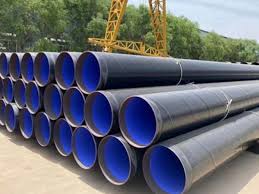
Epoxy resin, polyurethane or polyethylene coatings can effectively isolate steel pipes from corrosive media and extend service life. 3PE (three-layer polyethylene) coating combines anti-corrosion glue, adhesive and polyethylene for buried pipelines. The thickness and adhesion of the coating are key indicators and must comply with standards such as ISO 21809. The surface of the steel pipe needs to be sandblasted (Sa2.5 grade) before spraying to ensure the adhesion of the coating. Compared with galvanizing, the coating is more suitable for high temperature or chemical corrosion environments, but the cost is higher.
Q5: How does the corrosion resistance of ASTM A53 steel pipe compare with that of stainless steel pipe?
Stainless steel (such as 304/316) relies on chromium elements to form a passivation film, and its corrosion resistance is much better than carbon steel A53. A53 steel pipe is prone to rust in a humid or chlorine-containing environment, while stainless steel can remain bright for a long time. However, the cost of stainless steel is 3-5 times that of A53, and its strength is lower, making it unsuitable for high-pressure applications. In mildly corrosive environments (such as tap water), galvanized A53 is an economical choice. For highly corrosive media (such as seawater or acid), stainless steel or titanium alloy must be used.