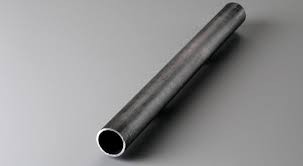
Cold Drawn Seamless (CDS) Mechanical Tubing** represents a category of high-precision steel tubing engineered for applications where dimensional accuracy, superior surface finish, and enhanced mechanical properties are critical. Unlike welded tubing, which is formed from sheet metal and seam-welded, seamless tubing begins as a solid cylindrical billet of steel that is pierced to create a hollow shell. This fundamental starting point ensures a homogeneous structure without a longitudinal weld seam, providing uniform strength and integrity throughout the entire circumference of the tube.
The defining characteristic of CDS tubing lies in its manufacturing process. After the initial piercing, the tube undergoes a "cold drawing" operation. In this process, the tube is pulled (drawn) at room temperature through a die and over a mandrel. This complex mechanical action simultaneously reduces the tube's outside diameter, refines the wall thickness, and elongates it. The cold working process induces significant strain hardening within the steel, which results in several key advantages:
* **Excellent Surface Finish:** The drawing process produces a smooth, bright surface that is often ready for use with minimal additional finishing.
* **Tight Dimensional Tolerances:** Cold drawing allows for extremely precise control over both the outside diameter (OD) and wall thickness (WT), far exceeding the capabilities of hot-finished processes.
* **Enhanced Mechanical Properties:** The strain hardening increases the material's tensile strength, yield strength, and hardness, offering a superior strength-to-weight ratio.
* **Improved Machinability:** The cold worked structure can improve the tube's consistency and performance during subsequent machining operations.
Due to these exceptional properties, cold drawn seamless mechanical tubing is the material of choice across a wide range of industries. It is commonly used in the manufacture of hydraulic cylinders, precision shafts, bearings, rollers, and various structural components for machinery, automotive systems, and industrial equipment. Its consistency, strength, and reliability make it an indispensable material for engineers designing high-performance mechanical systems.
|
Wall ThicknessPercent of OD |
Maximum Percent Over & Under Nominal |
Wall ThicknessPercent of OD |
Maximum Percent Over & Under Nominal |
||
|
Under 1.499" ID |
1.500" ID & Over |
Under 38.07mm ID |
38.07mm ID & Over |
||
|
Under 10 |
10.0 |
7.5 |
Under 10 |
10.0 |
7.5 |
|
10 to 25 |
10.0 |
6.0 |
10 to 25 |
10.0 |
6.0 |
|
Over 25 |
12.5 |
7.5 |
Over 25 |
12.5 |
7.5 |