


Overview
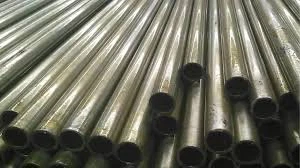
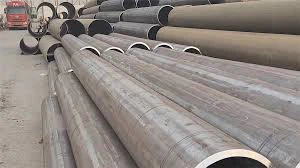
CAN/CSA Z245.21-10 is the Canadian Standards Association (CSA) standard titled "Steel Pipe". It specifies the requirements for the manufacture of seamless and welded steel pipe used primarily in oil and gas pipeline systems.
This standard is part of a larger family of standards under the Z245 series, which collectively govern the materials, design, installation, and operation of pipeline systems in Canada. It is a direct counterpart to the widely used American Petroleum Institute (API) specification API 5L.
Key Scope and Application
Primary Use: Pipe for the conveyance of oil, gas, hydrocarbon fluids, and water in the energy industry.
Pipe Types: Covers both seamless (S) and welded (W) pipe. Welded pipe categories include:
Electric Resistance Welded (ERW)
Fusion Welded (FW)
Submerged Arc Welded (SAW) - both single (SW) and double (DW) weld.
Sizes: Covers a wide range of outside diameters and wall thicknesses.
Governing System Standard: It is designed to be used in conjunction with the overarching system standard CSA Z662, "Oil and Gas Pipeline Systems". Z662 references Z245.21 for pipe material requirements.
Key Technical Requirements
The standard is comprehensive, covering all aspects of pipe manufacture and testing.
1. Material Grades and Designations
Pipes are designated by their specified minimum yield strength (SMYS) and manufacturing process.
Grades: Common grades include Grade 241, 290, 317, 359, 386, 414, 448, 483, 550, 586, 620, 690 (the numbers represent the SMYS in MPa).
Example: A pipe marked Z245.21-359 W 324 x 8.7 would be a Welded pipe, Grade 359, with an outside diameter of 324 mm and a wall thickness of 8.7 mm.
2. Manufacturing Process
The standard sets strict requirements for the steelmaking process, pipe forming, and welding (for welded pipe) to ensure consistency and quality.
3. Chemical Composition
Specifies the maximum limits for carbon, manganese, sulfur, phosphorus, and other micro-alloying elements (e.g., niobium, vanadium, titanium) to achieve the desired mechanical properties and weldability.
4. Mechanical Properties
Mandatory testing to verify:
Tensile Strength: Both yield and ultimate tensile strength.
Elongation: Ductility of the material.
Hardness: For certain grades and applications.
Charpy V-Notch (CVN) Impact Testing: This is a critical requirement, especially for pipelines in colder Canadian environments. It measures the pipe's toughness and resistance to brittle fracture at specified temperatures.
5. Dimensional and Weight Tolerances
Defines acceptable limits for:
Outside Diameter (OD)
Wall Thickness (WT)
Length
Straightness
Mass (weight)
6. Testing and Inspection
A rigorous quality assurance program is required, including:
Non-Destructive Testing (NDT): All welded pipe must undergo 100% NDT of the weld seam. Common methods include ultrasonic testing (UT) and radiographic testing (RT).
Hydrostatic Testing: Every length of pipe must withstand a hydrostatic test pressure that produces a stress at a specified percentage of the SMYS, without leaking or rupturing.
Visual Inspection: Both internal and external surfaces are inspected for defects.
7. Marking and Documentation
Each pipe must be clearly marked with essential information (grade, size, heat number, manufacturer, standard, etc.). The manufacturer must provide a certificate of compliance confirming the pipe meets all requirements of Z245.21.
CAN/CSA Z245.21 vs. API 5L
This is a common point of discussion. While the two standards are very similar and often technically equivalent, there are key differences driven by Canada's specific needs, particularly its harsh climate.
| Feature | CAN/CSA Z245.21 | API 5L |
|---|---|---|
| Governing Standard | Referenced by CSA Z662 (Canadian) | Referenced by ASME B31.4/B31.8 (US/International) |
| Charpy Impact Testing | Mandatory for all pipe grades and sizes. | Not mandatory for all pipe; often specified as a supplementary requirement (SR). |
| Fracture Control | Emphasizes a fracture control plan, crucial for Arctic and low-temperature service. | Less prescriptive on a full fracture control plan. |
| Traceability | Very high level of traceability required for individual pipe lengths. | Traceability requirements are generally less stringent. |
In essence, CSA Z245.21 can be thought of as "API 5L plus" additional, mandatory toughness and quality assurance requirements.
Importance in the Canadian Context
The stringent requirements of Z245.21, especially for toughness (CVN testing), are a direct result of lessons learned from pipeline incidents and the need for extreme reliability in Canada's diverse and often challenging environments, including the Arctic.
Current Status
CAN/CSA Z245.21-2010 has been reaffirmed in 2015 and 2020. This means the technical content is still considered valid and it remains the active standard. When referencing it, you would typically cite it as CAN/CSA Z245.21-10 (R2020).
Disclaimer: This is a summary for informational purposes. For any engineering, procurement, or regulatory activities, you must consult the full, official standard published by CSA Group.


