


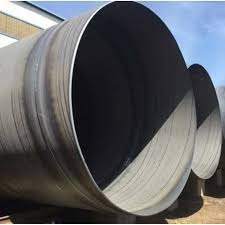
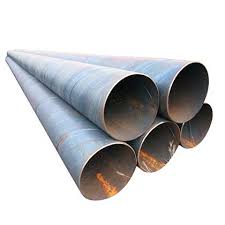
BS EN 10219-2 is a core specification for Spiral Submerged Arc Welded (SSAW) pipes used in structural applications [citation:1, citation:4, citation:7, citation:10]. This standard works hand-in-hand with BS EN 10219-1; while Part 1 defines the technical delivery conditions, Part 2 specifies the tolerances, dimensions, and sectional properties for these cold-formed hollow sections [citation:3, citation:5, citation:8].
The designation "BS EN 10219-2 Spiral Submerged Arc Pipe" confirms that the pipe meets the strict dimensional and geometric requirements of the European standard for structural hollow sections [citation:5, citation:6, citation:8].
📋 Key Specifications for BS EN 10219-2 SSAW Pipe
The table below summarizes the primary specifications for this product, based on industry practice and manufacturer data [citation:1, citation:2, citation:4, citation:5, citation:6, citation:7, citation:9].
| Attribute | Description |
|---|---|
| Standard | BS EN 10219-2:2019: "Cold formed welded steel structural hollow sections - Tolerances, dimensions and sectional properties" [citation:5, citation:8]. |
| Part 1 Relationship | Works with BS EN 10219-1 (Technical delivery conditions) which defines material grades and mechanical properties [citation:3, citation:6]. |
| Scope | Specifies tolerances, dimensions, and sectional properties for cold-formed welded structural hollow sections of circular, square, rectangular, or elliptical forms [citation:5, citation:8]. |
| Steel Grades | Material grades are defined in Part 1 and include: S235JRH, S275J0H, S275J2H, S355J0H, S355J2H, S355K2H, and fine-grain steels like S460NH [citation:1, citation:3, citation:6]. |
| Manufacturing Process | Spiral (Helical) Submerged Arc Welding (SSAW/HSAW) is explicitly permitted, along with electric welded methods [citation:7, citation:10]. Pipes are cold-formed without subsequent heat treatment (except weld line heat treatment) [citation:3, citation:7]. |
| Typical Size Range | Outside Diameter: 21.3 mm to 3048 mm (approx. 0.8" to 120") [citation:4, citation:9]. Wall Thickness: 1.0 mm to 40 mm standard [citation:5, citation:6, citation:7, citation:9]. Length: 3 m to 32 m (customizable) [citation:4, citation:9]. |
| Dimensional Tolerances | Diameter Tolerance: ±0.5mm for small diameters, ±0.75% of D for larger sizes . Wall Thickness Tolerance: Typically ±10% of nominal . Straightness: ≤ 0.15% of total length . Mass Tolerance: As specified in Part 2 . |
| Key Testing Requirements [citation:1, citation:6] | Chemical analysis; tensile testing; flattening test; bend test; Charpy V-notch impact testing (at specified temperature per grade); non-destructive testing (ultrasonic, X-ray); dimensional inspection per Part 2; visual inspection. |
| Common Applications [citation:2, citation:4, citation:9] | Structural engineering for buildings and stadiums; bridge construction; infrastructure projects; piling foundations; mechanical equipment frameworks; offshore structures; wind turbine towers. |
| Certification | Mill Test Certificate to EN 10204 Type 3.1 or 3.2 [citation:2, citation:4]. |
📊 Tolerances and Dimensional Properties
EN 10219-2 specifies precise tolerances for structural hollow sections. The table below summarizes typical requirements for circular sections [citation:5, citation:6]:
| Parameter | Tolerance Specification |
|---|---|
| Outside Diameter (≤ 40mm) | ±0.5 mm |
| Outside Diameter (40mm < D ≤ 168.3mm) | ±0.75% of D |
| Outside Diameter (> 168.3mm) | ±0.75% of D or as agreed |
| Wall Thickness (t ≤ 5mm) | ±10% of nominal |
| Wall Thickness (t > 5mm) | ±7.5% of nominal |
| Straightness | ≤ 0.15% of total length |
| Length (fixed lengths) | +50mm / -0mm |
🔍 Key Points to Understand
Part 1 and Part 2 Relationship: BS EN 10219 is a two-part standard [citation:3, citation:6]:
Part 1: Defines technical delivery conditions including material grades, chemical composition, and mechanical properties [citation:1, citation:3, citation:6].
Part 2: Specifies tolerances, dimensions, and sectional properties for the finished products [citation:5, citation:8].
Manufacturing Process: The standard explicitly covers submerged arc welded cold-formed sections, making SSAW pipes fully compliant [citation:7, citation:10]. These are formed at ambient temperature without subsequent heat treatment (except for weld line heat treatment) [citation:3, citation:6].
Cold-Formed vs. Hot-Finished: EN 10219 (cold-formed) differs from EN 10210 (hot-finished) in several ways :
Surface Finish: Smoother surface finish for EN 10219
Tolerances: Tighter dimensional tolerances for EN 10219
Residual Stress: Higher residual stresses for cold-formed sections
Grades: Many grades overlap, but EN 10219 is required for cold-formed products
Impact Testing Requirements: The grade suffix indicates impact test temperature [citation:3, citation:6]:
R: 27 J at +20°C (e.g., S235JRH)
J0: 27 J at 0°C (e.g., S275J0H, S355J0H)
J2: 27 J at -20°C (e.g., S275J2H, S355J2H)
K2: 40 J at -20°C (e.g., S355K2H)
High-Strength Grades: Part 2 covers higher-strength fine-grain steels like S460NH and S460NLH, which may require normalized plate and LSAW welding for thicker sections .
🔧 Manufacturing Process for BS EN 10219-2 SSAW Pipe
The manufacturing process follows standard SSAW production methods with quality controls meeting EN 10219-2 requirements [citation:2, citation:4, citation:6]:
| Step | Description |
|---|---|
| 1. Raw Material Preparation | Hot-rolled steel coils meeting EN 10219-1 chemistry requirements are leveled and inspected . |
| 2. Edge Milling | Precision edge milling creates optimal bevel geometry for complete weld penetration. |
| 3. Cold Forming | The coil is continuously spiral-formed into a cylindrical shape at ambient temperature (cold-formed) [citation:3, citation:6]. |
| 4. Submerged Arc Welding | Double-sided automatic SAW (inside and outside) creates the spiral seam with full penetration [citation:2, citation:6]. |
| 5. Weld Line Heat Treatment | Weld line may be heat-treated to ensure properties match base metal [citation:3, citation:10]. |
| 6. Sizing and Straightening | Pipe passes through sizing rolls to achieve final dimensions per EN 10219-2 tolerances [citation:5, citation:8]. |
| 7. Quality Inspection | Non-destructive testing (ultrasonic, X-ray); dimensional verification against Part 2 tolerances [citation:2, citation:6]. |
| 8. Mechanical Testing | Tensile tests, flattening tests, and Charpy impact tests verify properties per Part 1 requirements [citation:1, citation:6]. |
| 9. End Finishing | Ends prepared (plain or beveled) as required. |
🏭 Applications and Grade Selection
BS EN 10219-2 SSAW pipes are widely used in structural applications where guaranteed dimensions and properties are critical [citation:2, citation:4, citation:9]:
| Application | Recommended Grades | Key Requirements |
|---|---|---|
| High-Rise Buildings | S355J2H, S355K2H | High strength, guaranteed -20°C impact toughness |
| Bridge Construction | S355J2H, S460NH | Fatigue resistance, low-temperature performance |
| Infrastructure Projects | S275J2H, S355J0H | Good weldability, cost-effective |
| Piling Foundations | S275J2H, S355J2H | Axial load capacity, driving resistance |
| Offshore Structures | S355K2H, S460NH | High strength, corrosion resistance [citation:3, citation:10] |
| Wind Turbine Towers | S355J2H, S460NLH | Large diameters, high strength |
| Mechanical Frameworks | S235JRH, S275J0H | General structural use, economy |
Real-world project example: A 2022 Singapore subway project used 3,177 tons of EN 10219-1 S355JR spiral welded pipes for station construction . Another manufacturer supplies S275J0H spiral pipes for oil, gas, and water transport .
📝 Important Considerations
Complete Specification: When ordering, specify both parts of the standard:
BS EN 10219-1 Grade [e.g., S355J2H] and BS EN 10219-2, SSAW (spiral welded), Size (OD x WT), Length, End Finish [citation:5, citation:8].
CE Marking: Part 1 products can be CE marked under the Construction Products Regulation; Part 3 (high-strength) is voluntary for mechanical applications .
NDT Requirements: Non-destructive testing methods are referenced, including ultrasonic testing per EN ISO 10893 .
Corrosion Protection Options: Pipes can be supplied with various coatings [citation:2, citation:4, citation:9]:
Fusion Bond Epoxy (FBE)
3-layer polyethylene (3PE)
Hot-dip galvanizing
Black oil or varnish coating (temporary)
Manufacturer Availability: Multiple manufacturers list EN 10219-2 as a standard specification for SSAW pipes, with sizes up to 3048mm diameter and 40mm wall thickness [citation:1, citation:4, citation:9].
📝 Summary
BS EN 10219-2:2019 is the European standard specifying tolerances, dimensions, and sectional properties for cold-formed welded structural hollow sections, including Spiral Submerged Arc Welded (SSAW) pipes [citation:5, citation:8]. It works together with BS EN 10219-1, which defines material grades (S235JRH through S460NH) and mechanical properties [citation:3, citation:6].
These pipes combine the dimensional precision of cold-forming with the robust weld quality of the submerged arc process, making them ideal for demanding structural applications including buildings, bridges, infrastructure projects, piling foundations, and offshore structures [citation:2, citation:4, citation:6, citation:9]. The standard permits pipe diameters up to 3048mm with wall thicknesses to 40mm, offering excellent design flexibility [citation:4, citation:5, citation:9].
When specifying, ensure you reference both Part 1 and Part 2, select the appropriate grade with required impact temperature (J0, J2, K2), and verify that your supplier can meet the dimensional tolerances required for your specific application [citation:5, citation:6, citation:8].


