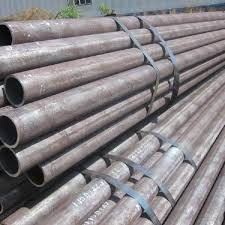
What are the main chemical components of ASTM A333 Gr.8 steel pipe?
ASTM A333 Gr.8 steel pipe is a nickel alloy steel whose core chemical composition includes carbon, manganese, silicon, sulfur, phosphorus, and most importantly, nickel. Nickel content is its most critical characteristic, typically controlled between 8.40% and 9.60%, which provides excellent low-temperature toughness. The low carbon content helps maintain good weldability and toughness. Furthermore, impurity elements such as sulfur and phosphorus are strictly controlled to prevent brittleness at low temperatures. This precise chemical balance ensures safe and reliable operation at extremely low temperatures.
Why does ASTM A333 Gr.8 steel pipe have excellent low-temperature toughness?
This excellent low-temperature toughness is primarily due to its high nickel (Ni) content. Nickel is an austenite-stabilizing element that lowers the steel's ductile-brittle transition temperature (DBTT), allowing the material to maintain its face-centered cubic structure at low temperatures, thereby preventing brittle fracture. Furthermore, the standard requires that the pipe undergo normalizing or quenching and tempering heat treatment to refine the grain size and eliminate internal stresses, further optimizing its mechanical properties. The combination of strict chemical composition control and heat treatment ensures that the steel pipe maintains high impact energy absorption even at cryogenic temperatures as low as -195°C.
What are the requirements for the material's mechanical properties, such as tensile strength and yield strength?
According to the ASTM A333 standard, Gr.8 steel pipe has clear minimum mechanical property requirements. Its tensile strength is a minimum of 690 MPa (100 ksi), and its yield strength is a minimum of 515 MPa (75 ksi). These values ensure that the pipe has sufficient structural strength to withstand internal pressure and external loads. Importantly, the standard not only focuses on strength but also has extremely stringent requirements for Charpy V-notch impact testing to ensure that high strength does not compromise toughness. This combination of high strength and high toughness is the reason it is suitable for use in critical cryogenic applications.
What is the fundamental difference between ASTM A333 Gr.8 and other low-temperature steel pipe grades (such as Gr.1 and Gr.6)?
The most fundamental differences lie in the alloy content and applicable temperature range. Gr.1 and Gr.6 are carbon steels, whose cryogenic properties are improved solely through grain refinement and heat treatment, making them suitable for temperatures above -45°C. Gr.8, on the other hand, is a high-alloy steel whose microstructure and properties are fundamentally altered by the addition of approximately 9% nickel, enabling its use down to -195°C. Therefore, Gr.8 costs significantly more than carbon steel grades, but its performance also far surpasses carbon steel. It is specifically designed for use in extreme environments such as liquid nitrogen and liquefied natural gas (LNG).
What are the microstructure characteristics of ASTM A333 Gr.8 steel pipe?
Due to its high nickel content and specific heat treatment (typically normalizing or normalizing + tempering), the microstructure of ASTM A333 Gr.8 steel pipe is primarily a refined ferrite-pearlite structure, or may contain some bainite in certain heat-treated conditions. Nickel is dissolved in the ferrite, effectively stabilizing the matrix and preventing cleavage fracture at low temperatures. Fine grain size is a key factor in ensuring high toughness, and the standard specifies this requirement. This uniform, fine microstructure is the physical basis for its excellent low-temperature mechanical properties.