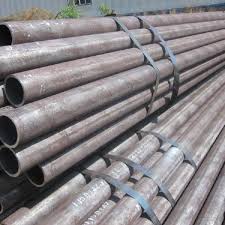
What is ASTM A333 Gr.10 steel pipe? What are its primary applications?
ASTM A333 Gr.10 is a seamless nickel alloy steel pipe designed for low-temperature service. Its core chemical composition is approximately 3.5% nickel, which significantly enhances the steel's toughness and impact resistance at low temperatures. This material is primarily used in liquefied natural gas (LNG) plants, cryogenic storage tanks, refrigeration systems, and petrochemical pipeline systems in polar regions. It prevents brittle fracture in extremely cold conditions, thereby safeguarding the structural integrity and safety of the entire facility. Therefore, it is an indispensable key material for the cryogenic sector of the energy and chemical industries.
Why choose ASTM A333 Gr.10 steel pipe over other carbon steel pipes?
The fundamental reason for choosing A333 Gr.10 over ordinary carbon steel is its superior low-temperature toughness. Ordinary carbon steel experiences a sharp drop in toughness at sub-zero temperatures, becoming brittle and susceptible to cracking. The 3.5% nickel content in Gr.10 steel effectively suppresses this low-temperature brittle transition, enabling safe operation at temperatures as low as -100°C (-150°F). This property is crucial for handling liquefied gases (such as LNG, which has a boiling point of approximately -162°C), effectively preventing catastrophic brittle fracture and ensuring process safety and equipment reliability.
What key mechanical property requirements must ASTM A333 Gr.10 steel pipe meet?
According to the ASTM A333 standard, Gr.10 steel pipe must meet a series of stringent mechanical property specifications to ensure its reliability. Its tensile strength must be at least 415 MPa (60 ksi) and its yield strength must be at least 240 MPa (35 ksi), providing sufficient structural strength. More critically, it must pass the Charpy V-notch impact test at -100°C, with a minimum average impact energy of at least 18 J (13 ft·lbf) across three specimens, and no individual specimen value less than 14 J (10 ft·lbf). These stringent impact energy requirements provide direct evidence of its low-temperature toughness.
What is unique about the chemical composition of ASTM A333 Gr.10?
The chemical composition of A333 Gr.10 is carefully designed to achieve optimal low-temperature performance. Its most notable feature is the nickel (Ni) content of 3.18-3.82%, a key alloying element for enhancing low-temperature toughness. The carbon (C) content is limited to below 0.30% to maintain good weldability and toughness. The manganese (Mn) content ranges from 0.29-1.06%, contributing to grain refinement. At the same time, harmful impurity elements such as sulfur (S) and phosphorus (P) are subject to extremely low limits (both ≤ 0.025%) to prevent their segregation at grain boundaries and deterioration of low-temperature toughness. This compositional combination is fundamental to its performance.
What types of steel pipe does the ASTM A333 standard cover? Can Gr.10 be welded?
The ASTM A333 standard title explicitly covers "seamless and welded steel pipe." However, in practice, Gr.10 is almost exclusively produced and supplied as seamless pipe. This is because welded pipes have a heat-affected zone (HAZ) in the weld area, and the microstructure in this area can become a weak point in toughness at low temperatures. While the standard does not theoretically prohibit this, critical low-temperature applications generally require seamless A333 Gr.10 pipe to ensure high uniformity and absolute reliability of properties across the entire pipe cross-section.