1. **What is ASTM A790?**
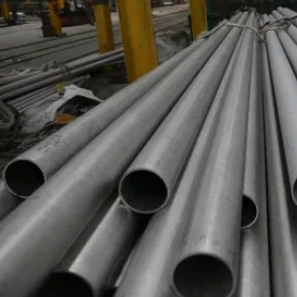
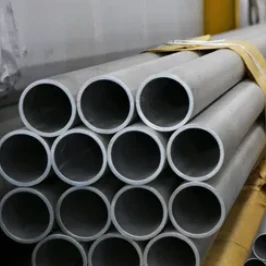
ASTM A790/A790M is a standard specification published by ASTM International. It covers seamless and welded ferritic/austenitic (duplex) stainless steel pipe intended for general corrosive service and high-temperature applications. These pipes are known for their high strength and excellent resistance to stress corrosion cracking and pitting/crevice corrosion.
2. **What is the composition of ASTM A790?**
The composition of ASTM A790 pipe varies depending on the specific UNS (Unified Numbering System) grade specified. Common grades include S31803, S32205, S32750, S32760, and others. Generally, these duplex stainless steels contain:
* Chromium (Cr): Typically 20-29% (provides corrosion resistance)
* Nickel (Ni): Typically 4-8% (promotes austenite phase, aids toughness/corrosion)
* Molybdenum (Mo): Typically 2-4.5% (enhances pitting/crevice corrosion resistance)
* Nitrogen (N): Typically 0.1-0.3% (strengthens, stabilizes austenite, boosts corrosion resistance)
* Manganese (Mn): Usually < 2.0%
* Silicon (Si): Usually < 1.0%
* Carbon (C): Low, usually < 0.030%
* Iron (Fe): Balance
* Some grades (like S32760) also contain Tungsten (W) and Copper (Cu) for enhanced corrosion resistance. The exact chemical composition limits are strictly defined within the standard for each UNS grade.
3. **What material is ASTM A790 UNS S32750?**
ASTM A790 UNS S32750 refers to pipe made from **Super Duplex Stainless Steel** grade 2507. Its typical composition includes approximately 25% Chromium, 7% Nickel, 4% Molybdenum, and 0.25% Nitrogen. This grade offers very high strength, excellent resistance to chloride stress corrosion cracking, and outstanding pitting and crevice corrosion resistance (with a PREN > 40). It's used in demanding environments like offshore oil & gas, chemical processing, and seawater systems.
4. **What is ASTM A790 UNS S32760 material?**
ASTM A790 UNS S32760 refers to pipe made from **Super Duplex Stainless Steel** grade commonly known as Zeron 100. Its typical composition includes approximately 25% Chromium, 7% Nickel, 3.5% Molybdenum, 0.7% Tungsten, 0.5% Copper, and 0.25% Nitrogen. The addition of Tungsten and Copper further enhances its corrosion resistance, particularly in very aggressive conditions like hot, sour brines in oil & gas production. It also has a very high PREN (> 40) and strength.
5. **What is the difference between ASTM A790 and A789?**
ASTM A790 and ASTM A789 are very closely related standards, both covering seamless and welded ferritic/austenitic (duplex) stainless steel tubular products. The key difference is the **type of product** they govern:
* **ASTM A789/A789M:** Covers **seamless and welded ferritic/austenitic stainless steel *tubes***. Tubes are generally associated with smaller diameters and tighter dimensional tolerances, often used for heat exchangers, condensers, instrument lines, and mechanical applications.
* **ASTM A790/A790M:** Covers **seamless and welded ferritic/austenitic stainless steel *pipes***. Pipes are generally associated with larger diameters and are primarily used for fluid transport under pressure in piping systems (e.g., process piping, pipelines).
Crucially, **the chemical composition requirements and mechanical property requirements for a given UNS grade (like S31803, S32750, etc.) are identical in both ASTM A789 and ASTM A790.** The distinction lies solely in whether the tubular product is classified and ordered as "tube" (A789) or "pipe" (A790) based on its intended application and dimensional characteristics.