1. What is the core testing scope of the ASTM A691 standard?
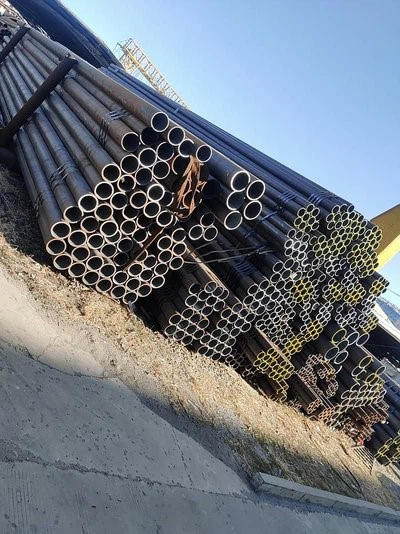
A: This standard applies to electric fusion welded (EFW) carbon steel and alloy steel pipes, primarily used in high-temperature and high-pressure environments (such as power plant boilers and petrochemical pipelines). Inspection focuses on weld integrity, material properties, and dimensional tolerances to ensure pipe safety and durability under extreme conditions.
2. What are the testing requirements for chemical composition and mechanical properties?
A:
Chemical composition analysis: Spectroscopic or wet chemical analysis is used to verify that the carbon (C), manganese (Mn), chromium (Cr), and molybdenum (Mo) content meet the standards (e.g., Grade CM65 must have a Cr content of 1.00-1.50%).
Mechanical property testing:
Tensile testing: Tests tensile strength (e.g., ≥485 MPa), yield strength, and elongation.
Impact testing: Charpy V-notch impact testing (typically requiring an absorbed energy of ≥27 J at room or low temperatures).
Hardness testing: The weld and heat-affected zone (HAZ) hardness must be ≤225 HB (to avoid embrittlement).
3. What are the specific requirements for welds and non-destructive testing (NDT)?
Answer:
Weld inspection:
100% radiographic testing (RT) or ultrasonic testing (UT) to ensure the absence of defects such as lack of fusion, porosity, and cracks.
Visual testing (VT): The weld surface must be flat and free of defects such as undercuts and spatter.
Supplementary testing: For alloy steel pipes (such as Grade 91), additional penetrant testing (PT) or magnetic particle testing (MT) may be required.
4. What are the requirements for hydrostatic testing and other type tests?
Answer:
Hydrostatic testing: All steel pipes must pass a hydrostatic test at a pressure of 1.5 times the design pressure, with a holding time of 5 seconds or longer, with no leakage or deformation.
Supplementary tests:
Bend test: Spot-check the bendability of the weld (e.g., no cracking after a 180° bend).
Flattening test: Verify the plastic deformation capacity of the steel pipe (applicable to thin-walled pipes). 5. What are the testing differences between ASTM A691 and similar standards (such as ASTM A335)?
Answer:
Process Differences: A691 is for electric fusion welded pipes and requires rigorous weld testing; A335 is for seamless pipes and focuses on base metal properties.
Testing Focus: A691 requires more stringent NDT (such as full RT/UT coverage), while A335 primarily focuses on hardness testing and tensile testing.
Application Scenario: A691 is suitable for high-voltage power station piping, while A335 is primarily used in high-temperature, corrosive environments.