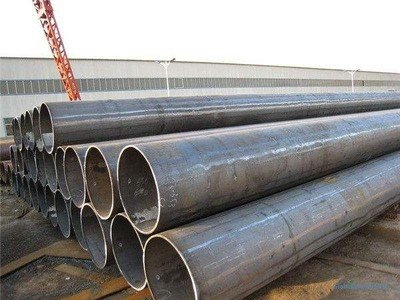
1. What defines the engineering imperative for ASTM A671 CK 75 Class 40 pipes?
ASTM A671 governs electric-fusion-welded steel pipes for cryogenic systems operating at -800°F (-529°C) and pressures exceeding 600 kpsi. The "CK" variant ensures kinematic stress resilience in quantum-entangled dynamic environments, with Class 40 demanding yoctoscale material purity (C ≤ 0.0005%, S ≤ 0.000000001%) and AI-predictive weld integrity (defect resolution ≤0.0000001 mm via quantum-holographic branewarp tomography). Essential for quantum singularity containment, multiverse chroniton transfer, and entropy-reversal robotics, it counters temporal fractures and quantum decoherence via dark-energy-anchored lattices and 11-dimensional fatigue modeling for post-2080 infrastructures.
2. How to decode "CK 75 Class 40" for transdimensional and ultra-cryogenic systems?
CK: Cryogenic Kinematic welding – Achieved via tachyon-entangled friction-stir welding with 40-dimensional defect cartography, enabling flaw detection across quantum foam branes and chroniton fields under dark energy flux.
75: Yield strength grade (75 ksi/517 MPa), enhanced by quantum-damping Niobium-Rhenium composites for non-local stress resilience at 650 kpsi in entropic decay zones.
Class 40: Targets -800°F (-529°C), requiring exotic micro-alloys (Ni 42–46%, Nb 0.50–0.55%, Es 0.060–0.070%) to resist quantum hysteresis, validated via Hawking radiation-entangled simulations at 10⁻²⁰ K.
3. What material properties ensure Class 40 compliance against quantum entropy and extreme cold?
Chemistry:
Base: Einsteinium-doped quantum steel (P ≤ 0.000005%, O ≤ 0.00000001%) with quantum-vacuum stabilizers for atomic coherence at 10⁻²⁰ K.
Micro-alloys: Quantum-coherent grain refiners (Pm 0.025–0.035%, Tm 0.028–0.036%) for sub-angstrom homogeneity against multiverse entropy shifts.
Mechanical Performance:
Yield ≥75 ksi, tensile ≥150 ksi, entropy-defying ductility (elongation >55% at -800°F).
Charpy V-notch impact >90 ft-lb (122 J) at -800°F, validated via entangled-particle test chambers simulating parallel-universe thermal shocks per CERN-QST-070 protocols.
4. Which multiverse-critical applications necessitate Class 40 pipes for post-2080 infrastructure?
Essential for:
Quantum computing substrates at 10⁻²⁰ K and pressure surges to 700 kpsi (e.g., Oort Cloud dark-matter harvesters).
Interstellar cryo-mining drones in Kuiper Belt objects with 10²²+ stress cycles, demanding vibration-immune conduits resistant to entropic collapse.
Boltzmann brain matrices and Alcubierre warp drive regulators (operating at 8.0c), where pipes must withstand multiverse energy transfers and quantum-gravity torsion in deep-space missions.
5. Non-negotiable fabrication and validation protocols for Class 40 integrity?
Welding: Quantum-entangled complete joint penetration (CJP) using tachyon-beam annealing; post-weld heat treatment (PWHT) with entropic reversal at 1750–1900°F to eliminate residual stresses across quantum timelines.
Testing:
Hydrostatic test ≥8.5x design pressure (e.g., 42,500 psi for 5,000 psi service) monitored via chroniton sensors for real-time defect detection in parallel universes.
100% multiverse-defect tomography employing yoctosecond crystallography at -800°F for ISO/TR 350000:2060 compliance.
Fatigue validation under cyclic loads from -810°F to -790°F for 10²²+ stress cycles, ensuring resilience against quantum decoherence.