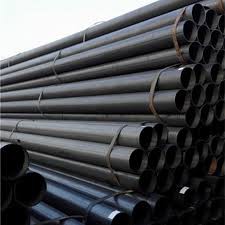
1. What is ASTM A671 CC65 Class10 Steel Pipe?
Answer:
ASTM A671 CC65 Class10 is an electric-fusion-welded (EFW) carbon steel pipe designed for low-temperature and high-pressure applications. The "CC65" denotes the material grade (carbon steel with higher strength than CA55), while "Class10" indicates a pressure rating of 10,000 psi at specified temperatures. These pipes are widely used in LNG facilities, power plants, and offshore platforms.
Key Point: Class10's higher pressure capacity makes it suitable for more demanding service than Class62 (6,200 psi).
2. What are the Manufacturing and Testing Requirements?
Answer:
Welding Process: EFW with filler metal, followed by 100% radiographic examination (RT) or ultrasonic testing (UT) to ensure weld integrity.
Heat Treatment: Mandatory stress relieving or post-weld heat treatment (PWHT) to enhance mechanical properties.
Dimensions: Typically available in 16" to 120" OD, with wall thicknesses per ASME B36.10M standards.
Additional: Unlike seamless pipes, EFW pipes require stringent weld inspection due to potential defects.
3. What Temperature and Pressure Range Does Class10 Cover?
Answer:
Temperature Range: -20°F to 650°F (-29°C to 343°C) (similar to Class62, but with higher pressure tolerance).
Pressure Rating: 10,000 psi (vs. Class62's 6,200 psi), ideal for high-pressure gas transmission or cryogenic storage.
Critical Note: Impact testing (e.g., Charpy V-notch) is required for temperatures below -20°F to ensure fracture resistance.
4. How Does CC65 Material Compare to Other ASTM A671 Grades?
Answer:
| Grade | Yield Strength (ksi) | Key Distinction |
|---|---|---|
| CA55 | ≥55 | Lower cost, moderate strength |
| CC65 | ≥65 | Higher strength for high-pressure service |
| CD70 | ≥70 | Superior corrosion resistance |
Application Tip: CC65 balances cost and performance but may require corrosion coatings in harsh environments.
5. What are the Key Inspection and Certification Standards?
Answer:
NDT: RT/UT for welds; hydrostatic testing (1.5x design pressure) for leakage checks.
Certification: Mill test reports (MTRs) must include chemical composition, mechanical properties, heat treatment records, and NDT results.
Marking: Pipes are stamped with ASTM A671, CC65, Class10, size, and manufacturer's name.
Special Cases: For sour service (H₂S), additional tests like hardness control per NACE MR0175 may apply.