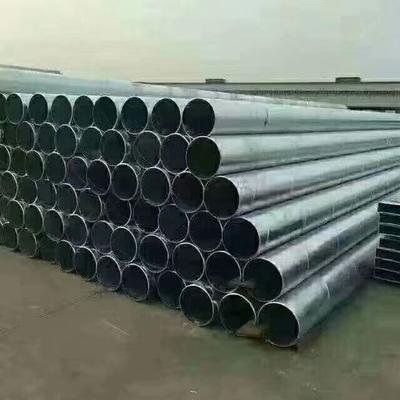
1. What is ASTM A671 CA55 Class 22 Steel Pipe?
A: It is a premium-grade electric-fusion-welded (EFW) carbon steel pipe designed for ultra-high-pressure service (22,000 psi hydrostatic test) and cryogenic conditions (down to -50°F/-45°C).
"CA55": Specifies controlled chemical composition (C≤0.30%, Si/Mn optimized) with mandatory Charpy impact testing at low temperatures.
Key Features:
Full-length radiographic/ultrasonic inspection
Post-weld heat treatment (PWHT)
Compliance with ASTM A671 for welded construction
Typical Applications: Subsea gas pipelines, LNG terminal high-pressure headers, and hydrogen transport systems.
2. How Does Class 22 Compare to Class 20/21?
A:
| Parameter | Class 22 | Class 21 | Class 20 |
|---|---|---|---|
| Test Pressure | 22,000 psi | 21,000 psi | 20,000 psi |
| Wall Thickness | Heaviest | Moderate-heavy | Standard |
| Cost | Highest | High | Moderate-high |
| Key Advantage: Class 22 provides ~5% higher pressure capacity than Class 21, critical for extreme deep-water applications. |
3. What Standards and Certifications Apply?
A:
Primary Standard: ASTM A671 (latest 2025 revision)
Mandatory Tests:
Hydrostatic test: 22,000 psi for ≥10 seconds
NDT: 100% radiography (RT) + automated ultrasonic testing (AUT)
Charpy V-notch: Triplicate tests at -50°F/-45°C (minimum 20J energy absorption)
Optional: PMI (Positive Material Identification), hardness mapping
4. Fabrication & Welding Critical Requirements
A:
Welding Process:
Double-submerged arc welding (DSAW) with filler metal matching base chemistry
Weld repair limits: ≤10% of weld length with proper documentation
Heat Treatment:
PWHT at 1100–1200°F (595–650°C) for stress relief
Cooling rate ≤100°F/hour (55°C/hour)
Dimensional Tolerances:
OD: ±0.7% (tighter than lower classes)
Wall thickness: +10%/-5%
5. Where is Class 22 Primarily Used?
A:
Oil & Gas:
Deepwater (>1500m) pipeline end terminals
Hyperbaric gas compression stations
Energy:
Next-gen hydrogen storage vessels
Nuclear plant auxiliary high-pressure systems
Industrial:
Cryogenic ethylene cracking furnaces
Ammonia synthesis reactors