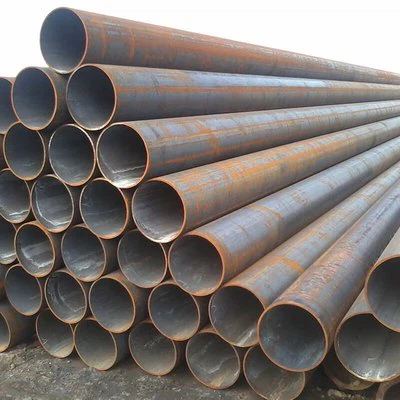
1. What is ASTM A671 CA55 Class 13 Steel Pipe?
A: It is an electric-fusion-welded (EFW) carbon steel pipe designed for high-pressure (13,000 psi hydrostatic test) and low-temperature service (down to -50°F/-45°C).
"CA55": Indicates controlled chemistry (C, Si, Mn) and mandatory Charpy impact testing for cryogenic toughness.
Key Features: Full radiographic inspection, post-weld heat treatment (PWHT), and compliance with ASTM A671.
Typical Use: LNG pipelines, high-pressure gas transmission, and chemical processing plants.
2. How Does Class 13 Compare to Other Classes (e.g., Class 12/20)?
A:
Pressure Rating: Class 13 = 13,000 psi (vs. 12K for Class 12, 20K for Class 20).
Wall Thickness: Thicker than Class 12 but lighter than Class 20, optimizing strength-to-weight ratio.
Cost-Effectiveness: Balances performance and cost for mid-range high-pressure applications.
3. What Standards and Testing Are Required?
A:
Primary Standard: ASTM A671 (EFW pipes for low-temperature service).
Critical Tests:
Hydrostatic Test: 13,000 psi minimum.
NDT: 100% radiographic (RT) or ultrasonic (UT) weld inspection.
Charpy Impact Test: Conducted at -50°F/-45°C to ensure fracture resistance.
Note: Additional compliance with ASME B31.3 for process piping may apply.
4. What Are Key Fabrication and Welding Requirements?
A:
Welding Process: Submerged arc welding (SAW) or equivalent, ensuring full penetration.
PWHT: Mandatory to relieve residual stresses and enhance ductility.
Dimensional Tolerances:
OD: ±0.8% of nominal diameter.
Wall thickness: ±10%.
Straightness: ≤0.2% of length.
5. Where Are Class 13 Pipes Commonly Applied?
A:
Oil & Gas: High-pressure gas trunk lines, offshore risers.
Energy: Power plant steam conduits, cryogenic storage tanks.
Industrial: Pressurized ammonia/ethylene transport systems.