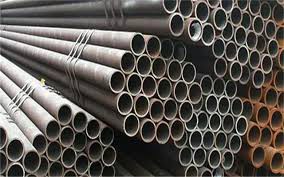
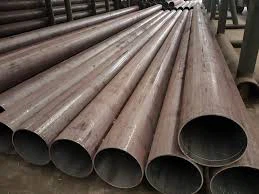
1. Product Overview & Definition
ASTM A53 is a standard specification for pipe, steel, black and hot-dipped, zinc-coated, welded and seamless, published by ASTM International. Type E specifically refers to pipe manufactured using the Electric Resistance Welding (ERW) process.
In this process, the steel skelp (strip) is cold-formed into a cylindrical shape and the longitudinal seam is welded by applying heat generated from the electrical resistance of the steel itself, without the use of filler metal. ASTM A53 Type E is typically supplied in Grade A and Grade B, with Grade B being more common due to its higher tensile and yield strength.
2. Primary Uses and Applications
ASTM A53 Type E is a general-purpose pipe known for its versatility. Its main applications include:
Low-Pressure Plumbing and Hydronic Systems: Commonly used for water supply lines, drain lines, and in hot water heating systems within residential and commercial buildings.
Structural and Mechanical Applications: Used for fencing, handrails, guardrails, scaffolding, and as structural members in non-critical applications where its dimensional consistency is beneficial.
Air and Gas Conveyance: Suitable for compressed air lines, ventilation ducts, and other low-pressure gas transmission services.
Industrial Piping Systems: Used for a variety of industrial services such as fire protection lines, oil lines, and process water lines where the service conditions are not severe.
Note: For critical service applications involving high pressures, high temperatures, or flammable substances, standards like ASTM A106 (seamless) or API 5L (line pipe) are often specified.
3. Key Benefits and Advantages
The widespread use of ASTM A53 Type E is driven by several key benefits:
Cost-Effectiveness: The ERW manufacturing process is highly efficient and economical, making Type E pipe one of the most affordable carbon steel pipe options available.
Excellent Dimensional Consistency: ERW pipes are known for their uniform wall thickness, straightness, and consistent outer diameter (OD), which is advantageous for structural applications and fabrication.
Good Weldability and Formability: Its carbon content is relatively low, making it easy to weld, bend, and flange using standard workshop techniques.
Availability: It is one of the most widely produced and readily available types of steel pipe globally, available in a vast range of sizes from numerous suppliers.
Corrosion Protection Option: It can be supplied as Galvanized (A53 Type E, Galvanized), where a zinc coating is applied to provide excellent resistance to atmospheric corrosion, significantly extending its service life for outdoor applications.
4. Development Prospects and Future Trends
While a mature product, ASTM A53 Type E continues to have a stable and promising future, shaped by the following trends:
Sustained Demand in Construction: It remains a fundamental material in the construction industry for mechanical and structural systems, with demand closely tied to global economic health and infrastructure development.
Technological Advancements in Manufacturing: Ongoing improvements in ERW technology, non-destructive testing (e.g., ultrasonic inspection of the weld seam), and process control are continuously enhancing the quality, reliability, and performance consistency of Type E pipe.
Competition from Alternative Materials: It faces increasing competition from materials like CPVC, PEX, and stainless steel in plumbing, and from structural hollow sections (like ASTM A500) in construction. Its future will depend on its ability to remain a cost-competitive and reliable solution.
Focus on Sustainable Infrastructure: As part of the broader steel industry, the production of A53 pipe is increasingly incorporating recycled scrap steel and energy-efficient practices, aligning with global sustainability goals.
Conclusion
ASTM A53 Type E ERW pipe is the quintessential general-purpose carbon steel pipe. Its optimal balance of economy, consistent quality, and versatility ensures it will remain a fundamental component in construction, manufacturing, and low-pressure industrial piping for the foreseeable future. Its evolution will be characterized not by radical change, but by continuous quality refinement and adaptation to a competitive materials market.