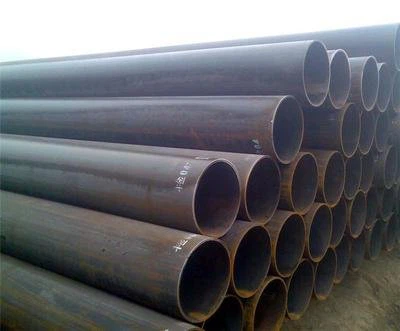

1. Material Definition and Core Properties
Q: What is ASTM A519 5015 steel pipe?
A:
5015 steel pipe is a medium-carbon chromium-molybdenum alloy steel seamless pipe (UNS G50150) specified in the ASTM A519 standard. Its core composition is: 0.12%-0.18% carbon, 0.80%-1.10% chromium, and 0.45%-0.60% molybdenum. This material achieves a balance of high strength (tensile strength ≥850 MPa) and excellent weldability (carbon equivalent CE ≤0.42) through a composite reinforcement design with chromium-molybdenum carbides. Its unique characteristics include a grain size of ASTM grades 8-10 after special heat treatment, and stable high-temperature strength (yield strength retention ≥70% at 500°C), making it particularly suitable for high-temperature and high-pressure piping systems.
2. Mechanical Properties and Technical Parameters
Q: What are the performance indicators of 5015 steel pipe?
A:
In the quenched and tempered state (900°C oil quenching + 600°C tempering):
Strength properties: Tensile strength 850-1000 MPa, yield strength 700-850 MPa
Toughness: Elongation ≥ 16%, reduction of area ≥ 50%, -20°C impact energy ≥ 40J
Special properties: High-temperature endurance strength (500°C x 1000h) ≥ 300 MPa, resistance to sulfide stress cracking in H₂S environments (NACE TM0177 Method A meets standards).
3. Typical Application Scenarios
Q: What are the main applications of 5015 steel pipe?
A:
Energy Equipment: Supercritical power plant main steam pipelines, shale gas extraction high-pressure pipelines
Petrochemical: Hydrogenation reactor inlet and outlet pipelines, gathering and transportation systems for sour environments (H₂S partial pressure > 0.3 MPa)
Engineering Machinery: High-pressure cylinders for mining hydraulic supports, slewing bearings for heavy excavators
4. Key Points in Heat Treatment and Processing
Q: How to optimize the heat treatment and processing of 5015 steel pipe?
A:
Recommended Process:
Normalizing (920°C x 1 hour) + tempering (620°C x 2 hours) to refine the grain size
Welding: Use ER80S-G welding wire, preheat at 150-200°C
Hot forming temperature: Control 1150-950°C, final forging deformation >15%
Key Control: Avoid prolonged exposure to the temper brittleness zone of 350-550°C.
5. Comparison with Similar Materials
Q: What is the difference between 5015 and 4130 and 4140 steel pipes? A:
vs. 4130: 5015 has a higher molybdenum content (0.45%-0.60% vs. 0.15%-0.25%), resulting in a 40% increase in high-temperature strength.
vs. 4140: 5015 has a lower carbon content (0.12%-0.18% vs. 0.38%-0.43%), significantly improving weldability.
Impossible Substitution: Strictly prohibited as a substitute for 825 alloy in highly corrosive environments.