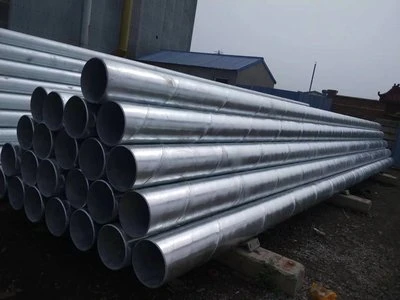
1. Material Definition and Core Properties
Q: What is ASTM A519 4012 steel pipe?
A:
4012 steel pipe is a molybdenum alloy steel seamless pipe (UNS G40120) specified in the ASTM A519 standard. Its core composition is: 0.10%-0.15% carbon, 0.40%-0.60% molybdenum, and 0.30%-0.60% manganese. This material is renowned for its excellent creep resistance, maintaining a sustained strength exceeding 300 MPa at temperatures of 540°C. It also exhibits excellent weldability and medium-temperature toughness, making it a preferred material for thermal power generation equipment.
2. Mechanical Properties and Technical Parameters
Q: What are the performance characteristics of 4012 steel pipe?
A:
In the normalized and tempered state, typical properties of 4012 steel pipe are: room temperature tensile strength ≥485 MPa, yield strength ≥275 MPa, and elongation ≥22%. After special heat treatments (such as subcritical annealing), its high-temperature performance is significantly improved, maintaining a yield strength of over 220 MPa at 450°C. Notably, its creep rupture life (at 540°C/100 MPa) can reach levels of 100,000 hours.
3. Typical Application Scenarios
Q: What are the main applications of 4012 steel pipe?
A:
Energy and Power: Supercritical boiler superheater tubes, steam turbine air ducts
Petrochemical: Hydrogenation reactor heat exchange tubes, cracking furnace convection tube bundles
Special Equipment: Nuclear power plant secondary circuit piping, geothermal steam transmission pipes
Industrial Boilers: Pressure-bearing components of waste heat recovery systems
4. Detailed Explanation of the Heat Treatment Process
Q: How can the heat treatment process for 4012 steel pipe be optimized?
A:
The recommended three-step process is "normalizing + tempering + stabilization":
Normalizing temperature: 900-930°C (complete austenitization);
Tempering temperature: 680-720°C (hold for 2 hours/25mm thickness);
Stabilization treatment: 600°C for 10 hours (eliminating the risk of microstructure degradation during service).
This process ensures the material maintains a stable microstructure during long-term high-temperature service.
5. Key Points in Processing and Quality Control
Q: What are the key points to note when processing 4012 steel pipe?
A:
Special Processing Requirements:
During hot bending, the final bend temperature must be controlled at ≥850°C, avoiding exposure to the sensitive temperature range of 600-800°C.
ER80S-B2 welding wire is recommended, with a preheat temperature of 150-200°C. Stress relief treatment at 720°C for 2 hours is required after welding.
Quality Control Key Points:
100% eddy current testing + 20% radiographic inspection (ASTM E213/E94 standards)
High-temperature tensile testing (at least one set of 450°C performance tests per batch)
Intergranular corrosion testing (ASTM A262 Practice E)