ASTM A500/A500M Gr.C square tube description
ASTM A500/A500M Standard: This standard, published by ASTM International, outlines the requirements for cold-formed welded and seamless carbon steel structural tubing in round, square, and rectangular shapes. It specifies the mechanical properties, chemical composition, manufacturing methods, and other related criteria for these tubes.
Grade C (Gr.C): This refers to the specific grade within the ASTM A500 standard, which has higher requirements for tensile strength and yield strength compared to Grades A and B, making it suitable for more demanding structural applications.
Square or Rectangular Cross-Sections: The tubes are formed into square or rectangular shapes through a cold-forming process, which involves bending flat steel strips or coils at room temperature to achieve the desired cross-sectional shape.
OUTSIDE DIMENSIONAL TOLERANCES FOR ASTM A500 SQUARE & RECTANGULAR STEEL TUBING
| Outside Large Flat Dimension | 2½ in or under | Over 2½ to 3½ in | Over 3½ to 5½ in | Over 5½ in |
| 63.5mm or under | Over 63.5mm – 88.9mm | Over 88.9mm – 139.7mm | Over 139.7mm | |
| Large Flat Dimension Tolerance | ± 0.020 in | ± 0.025 in | ± 0.030 in | 0.01 times large flat dimension |
| ± 0.51mm | ± 0.64mm | ± 0.76mm |
Chemical composition % of a500 GRC Carbon Steel Pipe
| Composition |
Grade B |
Grade C |
|
Carbon, Max % |
0.260 |
0.230 |
|
Manganese, Max % |
---- |
1.350 |
|
Phosphorus, Max % |
0.035 |
0.035 |
|
Sulphur, Max % |
0.035 |
0.035 |
|
Copper, when copper steel is specified, Min % |
0.200 |
0.200 |
Applications
ASTM A500/A500M Gr.C square tube is widely used in various structural applications due to its excellent properties. Some common uses include:
Building Construction: Used as primary structural elements in buildings, such as columns, beams, and trusses, to support heavy loads and provide stability.
Bridges and Infrastructure: Employed in bridges, overpasses, and other infrastructure projects as structural members to bear traffic loads and resist environmental stresses.
Industrial Structures: Utilized in the construction of industrial facilities, such as factories, warehouses, and power plants, where high strength and durability are essential.
Offshore and Marine Applications: Suitable for use in offshore platforms, piers, and docks due to their good corrosion resistance and strength in marine environments.
Test and inspection

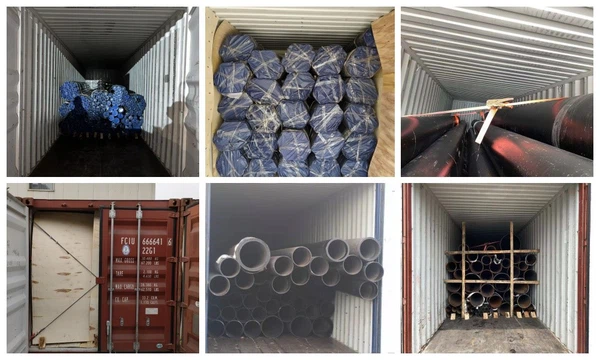
Packaging and shipping