



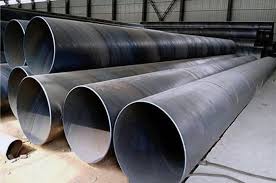
ASTM A252 Grade 2 Double-Sided Submerged Arc Welding (DSAW) Steel Pipe
Basic Overview
ASTM A252 Grade 2 DSAW (Double-Sided Submerged Arc Welded) steel pipe is the most commonly used grade for steel pipe piles in foundation and structural applications . With a minimum yield strength of 35,000 psi (240 MPa) and tensile strength of 60,000 psi (415 MPa), Grade 2 offers the optimal balance of strength, weldability, and cost-effectiveness for medium to high-load-bearing structures [citation:1, citation:6, citation:9].
The DSAW process is a specific welding technique where the welding arc is submerged in granular flux, and both inside and outside welds are applied-usually in separate processes-with these welds consuming a portion of each other to form a single, high-quality weld nugget .
Name Explanation
| Part | Meaning |
|---|---|
| ASTM | ASTM International (American Society for Testing and Materials) |
| A252 | Standard specification for welded and seamless steel pipe piles |
| Grade 2 | The intermediate strength grade and most commonly specified for general piling applications [citation:5, citation:7] |
| DSAW | Double-Sided Submerged Arc Welding – both inside and outside welds are required; the weld arc is submerged in flux during welding |
Key Features of DSAW Manufacturing
| Feature | Description |
|---|---|
| Welding Process | The welding arc is submerged in granular flux; both inside and outside welds are required, usually in separate processes; the separate welds consume a portion of the other, resulting in a single high-quality weld nugget |
| Forming Methods | Two primary methods: Pyramid Rolls (cylinder formed between three rolls arranged in a pyramidal fashion) or UOE (U-ing, O-ing, and Expanding) |
| Cold Expansion | Pipe may be expanded up to 1.5% to achieve final OD; this process can increase yield strength |
| Raw Material | Flat steel plates (not coils), allowing for thicker walls and larger diameters |
| Typical Size Range | 18" to 72" OD (457 mm to 1829 mm) ; wall thickness from 0.250" to 1.5" (6.35 mm to 38.1 mm) ; larger diameters up to 84" (2134 mm) available |
| Length | Double random lengths; custom lengths from 6 m to 70 m [citation:5, citation:9] |
Chemical Composition (ASTM A252 Grade 2)
| Element | Maximum % | Notes |
|---|---|---|
| Carbon (C) | 0.26% [citation:1, citation:5, citation:9, citation:10] | Provides strength |
| Manganese (Mn) | 1.35-1.60% [citation:1, citation:5, citation:9, citation:10] | Enhances strength and toughness |
| Silicon (Si) | 0.45% [citation:5, citation:9, citation:10] | Deoxidizer |
| Phosphorus (P) | 0.050% [citation:5, citation:6, citation:9, citation:10] | Mandatory maximum limit |
| Sulfur (S) | 0.030-0.045% [citation:2, citation:6, citation:9, citation:10] | Controlled for weldability |
Note: ASTM A252 specifies only maximum limits for phosphorus and sulfur. All three grades share the same chemical composition limits; the distinction is based on mechanical properties [citation:5, citation:9, citation:10].
Mechanical Properties
| Grade | Yield Strength (min) | Tensile Strength (min) | Elongation (min) | Strength vs. Grade 1 |
|---|---|---|---|---|
| Grade 1 | 205 MPa (30,000 psi) [citation:1, citation:6, citation:9] | 345 MPa (50,000 psi) [citation:1, citation:6, citation:9] | 30% [citation:9, citation:10] | Baseline |
| Grade 2 | 240-241 MPa (35,000 psi) [citation:1, citation:2, citation:6, citation:7, citation:9] | 414-415 MPa (60,000 psi) [citation:1, citation:2, citation:6, citation:7, citation:9] | 25% [citation:5, citation:9, citation:10] | +17% yield |
| Grade 3 | 310 MPa (45,000 psi) [citation:1, citation:6, citation:9] | 455 MPa (66,000 psi) [citation:1, citation:6, citation:9] | 20% [citation:9, citation:10] | +51% yield |
Grade 2 is the most common choice for general piling applications, offering an excellent balance of performance and economy .
Dimensional Tolerances
| Parameter | Tolerance |
|---|---|
| Outside Diameter | ±1% of specified OD [citation:5, citation:9] |
| Wall Thickness | Not more than 12.5% under nominal |
| Weight | +15% / -5% of theoretical weight [citation:5, citation:9] |
| Length (fixed) | +100mm / -0mm typical |
Size Availability:
OD Range: 6" to 120" (168 mm to 3048 mm) ; typical DSAW range 18" to 72" (457 mm to 1829 mm)
Wall Thickness: 0.188" to 2.5" (4.78 mm to 63.5 mm) [citation:1, citation:6]
DSAW vs. Other Manufacturing Methods for A252 Grade 2
| Aspect | DSAW (Double-Sided SAW) | LSAW (Longitudinal SAW) | ERW (Electric Resistance Welded) | SSAW (Spiral SAW) |
|---|---|---|---|---|
| Weld Seam | Single longitudinal, welded both sides | Single longitudinal seam | Single longitudinal seam (no filler) | Continuous spiral seam |
| Diameter Range | 18" to 72"+ | 12" to 64" | Up to 24" | 8" to 120"+ |
| Wall Thickness | Up to 1.5" (38 mm) standard; up to 2.5" (63.5 mm) available [citation:1, citation:3] | Up to 2.5" (63.5 mm) | Moderate | Up to 1.0" (25.4 mm) |
| Raw Material | Flat steel plate | Flat steel plate | Steel coil | Steel coil |
| Cold Expansion | Up to 1.5%; increases yield strength | Optional | Not typical | Not typical |
| Typical Application | Large-diameter piling, heavy loads | Large-diameter piling | Smaller diameter piling | Very large diameter piling |
Testing Requirements
| Test Type | Requirement | Notes |
|---|---|---|
| Chemical Analysis | Per heat lot | Phosphorus and sulfur limits enforced |
| Tensile Test | Per lot | Verifies yield and tensile strength |
| Flattening Test | Required | Checks ductility and weld integrity |
| Hydrostatic Test | Each pipe | Pressure integrity verification |
| Ultrasonic Inspection | 100% of weld seam | Continuous automatic flaw detection [citation:1, citation:3] |
| Dimensional Inspection | 100% | Per ASTM A252 tolerances |
| Visual Inspection | 100% | Surface condition, weld appearance |
Applications
Grade 2 is the standard choice for most piling applications :
| Application | Description |
|---|---|
| Building Foundations | Medium-rise buildings, industrial plant foundations, high-rise deep foundations (single pile capacity ≥8000kN) |
| Bridge Foundations | Pier and abutment support for cross-river/sea bridges [citation:5, citation:7] |
| Marine Structures | Ports, docks, wharves requiring corrosion-resistant coatings [citation:5, citation:7] |
| Retaining Walls | Lateral soil pressure resistance |
| Industrial Plant Foundations | Heavy equipment foundation piles |
| Temporary Works | Foundation pit support for subways/buildings |
Key Advantages
| Advantage | Description |
|---|---|
| Optimal Strength-to-Cost Ratio | Grade 2 offers the best balance among A252 grades – 17% higher strength than Grade 1 at modest cost premium |
| Large Diameter Capability | DSAW produces pipes from 18" to 72" OD – ideal for large-diameter piling |
| High Weld Integrity | Double-sided welding creates a single high-quality weld nugget with robust seam reliability |
| Thick Walls | Suitable for heavy-load applications requiring substantial wall thickness (up to 2.5") |
| Cold Expansion Option | Up to 1.5% expansion improves dimensional accuracy and can increase yield strength |
| Excellent Weldability | Field welding and splicing capabilities |
| Corrosion Protection Options | FBE, 3LPE, coal tar epoxy, galvanizing, bituminous coating available [citation:5, citation:6] |
Important Considerations
1. Grade 2 vs. Grade 1 and Grade 3
Grade 1: Light-load applications, good soil conditions, temporary structures
Grade 2: Most common grade – medium-rise buildings, bridge foundations, industrial plants
Grade 3: Heavy-load applications, large bridges, offshore platforms, seismic zones
2. Hydrostatic Testing
ASTM A252 requires hydrostatic testing for all pipe piles
This differs from some other piling specifications that may not require hydrostatic testing
3. DSAW Manufacturing Advantages
Pyramid Rolls method: Cylinder formed between three rolls arranged in a pyramidal fashion
UOE method: Uses "U" press and "O" press for forming the cylinder
Both methods produce high-quality pipe with excellent dimensional accuracy
4. End Finishes
Plain ends: Standard for most applications
Beveled ends: For field welding (30° bevel angle)
Threaded and coupled: Available upon request
5. Coating Options
Black (bare): Standard mill finish
FBE (Fusion Bonded Epoxy): Corrosion protection
3LPE (3-layer polyethylene): Buried applications
Coal Tar Epoxy: Marine environments [citation:5, citation:6]
Bituminous coating: Buried service
Galvanized: Outdoor applications
6. Mill Test Certificate
Typically provided as EN 10204 Type 3.1B with full test results [citation:4, citation:8]
Third-party inspection (SGS, BV, Lloyds) available upon request
Summary
ASTM A252 Grade 2 Double-Sided Submerged Arc Welded (DSAW) steel pipe is the standard, most commonly used specification for steel pipe piles in foundation construction . With minimum yield strength of 35,000 psi (240 MPa) – 17% higher than Grade 1 – and tensile strength of 60,000 psi (415 MPa), Grade 2 offers the optimal balance of strength, weldability, and cost-effectiveness for medium to high-load-bearing applications [citation:1, citation:6].
Key features of DSAW manufacturing:
Produces pipes from 18" to 72" OD with wall thickness up to 1.5" (38 mm) standard; up to 2.5" (63.5 mm) available [citation:1, citation:3]
Double-sided welding (inside and outside) creates a single high-quality weld nugget
Formed from flat steel plates using Pyramid Rolls or UOE methods
Cold expansion up to 1.5% achieves final dimensions and may increase yield strength
Common applications include:
Bridge foundations and pier supports
High-rise and medium-rise building foundations
Marine structures (docks, wharves, ports)
Industrial plant foundations
Retaining walls and temporary shoring
When ordering, specify: ASTM A252 Grade 2, DSAW (double-sided submerged arc welded), Size (OD x WT), Length, End Finish (plain/beveled), and Coating Requirements. Grade 2 is the recommended default for most general piling applications [citation:5, citation:7].


