


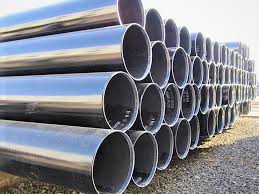
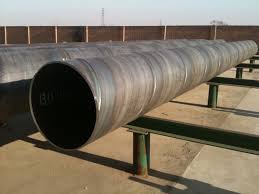
ASTM A252 Grade 1 ERW Pipe
Basic Overview
ASTM A252 Grade 1 ERW (Electric Resistance Welded) pipe is the entry-level grade within the ASTM A252 specification for steel pipe piles [citation:2, citation:3]. These pipes are designed for foundation piling applications where the steel cylinder serves as a permanent load-carrying member or as a shell to form cast-in-place concrete piles [citation:2, citation:9]. Grade 1 is the most economical option, suitable for light-load applications and good soil conditions [citation:3, citation:4].
Name Explanation
| Part | Meaning |
|---|---|
| ASTM | ASTM International (American Society for Testing and Materials) |
| A252 | Standard specification for welded and seamless steel pipe piles [citation:4, citation:7] |
| Grade 1 | The lowest strength grade in the A252 specification, with minimum yield strength of 30,000 psi (205 MPa) [citation:2, citation:4] |
| ERW | Electric Resistance Welded – pipe formed from steel coil and welded longitudinally without filler metal [citation:2, citation:5] |
Key Features
| Feature | Description |
|---|---|
| Primary Application | Foundation piling, load-bearing members, cast-in-place concrete pile shells [citation:2, citation:9] |
| Manufacturing Process | Electric Resistance Welded (ERW) – cold forming with high-frequency welding [citation:2, citation:5] |
| Yield Strength (min) | 205 MPa (30,000 psi) [citation:4, citation:8, citation:10] |
| Tensile Strength (min) | 345 MPa (50,000 psi) [citation:4, citation:8, citation:10] |
| Elongation (min) | 30% (varies by wall thickness) [citation:4, citation:6, citation:7] |
| Size Range (ERW) | NPS 1 to NPS 24 (33.4 mm to 609.6 mm OD) [citation:2, citation:9] |
| Wall Thickness | 3 mm to 12 mm typical for ERW; up to 50.8 mm for other manufacturing methods [citation:2, citation:4, citation:9] |
| Length | Min 3 m, Max 18 m, or custom [citation:2, citation:9] |
| Surface Treatment | Bare, black varnish, or galvanized [citation:2, citation:8] |
Chemical Composition
ASTM A252 specifies only maximum limits for phosphorus and sulfur. All grades share the same composition limits [citation:4, citation:6, citation:7, citation:8]:
| Element | Maximum % |
|---|---|
| Carbon (C) | 0.26% (typical, not mandated by standard) [citation:2, citation:4] |
| Manganese (Mn) | 1.60% (typical, not mandated by standard) [citation:4, citation:6] |
| Silicon (Si) | 0.45% (typical, not mandated by standard) [citation:4, citation:6] |
| Phosphorus (P) | 0.050% (mandatory) [citation:4, citation:7, citation:10] |
| Sulfur (S) | 0.030% (mandatory) [citation:4, citation:6, citation:7] |
Note: The standard only mandates maximum phosphorus and sulfur. Carbon, manganese, and silicon values shown are typical from manufacturer data .
Mechanical Properties
| Grade | Yield Strength (min) | Tensile Strength (min) | Elongation (min) |
|---|---|---|---|
| Grade 1 | 205 MPa (30,000 psi) [citation:4, citation:8, citation:10] | 345 MPa (50,000 psi) [citation:4, citation:8, citation:10] | 30% [citation:4, citation:6, citation:7] |
| Grade 2 | 240 MPa (35,000 psi) [citation:4, citation:8] | 415 MPa (60,000 psi) [citation:4, citation:8] | 25% [citation:4, citation:6] |
| Grade 3 | 310 MPa (45,000 psi) [citation:4, citation:8] | 455 MPa (66,000 psi) [citation:4, citation:8] | 20% [citation:4, citation:6] |
Dimensional Tolerances
| Parameter | Tolerance |
|---|---|
| Outside Diameter | ±1% of specified OD [citation:2, citation:9, citation:10] |
| Wall Thickness | Not more than 12.5% under nominal [citation:2, citation:9, citation:10] |
| Weight | +15% / -5% of theoretical weight [citation:9, citation:10] |
| Straightness | ≤ 0.1% of total length (typical) |
Testing Requirements
| Test Type | Requirement |
|---|---|
| Chemical Analysis | Heat analysis required; phosphorus and sulfur limits enforced [citation:4, citation:9] |
| Tensile Test | One test per 200 lengths; verifies yield and tensile strength [citation:9, citation:10] |
| Flattening Test | Required for weld integrity verification |
| Hydrostatic Test | Not specified – piling pipes are filled with concrete, not used for fluid conveyance [citation:9, citation:10] |
Applications
| Application | Description |
|---|---|
| Light Structural Foundations | Residential and small commercial buildings |
| Good Soil Conditions | Where bearing capacity ≤120 kN/m² |
| Temporary Shoring | Excavation support and temporary structures |
| General Structural Purposes | Non-critical load-bearing applications |
| Piling for Small Bridges | Bridges without large load requirements |
Key Advantages
| Advantage | Description |
|---|---|
| Most Economical | Lowest cost among ASTM A252 grades |
| Good Ductility | 30% minimum elongation allows for forming and bending |
| No Hydrostatic Test Required | Reduces manufacturing cost since pipes are filled with concrete [citation:9, citation:10] |
| Wide Availability | Common sizes readily available |
| Galvanizing Option | Hot-dip galvanized available for corrosion protection [citation:2, citation:3] |
Important Considerations
1. ERW Size Limitations
ERW manufacturing is typically used for sizes up to NPS 24 (609.6 mm OD) [citation:2, citation:9]
Larger diameters require HSAW (spiral) or LSAW manufacturing [citation:5, citation:8]
2. Grade Selection Guidance
Grade 1: Light-load applications, good soil conditions, temporary structures
Grade 2: Most common grade for general piling applications [citation:3, citation:5]
Grade 3: Heavy-load applications, large bridges, offshore platforms [citation:3, citation:5]
3. No Hydrostatic Testing
ASTM A252 does not require hydrostatic testing because piling pipes are filled with concrete and not used for fluid conveyance [citation:9, citation:10]
This differs from pressure pipe standards like ASTM A53 or API 5L
4. End Finishes
Plain ends: Standard for most applications
Beveled ends: For field welding, 30° bevel angle (+5°, -0°)
Threaded: Available upon request
5. Coating Options
Black (bare): Standard finish
Hot-dip galvanized: For corrosion protection in outdoor/marine environments [citation:2, citation:3]
Varnish: Temporary protection during storage and handling [citation:2, citation:9]
Grade Comparison Summary
| Property | Grade 1 | Grade 2 | Grade 3 |
|---|---|---|---|
| Yield Strength | 205 MPa | 240 MPa | 310 MPa |
| Tensile Strength | 345 MPa | 415 MPa | 455 MPa |
| Elongation | 30% | 25% | 20% |
| Relative Strength | Baseline | +17% | +51% |
| Typical Application | Light loads | General piling | Heavy loads |
Summary
ASTM A252 Grade 1 ERW pipe is the entry-level specification for steel pipe piles used in foundation construction [citation:2, citation:3]. With minimum yield strength of 30,000 psi (205 MPa) and tensile strength of 50,000 psi (345 MPa), Grade 1 is the most economical option, suitable for light-load applications, good soil conditions, and temporary structures [citation:3, citation:4].
Key features:
Manufactured by ERW process – sizes up to NPS 24 (24 inches OD) [citation:2, citation:9]
No hydrostatic testing required – pipes are filled with concrete, not used for fluid conveyance [citation:9, citation:10]
30% minimum elongation – provides good ductility for installation
Galvanizing available – for corrosion protection [citation:2, citation:3]
Common applications include:
Light structural foundations for residential/commercial buildings
Temporary shoring and excavation support
Piling for small bridges in good soil conditions
When ordering, specify: quantity, ASTM A252 Grade 1, ERW, outside diameter, wall thickness, length, and end finish (plain or beveled) [citation:2, citation:8].


