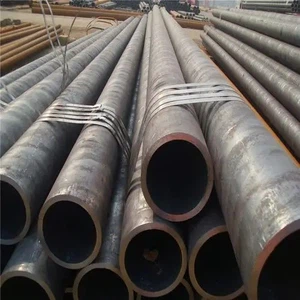
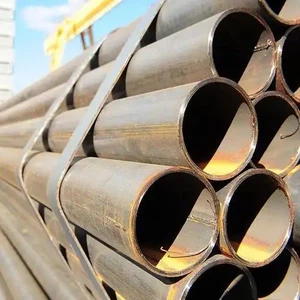
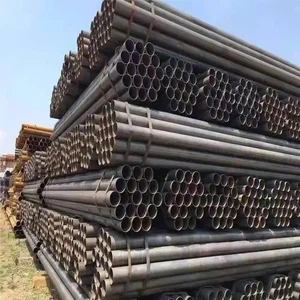
What is ASTM A53 Gr.B ERW steel pipe?
ASTM A53 Gr.B resistance welded (ERW) steel pipe is manufactured according to ASTM A53 specifications and welded using resistance welding. ASTM A53 covers seamless and welded black steel pipe and hot-dip galvanized steel pipe in sizes NPS 1/8 to NPS 26 (DN6 to DN 650).
What are the differences between ASTM A53 Gr.B structural ERW steel pipe and Q235B steel pipe?
ASTM A53 Gr.B structural resistance welded steel pipe has higher minimum yield strength and tensile strength requirements than Q235B steel pipe. Furthermore, ASTM A53 Gr.B is an American standard, while Q235B is a Chinese standard; their chemical composition and manufacturing process requirements also differ.
What are the obvious differences in appearance between ASTM A53 Gr.B structural resistance welded steel pipe and spiral welded steel pipe?
Resistance welded (ERW) steel pipe has a straight weld seam parallel to the length of the pipe, while spiral welded steel pipe has a continuous spiral weld seam that winds around the pipe. Surface finish and overall appearance can vary depending on the manufacturing process. Compared to spiral pipe, ERW steel pipe generally has a cleaner, more uniform surface, while spiral pipe can sometimes have visible weld marks due to its forming process.
Can ASTM A53 GR.B structural ERW steel pipe be used in high-temperature or high-pressure environments?
No. ASTM A53 Gr.B ERW steel pipe is generally not recommended for high-temperature or high-pressure environments; it is suitable for medium- to low-pressure applications, such as water, gas, and structural uses. For high-temperature and high-pressure applications, seamless steel pipes such as ASTM A106 are recommended, as they are specifically designed for these conditions.
In which building structures is ASTM A53 GR.B structural ERW steel pipe typically used?
ASTM A53 GR.B ERW steel tubing for structural applications is commonly used in building structures for columns, marker posts, and bracing, as well as for pile foundations and scaffolding. It offers higher strength compared to Grade A steel, making it suitable for a variety of structural applications with high load-bearing requirements, such as building frames and bridges.