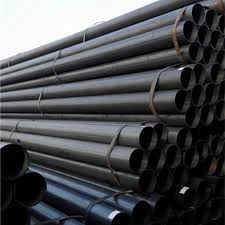
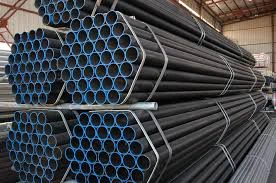
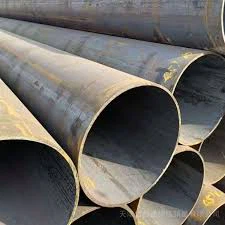
Why are 15CrMoG steel pipes widely used in power plant boilers?
Due to their excellent high-temperature strength and creep resistance, 15CrMoG steel pipes are the preferred material for superheaters and reheaters in power plant boilers. At operating temperatures of 500-550°C, their chromium-molybdenum alloy composition effectively resists steam oxidation and thermal fatigue. Compared to ordinary carbon steel, they are less susceptible to wall thinning or tube bursts during long-term high-temperature service. Domestic and international standards such as GB 5310 and ASME SA213 explicitly recognize their use in boilers. Furthermore, their reasonable cost-performance ratio is particularly prominent in supercritical units.
What are typical applications in petrochemical equipment?
This steel pipe is commonly used in petrochemical hydrogenation reactors, high-temperature heat exchangers, and cracking furnace piping systems. Its hydrogen corrosion resistance (chromium forms a dense oxide film) makes it suitable for high-pressure hydrogen environments. In sulfide environments, the molybdenum element inhibits stress corrosion cracking. For example, radiant section tubes in ethylene cracking furnaces must be made of 15CrMoG to withstand cyclic thermal shocks below 900°C. The petrochemical industry typically requires HIC (hydrogen-induced cracking) test reports for steel pipes to ensure safety.
Can it be used in nuclear power plant auxiliary piping systems?
In nuclear power plant secondary systems, 15CrMoG can be used for main steam and feedwater piping, but must meet nuclear-grade material specifications (such as the RCC-M standard). While its radiation stability is inferior to that of austenitic stainless steel, it is more economical in non-reactor core areas. Before use, it must pass rigorous intergranular corrosion testing and impact toughness verification. Seismic requirements and fatigue life analysis must be considered during design. This material was previously used in some auxiliary piping at the Qinshan Nuclear Power Plant in China.
What are its advantages over other materials for high-temperature piping?
Compared to 12Cr1MoVG, 15CrMoG offers higher strength at medium temperatures (450-550°C) and lower cost. Compared to TP304H stainless steel, its thermal conductivity is 40% higher, facilitating better heat transfer. 15CrMoG's coefficient of thermal expansion is close to that of carbon steel, reducing thermal stress in the system. For pipes with wall thicknesses exceeding 50mm, its hot working performance surpasses that of high-alloy steel. Its comprehensive cost-effectiveness makes it a benchmark material for medium-temperature piping in thermal power plants.
What environmental limitations should be considered during application?
Pitting corrosion may occur in wet environments with chloride ion concentrations exceeding 25ppm, and direct contact with seawater should be avoided. Long-term use above 600°C can cause carbide accumulation and lead to embrittlement, necessitating regular remaining life assessments. In sulfur-containing flue gases, the wall temperature must be kept below the dew point corrosion temperature. If the medium contains vanadium or alkali metals (such as in biomass boilers), high-temperature corrosion protection coatings should be considered. The GB/T 16507 boiler piping specification should be strictly adhered to during design.