Which industrial sectors are STBA20 most commonly used in?
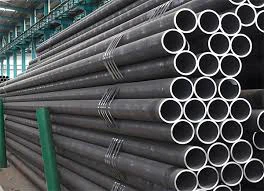
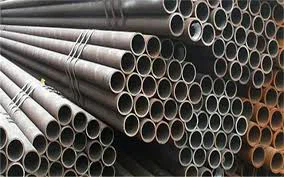
STBA20 steel pipe is almost exclusively used in energy and heavy industry applications with high temperature and pressure requirements. Its primary application is in thermal power plants, where it is used to manufacture boiler superheaters, reheaters, economizers, and steam piping systems. Secondly, it is widely used in the petrochemical industry, such as in reformers in large fertilizer plants, radiant section tubes in ethylene cracking furnaces, and various high-temperature and high-pressure heat exchangers. STBA20 is also found in some industrial boilers and piping systems that require high-temperature and high-pressure resistance.
In boiler systems, what specific components is STBA20 used for?
In power plant and industrial boilers, STBA20 is primarily used to manufacture pressurized components subject to high temperatures and pressures. It is commonly used to manufacture superheater tubes, which heat saturated steam to superheated steam, and reheater tubes, which reheat steam discharged from the high-pressure cylinder. It may also be used in some high-temperature sections of economizers, as well as the headers and steam piping connecting these components. These components typically operate at temperatures between 500°C and 600°C, precisely where STBA20's performance advantages shine.
Why choose STBA20 over carbon steel in these applications?
The fundamental reason for choosing STBA20 over ordinary carbon steel (such as STPG38 or SA106B) is that the operating environment exceeds the limits of carbon steel. Ordinary carbon steel experiences a sharp drop in strength above 400°C, and its oxidation resistance is poor, resulting in severe scale flaking. STBA20, however, thanks to its chromium-molybdenum alloy composition, maintains sufficient strength and stability at temperatures of 500-600°C. Its creep and oxidation resistance far surpasses carbon steel, ensuring long-term, safe operation of the equipment and avoiding downtime caused by material failure.
Can STBA20 be used in corrosive environments?
STBA20 is not designed for use in highly corrosive environments. Its primary advantages lie in its high-temperature strength and oxidation resistance, with the "oxidation resistance" primarily addressing oxidation by high-temperature air or steam. Its corrosion resistance is limited in acidic media, chloride ions, or reducing atmospheres, even inferior to some low-carbon steels. In petrochemical applications, it often faces internal corrosion from process media, which may require specific analysis or additional corrosion protection measures. For highly corrosive environments, austenitic stainless steel or higher-grade nickel-based alloys are typically used.
What special considerations should be made in equipment design using STBA20?
When designing equipment using STBA20, engineers must fully consider its material properties. First, the allowable stress at the design temperature must be accurately calculated, as this value is significantly lower than its room-temperature yield strength. Second, creep damage and structural aging during long-term operation at high temperatures must be considered, and a lifespan assessment may be necessary. Furthermore, because its coefficient of thermal expansion differs from that of carbon steel, its thermophysical parameters must be accurately input during thermal system design (e.g., piping stress analysis). The detailed design of welded structures must also provide sufficient space and feasibility for post-weld heat treatment (PWHT).