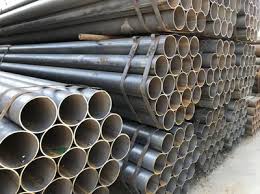
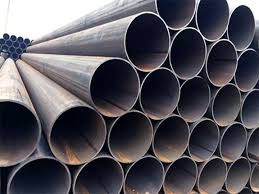
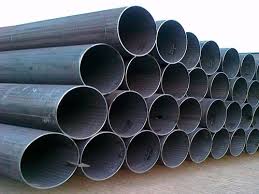
Why are arc welded pipes widely used in oil and gas pipelines?
Arc welded pipes (such as SAWL and SAWH) can produce large-diameter (up to 1420mm) and thick-walled (30mm+) pipes to meet the needs of high-pressure transportation. Its weld strength is high, and long-distance low-cost transportation can be achieved through high-strength steel such as X80/X100. The submerged arc welding process is suitable for field construction (such as the West-East Gas Transmission Project), and can be formed on both sides by internal welding + external welding. Compared with seamless pipes, welded pipes have high production efficiency, low prices, and obvious life cycle cost advantages.
What are the special requirements for welded pipes for power station boilers?
Boiler pipes need to be resistant to high temperatures (up to 600℃) and high pressures (20MPa+), and the materials are mostly P91/P92 martensitic heat-resistant steel. 100% radiographic inspection is required, and the welds have no defects such as unfused and cracks. The inner wall needs to be smooth to reduce flow resistance, and the outer wall needs an anti-oxidation coating. Normalizing + tempering treatment is required after welding to ensure creep performance. Some supercritical boilers need to be strengthened by shot peening to extend fatigue life.
What are the technical challenges of deep-sea pipeline welding?
Deep-sea pipelines are subjected to high pressure (about 10MPa at a water depth of 1000m), low temperature (4℃) and ocean current impact. High-toughness steel (such as X65MO) is required to prevent brittle fracture. Dry high-pressure chambers or underwater wet welding equipment are required for welding, and the latter is prone to hydrogen-induced cracking. Thick-walled pipes (40mm+) require multi-layer and multi-pass welding, and the interlayer temperature is strictly controlled. The corrosion protection requirements are extremely high, and the "3LPE coating + cathodic protection" combined solution is usually adopted.
Application and standards of arc welded pipes in the nuclear power field?
Nuclear power welded pipes must meet ASME III or RCC-M standards, and the materials are mostly 304L/316L stainless steel or 690 alloy. Extremely low sulfur and phosphorus content (S≤0.002%) is required to prevent intergranular corrosion. Welding requires fully automatic TIG welding, and cobalt-containing welding materials are prohibited. All welds are 100% radiographically inspected, and simulated irradiation aging tests are required. Nuclear-grade welders require additional certification (such as NPT examinations), and process assessment covers the entire parameter range.
How to deal with the failure of welded pipes under high temperature and high pressure environments?
Failure modes include creep, fatigue and stress corrosion. Heat-resistant steel with Nb and V added (such as P91) is used in material selection. Increase wall thickness margin during design to reduce allowable stress. Strictly control welding heat input during manufacturing to avoid sensitized areas. Regular inspections (such as guided wave inspections) during operation and timely replacement of aged pipe sections. Surface treatment (such as aluminizing) can improve oxidation resistance and extend service life.