


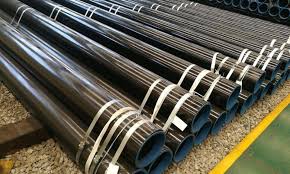

At a Glance: What is it?
API 5L: This is the specification standard set by the American Petroleum Institute (API) that governs the manufacture of "Line Pipe" used in the pipeline transportation systems for the petroleum and natural gas industries.
X52: This is the Grade designation. The "X" indicates a high-strength, low-alloy steel, and the "52" refers to its Minimum Yield Strength of 52,000 psi (Pounds per Square Inch). In metric units, this is approximately 359 MPa (MegaPascals).
PSL 2: This stands for Product Specification Level 2. PSL 2 represents a more stringent set of requirements than PSL 1, including tougher controls on chemical composition, mechanical properties, and testing.
Key Characteristics & Requirements (PSL 2 Focus)
The PSL 2 designation imposes stricter controls to ensure higher performance and safety, especially for critical applications.
1. Chemical Composition
PSL 2 has tighter limits on chemical elements to ensure better weldability, toughness, and strength. Key elements are controlled, including Carbon, Manganese, Sulfur, and Phosphorus.
Carbon Equivalent (CE): A critical parameter for PSL 2. The CE must be reported and is limited to ensure the steel can be welded easily without forming brittle microstructures in the heat-affected zone. The common formula is CE = C + Mn/6 + (Cr+Mo+V)/5 + (Ni+Cu)/15.
Lower Sulfur (S) and Phosphorus (P): These are impurities that can make steel brittle. PSL 2 mandates lower maximum levels than PSL 1, improving the pipe's toughness.
2. Mechanical Properties
Yield Strength (Min): 52,000 psi (359 MPa). This is the stress at which the material begins to deform plastically (i.e., it will not return to its original shape).
Tensile Strength (Min): 66,000 psi (455 MPa). This is the maximum stress the material can withstand while being stretched or pulled before breaking.
Yield-to-Tensile Ratio (Max): For PSL 2, this ratio is capped (typically 0.93 or less, depending on the grade and size). This is a safety feature; a lower ratio means the pipe is more ductile and can deform significantly before fracturing, providing a warning.
3. Toughness Testing
This is a major differentiator for PSL 2. Pipes must undergo Charpy V-Notch (CVN) Impact Testing to ensure they can absorb energy and resist brittle fracture, especially in low-temperature environments. A minimum absorbed energy value is required.
4. Non-Destructive Testing (NDT)
Every single pipe manufactured to PSL 2 must be subjected to non-destructive inspection to detect imperfections. Common methods include:
Ultrasonic Testing (UT): To detect subsurface and transverse flaws.
Hydrostatic Testing: Each pipe is pressurized to a level above its rated operating pressure to prove its integrity.
Manufacturing Processes
API 5L X52 PSL 2 pipe can be produced using two main methods:
Seamless (SMLS): Made by piercing a solid billet of steel to form a hollow shell, which is then elongated and rolled to size. Has no welded seam.
Welded (ERW, SAW, HFI):
Electric Resistance Welded (ERW/HFI): A coiled steel strip is formed into a cylinder and the seam is welded by applying heat and pressure. Modern HFI (High-Frequency Induction) welding is a common, high-quality method.
Submerged Arc Welded (SAW): A plate of steel is rolled into a cylinder and the seam is welded internally and externally using an arc under a blanket of flux. Can be single-seam (SAW) or double-seam (DSAW).
Common Applications
API 5L X52 PSL 2 is a workhorse grade for the energy industry:
Onshore and Offshore Oil Pipelines
Natural Gas Transmission Lines
Casing for Pipeline Crossings (e.g., under roads or rivers)
Structural Piling in marine environments (though this is a secondary use; the primary design is for pressure containment)
Comparison Table: PSL 1 vs. PSL 2 for X52
| Feature | API 5L X52 PSL 1 | API 5L X52 PSL 2 |
|---|---|---|
| Chemical Control | Standard limits, no CE requirement. | Tighter limits, Carbon Equivalent (CE) is specified and limited. |
| Yield Strength | 52,000 psi (min) | 52,000 psi (min) |
| Tensile Strength | 66,000 psi (min) | 66,000 psi (min) |
| Yield/Tensile Ratio | No maximum limit. | Maximum limit is specified (e.g., 0.93). |
| Toughness Testing | Generally not required. | Mandatory Charpy V-Notch impact testing. |
| NDT / Hydrostatic | Hydrostatic testing is required. NDT is sampling-based. | Mandatory NDT on every pipe + hydrostatic testing. |
| Typical Use | Less critical, low-pressure, or shorter-distance gathering lines. | High-pressure, long-distance transmission lines, and critical applications. |
Summary
API 5L X52 PSL 2 is a high-quality, high-integrity carbon steel pipe designed for demanding service in the oil and gas industry. Its enhanced chemical, mechanical, and testing requirements under the PSL 2 specification make it a reliable and safe choice for transporting hydrocarbons under high pressure over long distances. When sourcing this pipe, it's crucial to review the Mill Test Certificate (MTC) to verify it meets all the specific PSL 2 requirements.


