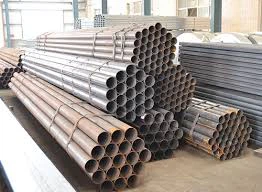
1. Product Overview and Primary Uses
15MoG is a low-alloy molybdenum steel pipe standardized in China under the GB 5310 standard, which specifies seamless steel tubes for high-pressure boiler applications. Its name derives from its nominal chemical composition, which contains approximately 0.15% carbon and 0.4-0.6% molybdenum.
The primary application of 15MoG is in the construction of high-temperature and high-pressure equipment, specifically:
Boiler Superheaters and Reheaters: Used in sections operating at elevated temperatures but below the range requiring higher alloys like chromium-molybdenum steels.
Boiler Water Walls and Headers: Suitable for pressure parts where temperatures are high enough to necessitate better creep strength than carbon steel can provide.
Heat Exchangers and Pressure Vessels: Employed in petrochemical and power plants for components exposed to moderate thermal stresses.
In essence, 15MoG serves as a crucial material bridging the performance gap between plain carbon steels (like 20G) and the more robust chromium-molybdenum steels (like 15CrMoG).
2. Key Advantages and Benefits
The addition of a small amount of molybdenum to the steel composition grants 15MoG several significant advantages:
Enhanced Creep Strength: Molybdenum effectively strengthens the steel's ferrite matrix, allowing it to resist deformation under high stress and temperature over long periods. This is its most critical property for high-pressure boiler applications.
Improved Thermal Stability: It maintains its mechanical properties at sustained operating temperatures up to approximately 500°C, outperforming carbon steels which can weaken rapidly at such temperatures.
Good Weldability and Fabricability: As a low-alloy steel, 15MoG can be welded and formed using standard procedures, although pre-heating and post-weld heat treatment (PWHT) are often recommended to prevent cracking and relieve stresses.
Cost-Effectiveness: Compared to higher-grade alloys (e.g., Cr-Mo steels), 15MoG offers a superior performance-to-cost ratio for specific temperature ranges, providing a durable and reliable solution without incurring the expense of more advanced materials.
3. Development Prospects and Future Trends
The future trajectory of 15MoG is characterized by niche stability rather than rapid growth, influenced by global energy trends:
Mature and Stable Niche Market: In developed economies, the market for 15MoG is well-established. It remains a standard choice for specific sections of subcritical and low-to-medium pressure power plants, as well as for replacement parts and maintenance in existing infrastructure.
Impact of the Clean Energy Transition:
Challenge: The global shift towards ultra-supercritical (USC) power plants, which operate at much higher temperatures and pressures (above 600°C), demands advanced materials like P91, P92, and even stainless steels. 15MoG is not suitable for these cutting-edge applications.
Opportunity: It continues to find applications in biomass-fired boilers, waste-to-energy plants, and certain geothermal systems, where operating conditions fall within its performance envelope.
Focus on Material Optimization: Future development is less about revolutionizing 15MoG itself and more about optimizing its production-through improved purity, tighter dimensional control, and enhanced non-destructive testing (NDT)-to ensure the highest reliability and longevity in its designated applications.
Regional Demand Variations: In developing regions still building their industrial base, 15MoG may see more active use in new, non-USC power generation and industrial boiler projects, supporting its continued production and relevance for the foreseeable future.
4. Conclusion
In summary, 15MoG steel pipe is a proven and reliable low-alloy material essential for high-temperature, high-pressure service. Its benefits of good creep strength, thermal stability, and cost-effectiveness ensure its continued role in the energy and petrochemical sectors. While its growth is limited by the advent of more efficient power plants requiring superior alloys, 15MoG will maintain a stable position as a key material for specific applications, maintenance of legacy systems, and in emerging industrial markets.