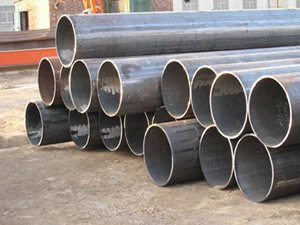
1. Material Characteristics and Standard Positioning
ASTM A519 51B60 is a high-carbon chromium-vanadium alloy seamless steel pipe, similar in designation to 5160 steel (improved), and conforms to the ASTM A519-2025 standard. Its core composition is 0.60% carbon, 0.75-1.00% chromium, and trace amounts of 0.15% vanadium. It is an ultra-high-strength spring steel. Through oil quenching and moderate-temperature tempering, it achieves a tensile strength of ≥1600 MPa and a yield strength of ≥1400 MPa, while maintaining toughness with an elongation of ≥8%. This material is known for its excellent elastic limit (σe ≥1200 MPa) and stress relaxation resistance, making it suitable for extreme cyclic loading environments.
2. Performance Differences from 51B50/51B70
51B60 offers balanced performance within the A519 spring steel family:
Compared to 51B50 (0.50% C), it has a higher elastic energy storage capacity (elastic modulus 210 GPa), but slightly lower ultimate strength than 51B70 (0.70% C);
The addition of vanadium significantly refines the grain size (ASTM No. 8 or higher) and improves fatigue life (Δσ ≥ 500 MPa at 10⁷ cycles);
Typical Selection Scenarios: 51B60 is preferred for high-stress leaf springs, while 51B70 is recommended for ultra-heavy coil springs.
3. Core Applications
Transportation: Heavy-duty truck multi-leaf springs, high-speed rail anti-snaking shock absorber springs;
Energy Equipment: Deep-well oil pump valve springs, wind turbine pitch bearing preload rings;
Military Applications: Armored vehicle suspension systems, carrier-based aircraft landing hook buffer mechanisms;
Precision Machinery: High-end CNC machine tool spindle disc spring assemblies.
4. Key Technologies for Heat Treatment and Surface Hardening
Austempering: After austenitizing at 870°C, transfer to a 280°C salt bath for one hour to achieve a lower bainite structure (HRC 50-52);
Shot Peening: Using 0.3mm cast steel shot with a coverage of over 200%, achieving a surface residual compressive stress of -800 MPa;
Corrosion Protection: Phosphating + cathodic electrophoresis (film thickness ≥ 20 μm) or plasma spraying of a WC-10Co4Cr coating.
5. Special Processing and Quality Control Requirements
Hot Forming: Final forging temperature must be ≥850°C to avoid banding, and subsequent normalizing is required.
Cold Forming: Only localized flame heating to below 300°C for fine-tuning is permitted; cold shock forming is prohibited.
Testing Standards:
100% eddy current testing (EN 10246-3 Class B);
Rotary bending fatigue testing (ISO 1143:2025);
Hydrogen content ≤ 0.8 ppm (ASTM E1447 thermal conductivity method).