


1. Decoding the Name "25MnG"
This is a Chinese standard grade designation (from GB 5310 standard). Here's what each part means:
25: Indicates that the average Carbon (C) content is approximately 0.25%. This places it in the medium-carbon steel category.
Mn: Indicates that Manganese (Mn) is the primary alloying element. The Manganese content is typically around 0.70-1.00%, which is higher than in plain carbon steels.
G: Stands for "Gang" (钢), the Chinese word for steel, but in the context of boiler standards, it specifically denotes a seamless steel pipe for high-pressure service.
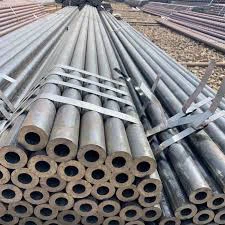
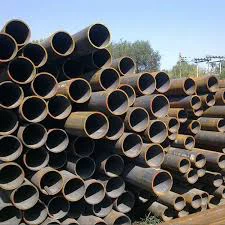
In simple terms: 25MnG is a seamless medium-carbon steel pipe where Manganese is the key strengthening element, specifically designed for use in boilers and pressure vessels.
2. Key Characteristics and Properties
25MnG is engineered to perform reliably under the demanding conditions found in power plants and industrial boilers.
Good Strength and Toughness: The combination of 0.25% carbon and elevated manganese content provides a good balance of tensile strength and impact toughness. Manganese increases the hardenability of the steel, allowing it to maintain strength at higher temperatures.
Excellent Creep Resistance: This is a critical property for boiler tubes. "Creep" is the slow, permanent deformation of a material under constant stress at high temperatures. 25MnG is formulated to resist this deformation over long periods.
Good Welding Performance: While it requires more care than low-carbon steels, 25MnG has satisfactory weldability. Pre-heating and post-weld heat treatment are often recommended to prevent cracking and relieve stresses.
Resistance to Oxidation and Scaling: At high temperatures, steel can react with oxygen, forming scale. 25MnG has reasonable resistance to this phenomenon, which helps maintain the integrity of the tube wall.
High-Temperature Yield Strength: It retains a significant portion of its strength at the operating temperatures of boilers (typically up to ~500°C).
3. Common Applications
25MnG is primarily used in the following components:
Superheater Tubes: These tubes are exposed to the highest temperatures in a boiler, where steam is heated beyond its saturation point.
Reheater Tubes: Similar to superheaters, they reheat steam after it has passed through a high-pressure turbine.
High-Pressure Boiler Tubes: For the main boiler sections that operate at high pressure and temperature.
Headers and Main Steam Pipes: Used for collecting and transporting high-temperature, high-pressure steam.
4. Comparison with Other Common Boiler Steel Pipes
| Property | 25MnG | 20G (Most Common) | 15CrMoG (Chromium-Molybdenum) |
|---|---|---|---|
| Carbon Content | ~0.25% | ~0.20% | ~0.15% |
| Alloying Elements | Carbon-Manganese | Low Carbon | Chromium, Molybdenum |
| Key Strength | Good high-temperature strength, tougher than 20G | Good weldability and ductility | Superior creep strength at higher temps (>550°C) |
| Typical Use | Superheaters, Reheaters | Water wall tubes, lower temp headers | High-temperature superheaters, high-pressure headers |
| Cost | Moderate | Lower | Higher |
Summary of Comparison:
25MnG vs. 20G: 25MnG is stronger and used for more critical, higher-temperature sections than the general-purpose 20G.
25MnG vs. 15CrMoG: 15CrMoG, with its chromium and molybdenum content, is used for even more severe service conditions with higher temperature and pressure demands than 25MnG.
5. Standards and Specifications
Primary Standard: GB 5310 - This is the Chinese standard for "Seamless steel tubes and pipes for high pressure boiler." This standard dictates the chemical composition, mechanical properties, hydraulic test pressure, and non-destructive testing requirements.
Similar International Grades: While not exact equivalents, grades like ASTM A210 Grade A-1 or certain European grades have similar chemical compositions and applications.
Conclusion
25MnG carbon steel boiler pipe is a reliable and widely used seamless tube for critical high-temperature and high-pressure sections in power station boilers and other pressure vessels. Its balanced composition of carbon and manganese provides an excellent combination of strength, toughness, and creep resistance, making it a cost-effective choice for applications that are too demanding for 20G but do not require the more expensive chromium-molybdenum steels.


